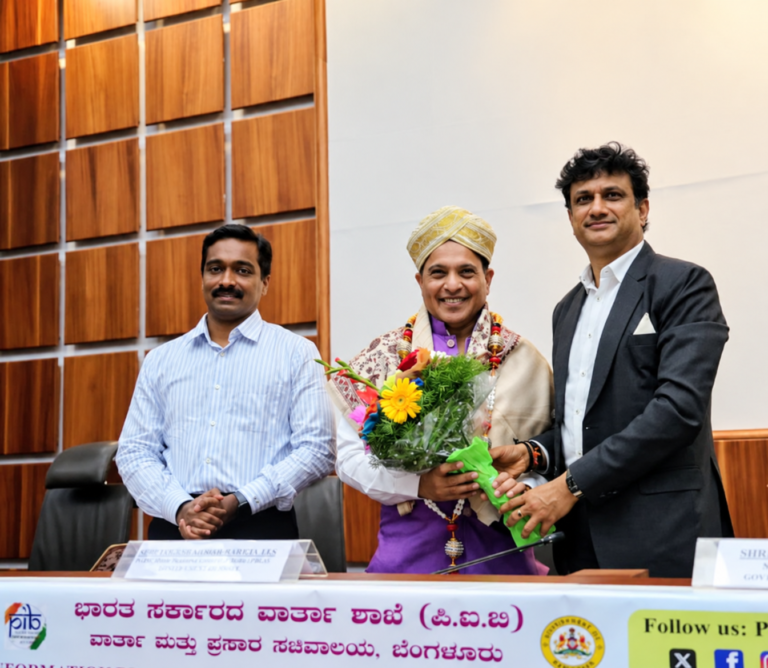
Image: Supplied
Bengaluru: Karnataka’s expenditure on incentive advertisements for newspapers has nearly doubled from ₹44 crore in 2022 to ₹82 crore in 2025-26, prompting state officials to call for tighter scrutiny of newspaper registration, attendance and circulation even as the Centre moves the entire registration process onto the digital Press Sewa Portal.
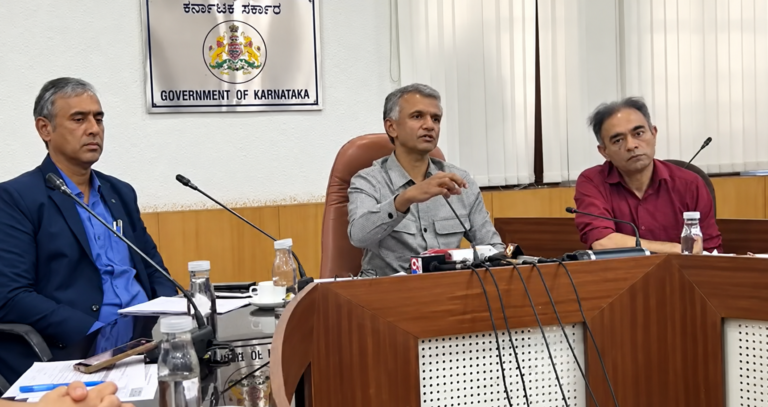
The issue came into focus at a workshop in Bengaluru on the Press and Registration of Periodicals Act, 2023 and the Press Sewa Portal, where officials discussed both the simplification of newspaper registration and the need to ensure that government support reaches genuine journalistic publications.
Principal Director General of the Press Registrar General of India Yogesh Kumar Baweja said the Centre had substantially overhauled the newspaper and periodical registration system by replacing processes rooted in a roughly 150-year-old law with a simplified digital framework.
He said the objective was to make registration easier for media organisations and remove delays caused by physical paperwork and multiple layers of movement between district offices and Delhi.
Under the earlier system, those seeking to start a new newspaper had to submit applications through the Deputy Commissioner’s office, after which the papers were forwarded to Delhi. Baweja said the process could take months and, in some instances, years.
Under the 2023 law, the process will now be carried out online through the Press Sewa Portal, with no provision for physical submission of documents.
He said the digital process would reduce the possibility of documents being misplaced and eliminate repeated movement of paper files, while making registration faster and easier.
Baweja said the registration timeline had been significantly reduced and that a new publication could be started within three months of filing the application.
Once the title is finally approved by PRGI after scrutiny, the publication must be started within 12 months, he said.
The digital system also provides for several post-registration processes, including fresh registration, addition of a new edition, revision of registration details, transfer of ownership, change of address, payment of penalties, import of newsprint and closure or cancellation of publications.
Baweja said all these processes could be handled digitally under the new framework.
He also responded to questions raised by editors and district information officers during the interaction and said suggestions received at the workshop would be taken up with the Union Information and Broadcasting Ministry.
He said the possibility of introducing a system under which printed copies of newspapers could be received at the Ministry’s Karnataka units for attendance-related purposes would also be examined.
The workshop was organised jointly by the Bengaluru branch of the Union Ministry of Information and Broadcasting and the Karnataka Department of Information and Public Relations at the Mahatma Gandhi Media Centre in Vartha Soudha.
Karnataka Flags Rising Cost of Incentive Advertisements
Commissioner of the Department of Information and Public Relations M.N. Anucheth used the workshop to draw attention to the growing cost of government incentive advertisements.
He said the government provides incentive advertisements to support newspapers, but expressed concern that, in recent years, some newspapers were being started primarily to obtain such advertisements.
According to Anucheth, expenditure on incentive advertisements stood at ₹44 crore in 2022 and had increased to ₹82 crore by 2025-26.
He said government support should reach those who have genuinely taken up journalism as a profession and argued that stronger checks were therefore necessary.
Anucheth called for cooperation from media organisations in strengthening scrutiny of newspaper registration, attendance and circulation.
He also said the question of who should be considered a “journalist” had become increasingly important in the era of social media and digital publishing.
According to him, the definition of a journalist requires serious discussion at the national level.
He noted that PRGI currently focuses on registration and administration of newspapers, but said the digital age had created a need for greater clarity on who qualifies as a journalist.
State Says Newspaper Numbers Are Rising
Earlier, Information Department Secretary J. Manjunath said the number of newspapers being added to the department’s media list was increasing steadily.
He said the rise in the number of newspapers was creating an additional financial burden on the government and argued that registration, attendance and circulation therefore required closer monitoring.
Manjunath also questioned whether newspapers still required a 48-hour window for submitting attendance in an era of artificial intelligence, ChatGPT and other digital technologies.
He said circulation figures too needed closer scrutiny.
At the same time, he described the media as the fourth pillar of democracy and urged publications to give greater emphasis to constructive and development-oriented journalism rather than focusing disproportionately on negative issues.
The workshop was intended to address grievances and operational difficulties relating to the Press and Registration of Periodicals Act, 2023 and the Press Sewa Portal.
Owners, editors and printers of district-level newspapers, along with district information officers, participated in the programme.
Doordarshan Kendra Bengaluru head B.K. Keshavamurthy spoke about the objectives of the workshop at the outset.
NIC Deputy Director Gaurav Sharma, senior Information Department officials, joint directors, deputy directors, district information officers from across Karnataka and owners and editors of local and regional publications were also present.
About the Author