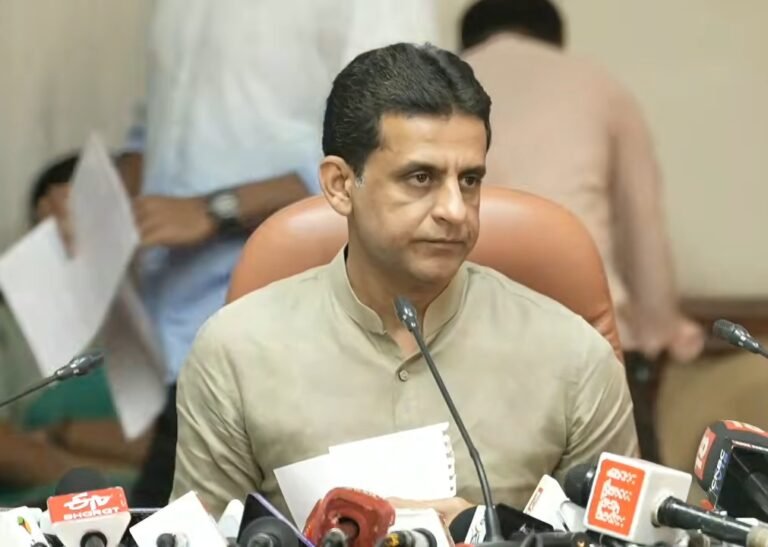
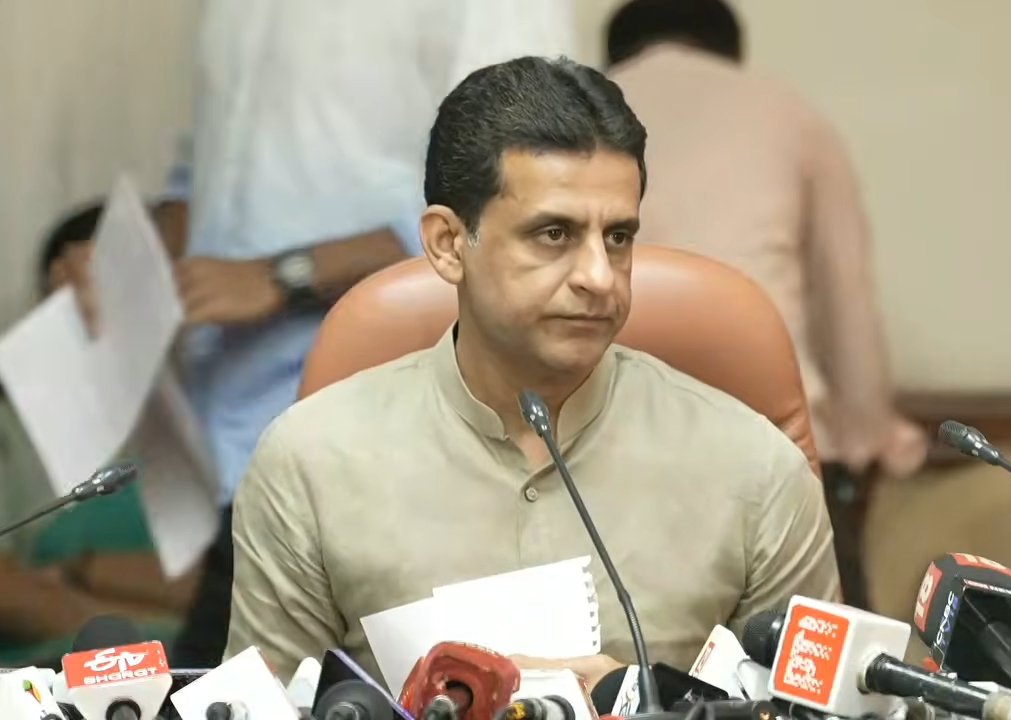
Karnataka Food, Civil Supplies, Consumer Affairs and Legal Metrology Minister Rizwan Arshad. Image: Video screenshot
Bengaluru: Karnataka Food and Civil Supplies Minister Rizwan Arshad called for independent testing of E20 petrol on November 10 after Union Minister Pralhad Joshi disputed Karnataka’s findings of excessive ethanol in some samples. Arshad questioned why the Centre relied on oil marketing companies to test the petrol they sell and certify that it meets the standard.
Arshad said Karnataka initially sent 63 petrol samples to laboratories run by the oil companies and received no report specifying the ethanol percentage. He said the state then went to independent laboratories accredited by the National Accreditation Board for Testing and Calibration Laboratories (NABL). According to Arshad, officers authorised under the 2005 Motor Spirit and High Speed Diesel Order collected the samples and recorded density readings on prescribed forms acknowledged by company representatives.
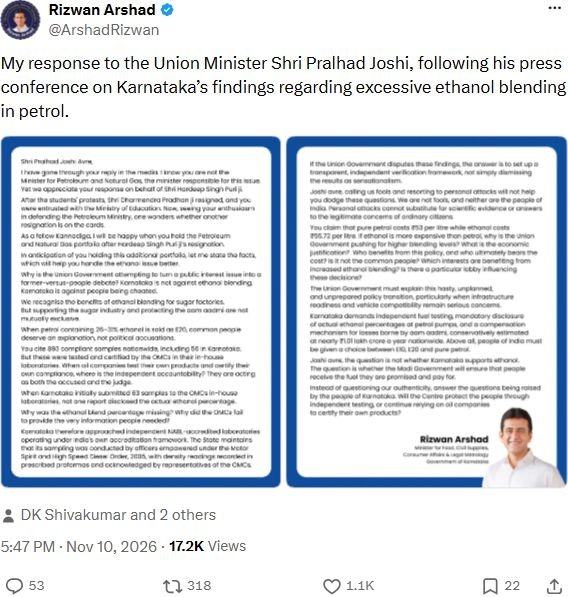
Arshad asked for mandatory disclosure of ethanol percentages at petrol pumps, a choice of E10, E20 or petrol without ethanol, and a way to compensate consumers. He estimated annual losses to consumers nationwide at nearly ₹1.01 lakh crore. The statement did not show how he calculated that estimate.
Arshad said Karnataka recognised the benefits of ethanol blending for sugar factories. He alleged that some petrol sold as E20 contained 26–31% ethanol and raised concerns about vehicle compatibility and infrastructure readiness. He also asked Joshi to explain the economics of higher blending, citing figures of ₹53 a litre for pure petrol and ₹55.72 a litre for ethanol that he attributed to the Union minister.
In his earlier response to Karnataka’s findings, Joshi cited 893 samples across India that he said met the standard, including 56 from Karnataka. He put the average ethanol content of the Karnataka samples tested by oil companies at 19.30% and questioned the state’s sampling and laboratory procedures. Karnataka stood by its findings, which included a reading of up to 31.2% ethanol in some petrol samples.
About the Author