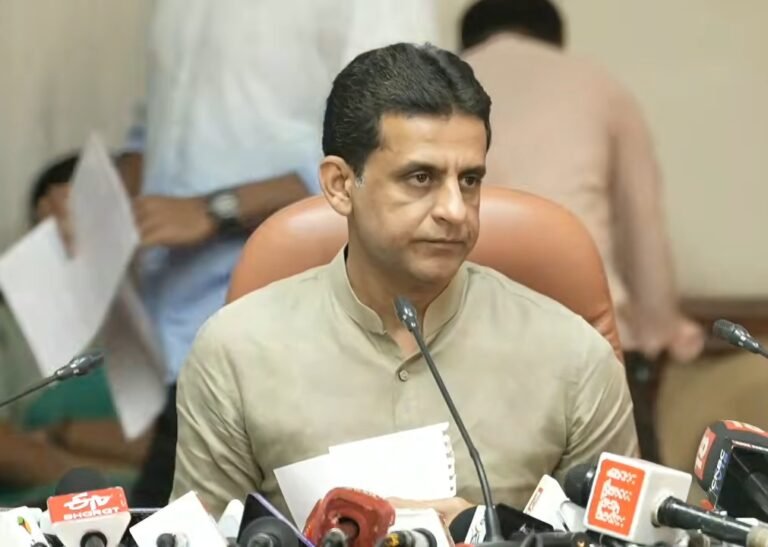
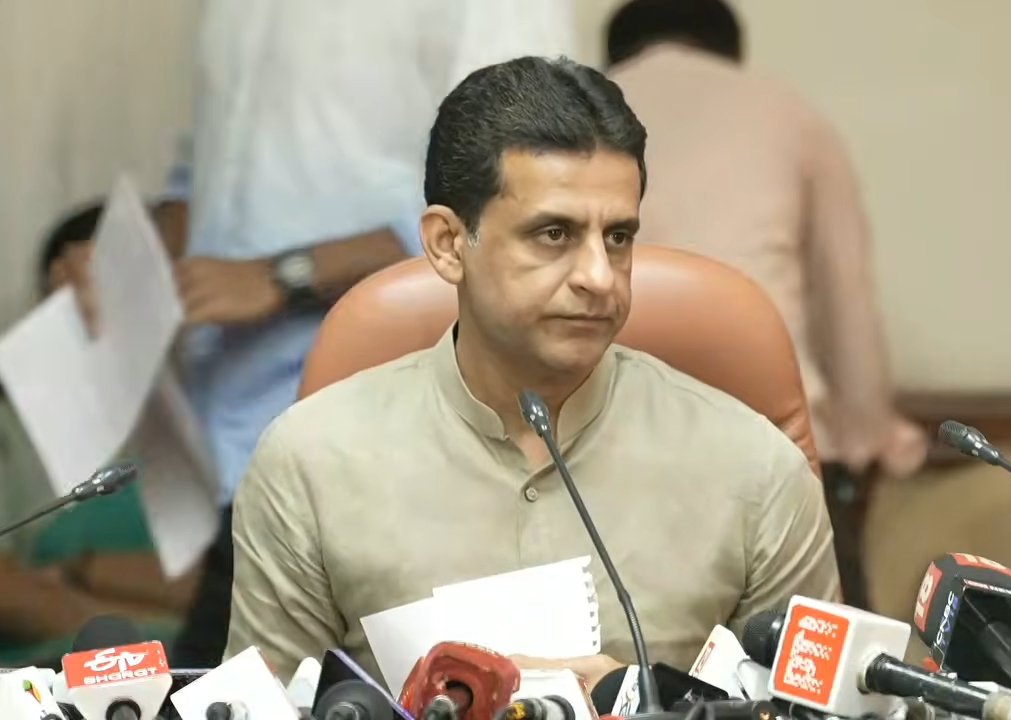
Karnataka Food, Civil Supplies, Consumer Affairs and Legal Metrology Minister Rizwan Arshad. Image: Video screenshot
Bengaluru: The Karnataka government has reviewed the joint statement issued by IOCL, BPCL and HPCL on the state’s E20 fuel test results, and said it stands by its test results and the position it has taken on that basis. The oil marketing companies’ (OMCs) statement contains lengthy technical explanations but does not answer the most important question: how much ethanol is actually in the petrol being sold at our petrol bunks?
Every voice that raised concerns about E20 fuel has been made to retreat, the government said. On July 28, 2026, the Society of Indian Automobile Manufacturers (SIAM) wrote to the Union Petroleum Ministry about the chloride and sulphur content in E20 fuel and the damage it causes to vehicle components. Under pressure from the Centre, that letter was withdrawn within a week.
ACKO insurance told a customer that “engine damage caused by incorrect fuel use is not covered”. Hyundai, Toyota and other vehicle makers have stated in their owner’s manuals that using any fuel other than E10 voids the vehicle warranty.
In every instance, the related statements were softened or withdrawn. The report prepared by the Automotive Research Association of India (ARAI) has still not been made public.
The Attorney General of India had told the Supreme Court that E20 fuel is still at an experimental stage. A clarification was later issued from his office.
All of this reveals a pattern, the government said: when the policy is questioned, the voice is suppressed. Industry bodies and companies may bow to pressure and retreat. The Karnataka government, however, will not retreat on this matter.
Led by Food, Civil Supplies, Consumer Affairs and Legal Metrology Minister Rizwan Arshad, the Karnataka government responds to each argument made by the oil marketing companies as follows.
1. Sampling
OMCs’ argument: Fuel samples were not collected as per the Motor Spirit and High Speed Diesel Order, 2005.
Karnataka government’s response:
The OMCs’ claim that sampling was not done lawfully is completely false.
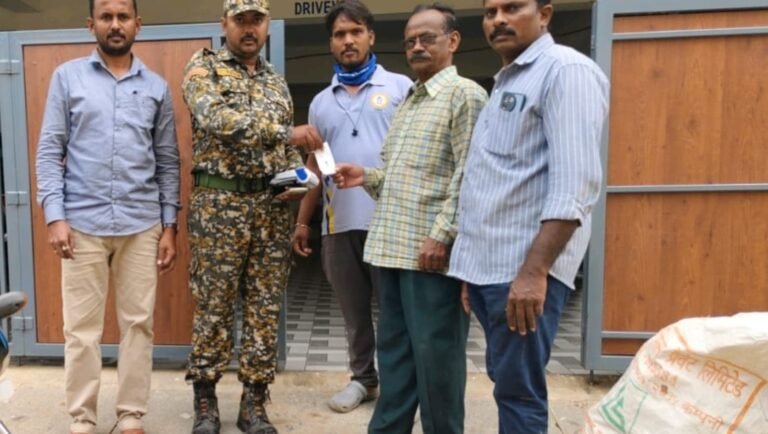
Every sample was collected by officers authorised under Clause 7 of the Motor Spirit and High Speed Diesel (Regulation of Supply, Distribution and Prevention of Malpractices) Order, 2005.
As required by Clause 8(3) of the Order, the label of every sample was jointly signed by the authorised officers and the dealer concerned or their representatives.
The fuel density was recorded at the time of sampling, and the prescribed proforma was filled in on the spot.
With the sole aim of protecting consumers’ interests, the Karnataka government has followed every provision of the Order in letter and in spirit.
2. Testing Methodology and Laboratories
OMCs’ argument: The prescribed technical procedures were not followed, and the laboratories specified in the Order were not used for testing.
Karnataka government’s response:
The 63 samples collected initially were first given to the in-house laboratories of IOCL, BPCL and HPCL for testing. None of their test reports stated the ethanol percentage.
The IS 17021:2018 standard, cited by the OMCs themselves, clearly specifies the method to test ethanol content. Yet not a single OMC test report stated the ethanol percentage.
The failure of the OMCs’ laboratories to provide the required test result itself raised doubts. On that count, the reliability of the tests conducted by the Karnataka government cannot be questioned on any ground.
To protect consumers’ interests, the samples were then sent to NABL-accredited and ISO-certified laboratories for testing.
What is NABL?
The National Accreditation Board for Testing and Calibration Laboratories (NABL) is a constituent board of the Quality Council of India (QCI).
QCI was set up as the national accreditation body in 1996 on a decision of the Union Cabinet.
It is an independent and autonomous body backed by the Government of India and Indian industry (ASSOCHAM, CII and FICCI). Its nodal department is the Department for Promotion of Industry and Internal Trade (DPIIT) under the Union Ministry of Commerce and Industry.
Questioning the test results of NABL-accredited laboratories therefore amounts to questioning the credibility of laboratories approved under the Government of India’s own accreditation system.
3. Quality Monitoring
OMCs’ argument: Tests under their own quality monitoring system confirmed that the fuel conforms to the prescribed quality standards.
Karnataka government’s response:
Testing 56 samples in their own laboratories indicates, at best, only that the OMCs have monitored their own quality themselves.
Whether the fuel conforms to the prescribed quality standards has to be confirmed through an independent third party.
When the Karnataka government conducted such a test following all prescribed procedures, it was exposed that the OMCs’ quality monitoring was being run to suit their own convenience.
The Karnataka government will not get entangled in technical explanations. In the interest of the people of Karnataka, it will always hold the OMCs accountable.
4. Density Readings and Quality Compliance
OMCs’ argument: The density readings in the test certificates are suspicious.
Karnataka government’s response:
The Karnataka government’s position on this is clear.
Under the Motor Spirit and High Speed Diesel (Regulation of Supply, Distribution and Prevention of Malpractices) Order, 2005, the density of petrol is recorded in the prescribed proforma at the time each sample is collected.
The proforma has been signed by the authorised officers concerned. The density values in the laboratories’ test results are equal or close to the density values recorded and signed at the time of sampling.
The OMCs themselves have said in their statement that ethanol blending is a “controlled and automated process” carried out at their refineries and depots.
So the ethanol blend in every litre of petrol is determined at the OMCs’ six terminals serving Karnataka, not at petrol bunks.
Petrol bunk dealers only sell fuel supplied by tanker. They have no role in determining the ethanol content of the fuel.
Detection of ethanol above the prescribed level therefore points to a failure at the original stage of fuel blending. The responsibility lies with the oil marketing companies.
By conducting this testing exercise and exposing the lapses in the OMCs’ system, the Karnataka government has created a climate of caution against such lapses recurring across the country.
For oil companies to test their own fuel in their own laboratories and declare that they have complied with quality standards is like the accused acting as the judge.
This is a clear conflict of interest. It is unreasonable to expect consumers to trust such a system.
The Karnataka government therefore demands that the fuel testing system be taken out of the OMCs’ control and brought under an independent and transparent system accountable to the public.
Next steps
The minister will soon convene a meeting of all oil marketing companies to discuss the matter and decide the steps needed to protect consumers’ interests.
The Karnataka government will make every necessary effort to ensure consumers get the prescribed quality and quantity of the fuel they pay for.
Protecting consumers’ interests and providing them fair service is the Karnataka government’s top priority.
Read more related stories:
- Who Is Misleading on E20 Petrol? IndianOil Says 56 Karnataka Samples Met Norms; State Found Up to 31.2% Ethanol
- Ethanol in Petrol: CM Shivakumar Says Centre Cannot Shirk Responsibility; 67 Samples Tested Across Karnataka
- Pralhad Joshi Defends 20% Ethanol Blending, Calls Congress Opposition to E20 ‘Anti-Farmer’
- Karnataka Petrol Tests Find Up to 31.2% Ethanol as State Seeks Action on Over-Blending
About the Author