Tejasvi Surya Calls Jan Vishwas Bill India’s Biggest Decriminalisation Reform, Says It Will Boost Ease of Doing Business
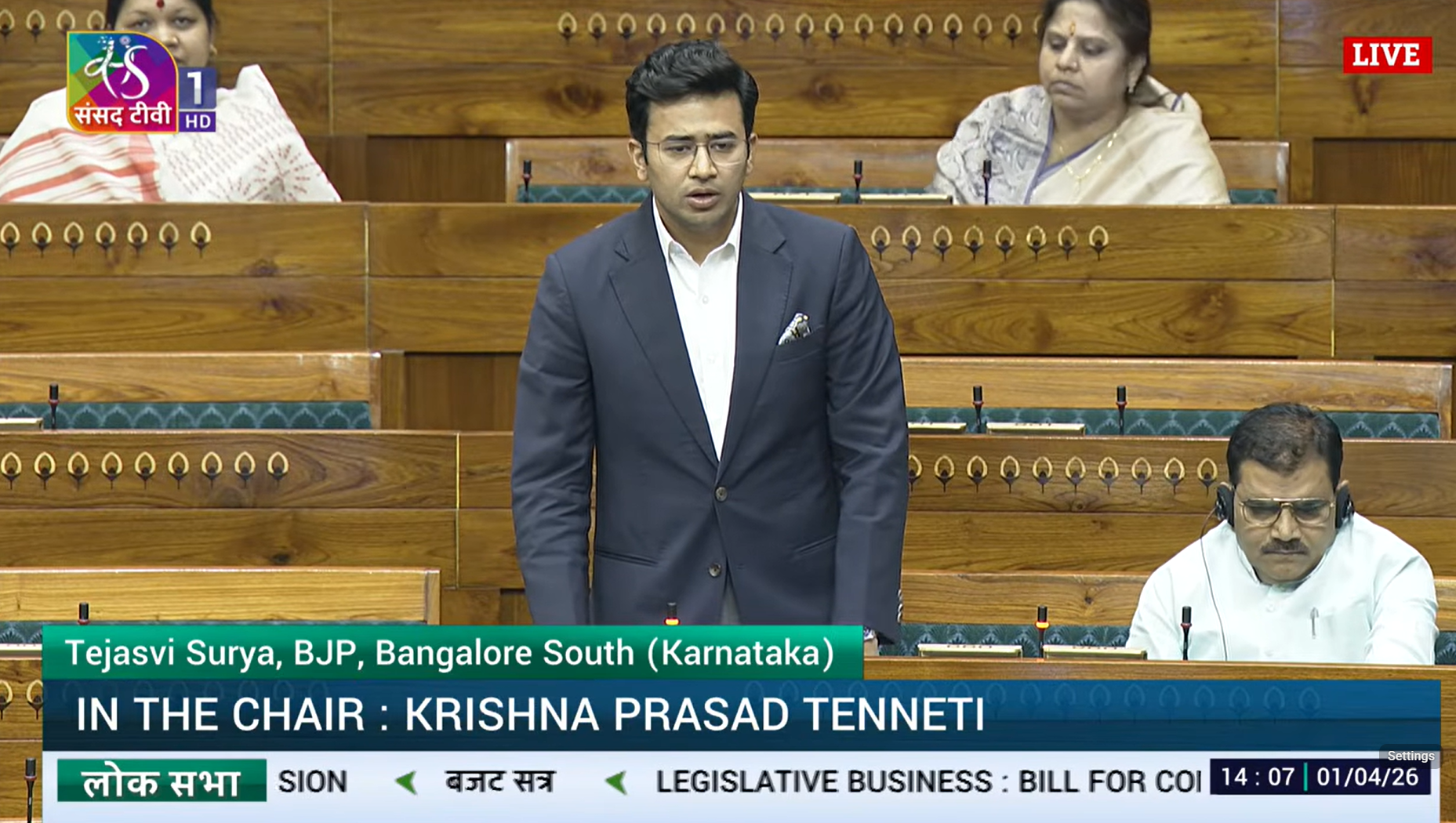
New Delhi/Bengaluru: Bengaluru South MP Tejasvi Surya on Tuesday hailed the Jan Vishwas (Amendment of Provisions) Bill, 2026, as the largest decriminalisation reform in India’s history, stating that it marks a major shift in the country’s governance philosophy from “suspicion to trust.”
Speaking during the Lok Sabha debate, Surya said the legislation amends 784 provisions across 79 Central Acts administered by 23 ministries. Of these, 717 provisions have been decriminalised to improve ease of doing business, while 67 provisions have been amended to enhance ease of living.
Surya, who chaired the Select Committee that reviewed the Bill, noted that the reform removes criminal provisions for over 1,000 minor offences, significantly reducing regulatory burden on businesses, entrepreneurs, and citizens.
Calling the Bill transformational, Surya said the reform reflects a deeper philosophical shift in governance. He congratulated Prime Minister Narendra Modi and Union Minister Piyush Goyal, stating that the initiative moves India from a system of “Avishwas (distrust) to Vishwas (trust)” and from a regulatory state to a facilitative one.
He emphasised that the Select Committee expanded the scope of the Bill by reviewing outdated provisions across multiple ministries and recommending wider decriminalisation. “The objective was to eliminate archaic laws and free India’s entrepreneurial spirit from unnecessary criminal liabilities,” he said.
Surya pointed out that several colonial-era laws had criminalised even minor procedural lapses, creating fear and compliance burdens for small businesses, farmers, fishermen, and innovators. “For decades, even minor errors could lead to imprisonment. This discouraged enterprise and slowed economic growth. The Jan Vishwas Bill corrects this legacy,” he added.
Taking a sharp dig at previous Congress-led governments, Surya criticised the earlier “license-permit-quota raj,” arguing that excessive regulation had crippled entrepreneurship and institutionalised a culture of fear. He contrasted this with the current government’s approach, which treats wealth creators as partners in nation-building rather than viewing profit with suspicion.
Highlighting broader reforms undertaken over the past decade, Surya said the Bill is part of a larger economic transformation that includes GST, Insolvency and Bankruptcy Code (IBC), labour law reforms, and compliance reduction measures.
He also underscored the importance of the reform in the context of India’s growing workforce. “With over one crore young Indians entering the job market every year, job creation is critical. This can only happen when entrepreneurs are empowered, not burdened by fear of prosecution,” he said.
The Bill also introduces key changes in Delhi’s property tax framework by bringing the existing dual system under a unified ‘One City, One Tax’ model. Additionally, it provides relief to road accident victims’ families by enabling ex gratia compensation in cases of death or serious injury, alongside insurance payouts.
Describing the legislation as a cornerstone for long-term growth, Surya said the Jan Vishwas Bill will have a catalytic impact on India’s economy over the next two decades. “This is a decisive step towards trust-based governance and a key pillar in building a Viksit Bharat,” he said.
About the Author