Siddaramaiah Backs 75% Reservation for Dalits, OBCs and Minorities, Says Electoral Politics Exit Won’t End Social Justice Fight
Bengaluru: Former Chief Minister Siddaramaiah has called for at least 75% reservation for Dalits, backward classes and minorities and representation based on caste and population, while declaring that his decision to withdraw from electoral politics would not end his fight for social justice, equal opportunity and the elimination of caste-based inequality.
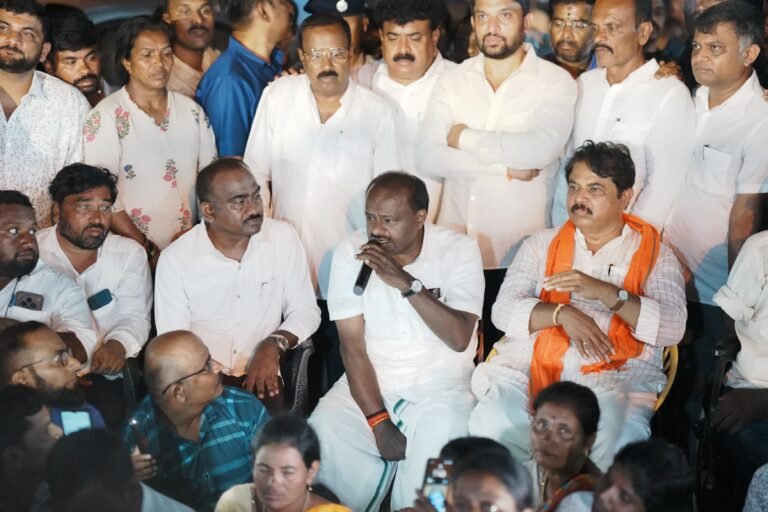
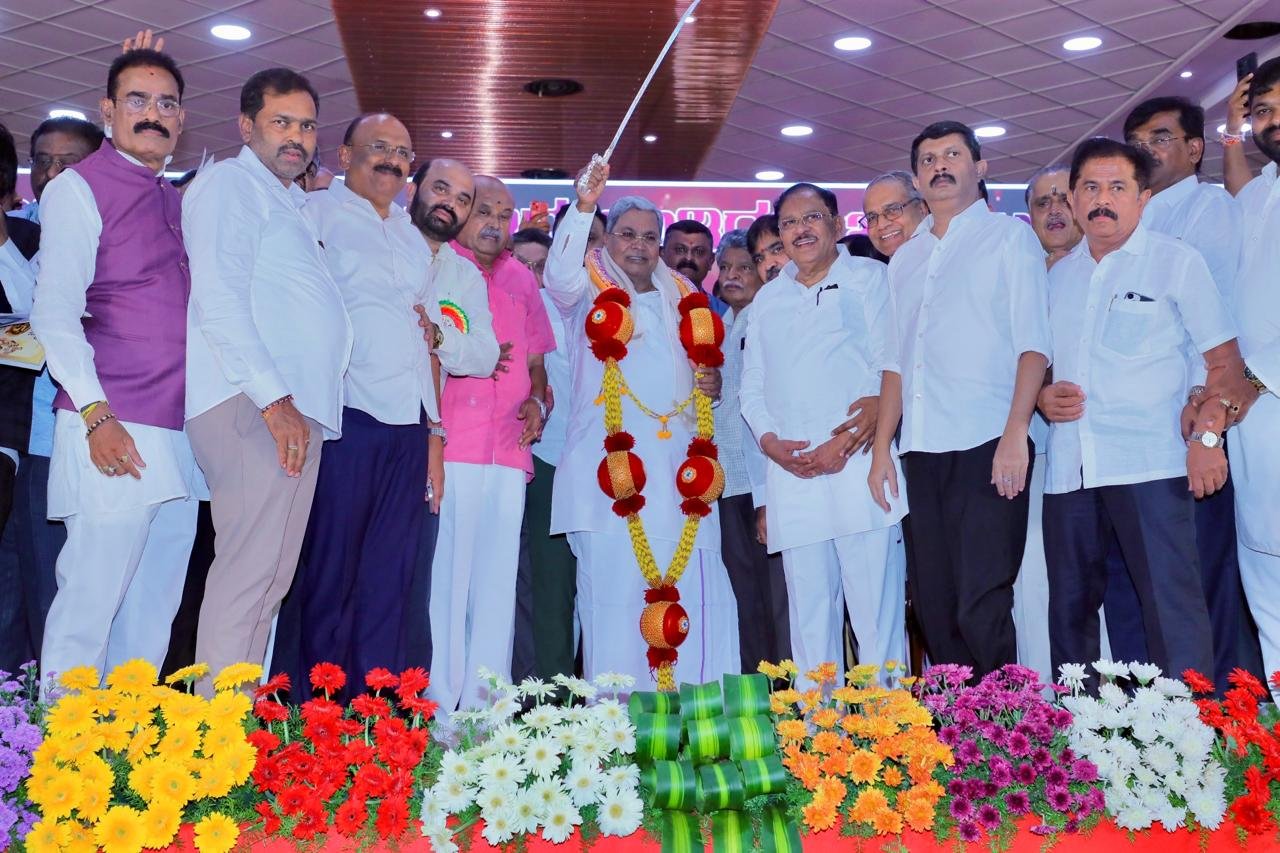
Speaking after being felicitated at the silver jubilee of the Karnataka State Federation of Backward Castes, which also organised a backward castes awareness convention, Siddaramaiah said he had no hesitation in identifying himself as a member of a backward caste and described his political journey as a continuing struggle against inequality.
He said the federation had completed 25 years and recalled that it was started in 2001 by Srinivas, who belonged to the Besta community. Ramachandrappa is now its president, he said.
Siddaramaiah said he had accepted the federation’s invitation but learnt only after seeing the invitation card that a felicitation had also been planned for him. He said such a felicitation was unnecessary and told the gathering that those who had supported and blessed him for four to five decades deserved appreciation instead.
“I am one among you,” he said, assuring the gathering that he would continue the struggle with backward and marginalised communities.
Siddaramaiah said he had withdrawn only from electoral politics, citing his age, the rising cost of elections and what he described as deterioration in the electoral system. He argued that contesting and winning increasingly required large amounts of money and could compel political compromises.
He said he would nevertheless remain with disadvantaged communities until they secured justice and equal opportunities and until caste-based inequality disappeared from society.
Reflecting on the caste system, Siddaramaiah referred to the traditional four-fold varna order of Brahmin, Kshatriya, Vaishya and Shudra and identified himself as a Shudra. He said Lingayats, Vokkaligas and other communities also fell within the Shudra category in that framework.
He argued that while the first three varnas historically had access to opportunities, Shudras were denied education and other opportunities, contributing to inequality. Had equal opportunities existed for everyone, he said, such inequalities would not have developed.
Siddaramaiah said he had opposed inequality since his student days. He recalled studying under difficult circumstances, obtaining a law degree and later entering politics, where he said his objective had been to secure social justice for backward castes, oppressed communities and others denied opportunities and to oppose exploitation.
He invoked B.R. Ambedkar and the Constitution, saying that despite 79 years of Independence and 76 years since the Constitution came into force, equal opportunity and an egalitarian society had still not been achieved. The struggle should continue as long as the caste system remained, he told the gathering.
Siddaramaiah also criticised the historical social order associated with Manusmriti, describing it as an unwritten constitution that divided castes and created a graded hierarchy. He said inequality persisted despite the passage of time but expressed confidence that India would one day become an egalitarian society.
A major part of his address focused on caste data and the socio-economic and educational survey. Siddaramaiah said that when he was Deputy Chief Minister in 1996, he had already envisioned the need for an educational and economic survey because Karnataka lacked reliable caste-wise data on the social, educational and economic condition of its people.
He said the absence of such data had contributed to unfavourable court outcomes in several cases. After becoming Chief Minister in 2013, he said, he directed that a survey be undertaken when Kantharaju headed the Backward Classes Commission.
Siddaramaiah said his government subsequently lost the election and that the report was submitted when H.D. Kumaraswamy was Chief Minister, but was not accepted at the time.
He said the Kantharaju report was later rejected. When he became Chief Minister again in 2023, Madhusudan Naik was chairman of the Backward Classes Commission and had said a report would be submitted. Siddaramaiah said he received it around the time he stepped down as Chief Minister.
He said a court order currently prevented the report from being made public and that he had asked federation president Ramachandrappa to seek removal of the restriction.
Siddaramaiah urged the federation and other groups to work towards getting the court stay vacated, saying he believed those in government, including the Chief Minister, would listen to the demand. He said the report should be implemented and social justice ensured.
He then called for at least 75% reservation for Dalits, backward classes and minorities, arguing that communities should receive reservation in proportion to their caste population. An egalitarian society could be built only when reservation and opportunities were distributed fairly, he said.
Siddaramaiah extended the argument to political representation, saying reservation in the Lok Sabha and Legislative Assembly based on caste and population was necessary to achieve political equality.
He called for unity among backward castes, Dalits and minorities, saying the struggle for an equal share and equal life should not be confined to backward communities alone.
According to Siddaramaiah, there are about 752 castes in Categories 1 and 2A and 806 backward castes in total. He said the federation currently represented communities from Categories 1 and 2A and urged that Categories 3A and 3B also be brought together in the future.
Reviewing measures taken during his governments, Siddaramaiah recalled waiving loans taken by people from backward communities through the Devaraj Urs Corporation after he became Chief Minister. He also cited the Anna Bhagya programme, under which he said seven kg of rice was provided free, and measures aimed at expanding educational opportunities.
He referred to Devaraj Urs and the Havanur Commission and said reservation was introduced in 1977, when a separate Backward Classes Department was also created and reservation in education and employment was expanded.
Siddaramaiah recalled that there was no reservation when he was studying. He remarked that had reservation existed then, he might have pursued an MSc and become a teacher, whereas his path ultimately took him into politics and to the posts of Deputy Chief Minister and Chief Minister.
He said the Backward Classes Department had a budget of only ₹5 crore when it began, while the allocation stood at ₹4,460 crore when he presented the 2026-27 Budget as Chief Minister.
Siddaramaiah said there were now 2,712 hostels accommodating 2.58 lakh students from backward communities. He also recalled starting Morarji Desai residential schools when he was Deputy Chief Minister, saying he had envisioned one residential school in every hobli after Dalit organisations demanded residential schools.
He alleged that only five or six hostels were sanctioned during the BJP period up to 2019-20, while his government opened 542 hostels between 2013 and 2018 and expanded residential schools. He said there were now around 543 residential schools for Dalit students and attributed the expansion to measures undertaken during his tenure.
Siddaramaiah also recalled introducing the Vidyasiri scheme, linking it to his own experience of renting a room, cooking for himself and studying. He said thousands of students who could not obtain hostel seats risked discontinuing their education, prompting the scheme to provide ₹1,500 a month to each student, amounting to ₹15,000 a year.
He said his governments had also introduced reservation for backward castes in government contract works up to ₹1 crore and filled backlog vacancies in 2015.
Siddaramaiah linked the guarantee schemes to the objective of reducing inequality. He cited the Shakti scheme providing women with free travel across the state, the Gruha Lakshmi scheme providing ₹2,000 to women heads of households, Yuva Nidhi for unemployed youth, and the Anna Bhagya and Ksheera Bhagya schemes.
He said these measures had been possible because of the strength and support given by the people and reiterated that the broader struggle for economic, social and political equality should continue until equality was achieved.
Siddaramaiah assured the gathering that his support for that struggle would continue even though he had stepped away from electoral politics.
About the Author