Priyank Kharge Tells Karnataka Police: Crack Down on Drugs, Avoid Links With Rowdies; No Protection for Unlawful Conduct
Bengaluru: Home, Information Technology and Biotechnology and e-Governance Minister Priyank Kharge has told police personnel that the government will stand behind every officer who works honestly, responsibly and within the law, but warned that no protection will be extended to those who act illegally.
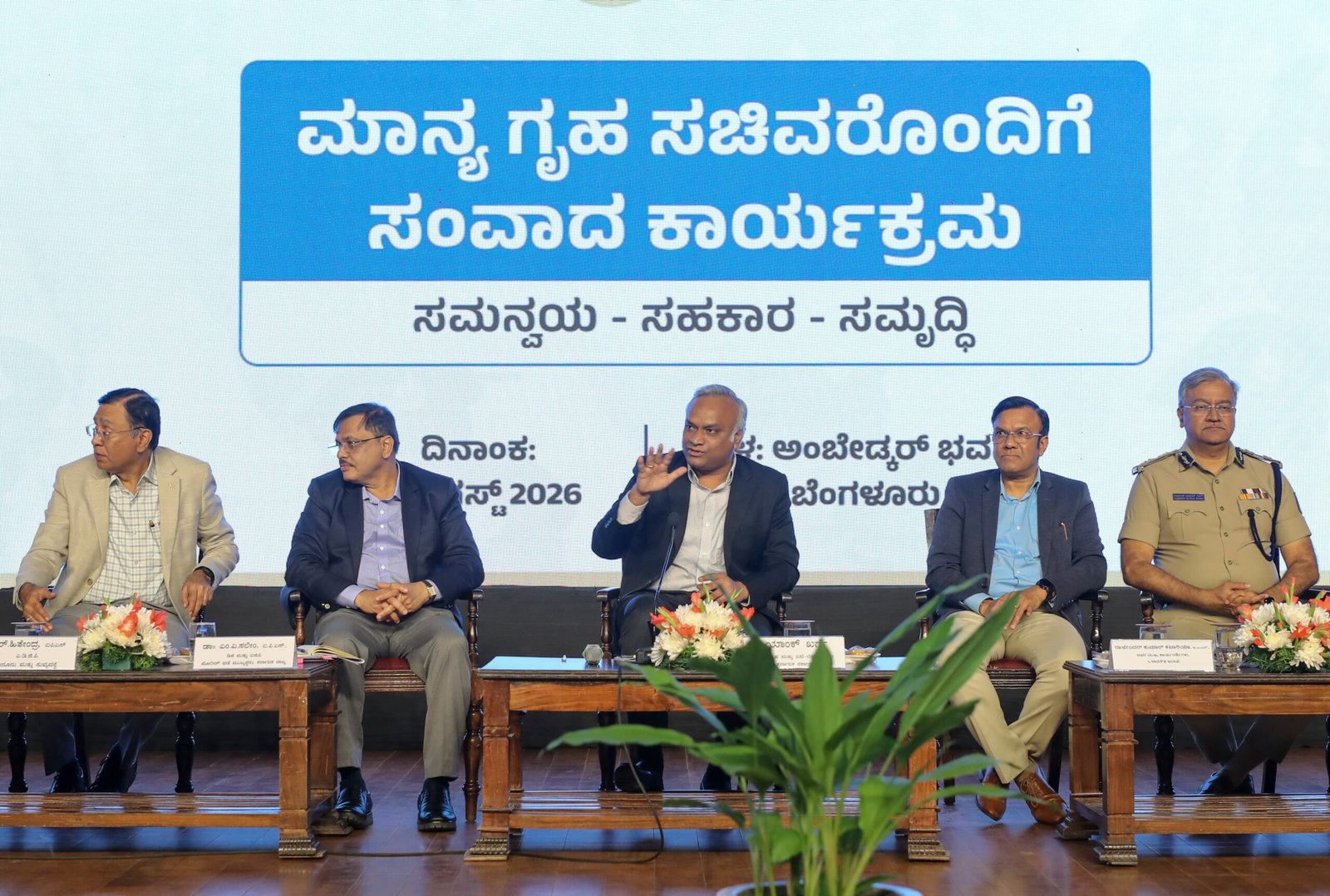
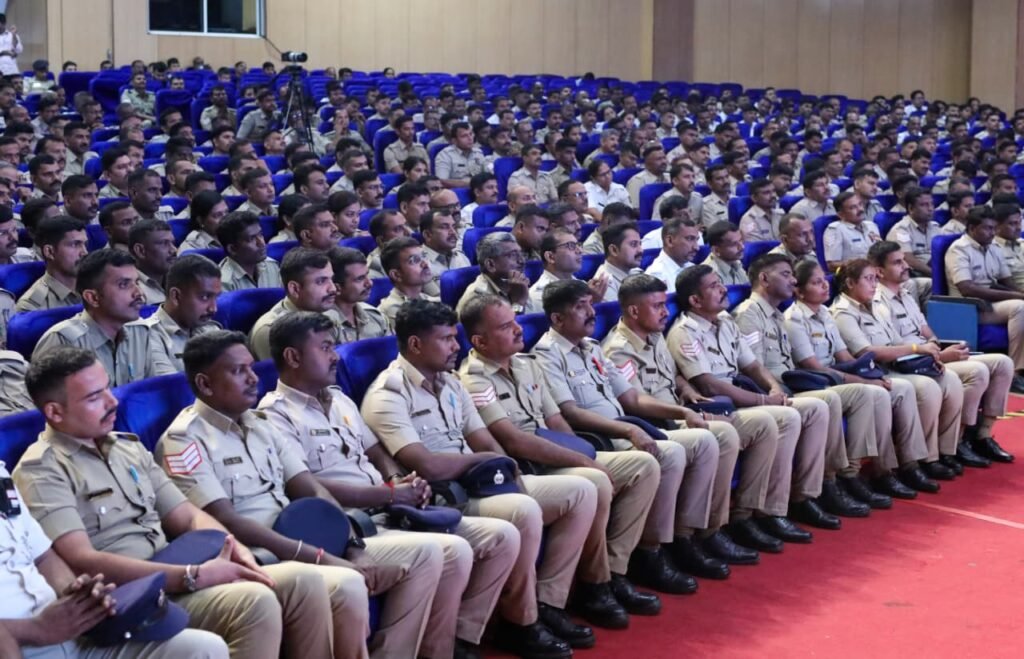
Addressing more than 800 police constables, head constables, assistant sub-inspectors and sub-inspectors from different districts at a ‘Dialogue with the Home Minister’ programme at Dr B.R. Ambedkar Auditorium in Bengaluru, Kharge discussed policing challenges as well as issues concerning personnel, including health and mental stress, transfers, promotions, families and skill development for their children.
Kharge said the responsibility of the police department was not limited to maintaining law and order. The force also had a significant role in Karnataka’s social and economic development and in maintaining the state’s reputation as a safe investment destination, he said.
Calling for the ‘Beda Bro’ campaign against synthetic drugs, ganja and other narcotics to be implemented in mission mode, Kharge said local police generally know who consumes and sells drugs in their jurisdiction and which medical shops or pharmacies sell medicines without a doctor’s prescription.
He said it was not appropriate for such information to emerge only when specific targets were assigned. The fight against narcotics concerned the future of children and should not be treated as an exercise to be undertaken only when targets were set, he said.
Kharge said drug consumption was also contributing to crime and stressed that the problem was not confined to Bengaluru, Mangaluru or Belagavi. Ganja cultivation had also been detected in rural areas, including Chittapur and Chincholi, he said, adding that situations in which police from neighbouring states conduct raids despite local police having information should not arise.
The minister also called for a tough approach towards rowdy activities and warned police personnel against developing any association with rowdies. Police generally know who is involved in rowdy activities within their station limits, he said, while expressing concern that there were instances in which police themselves could end up encouraging such individuals.
Kharge said personnel must completely stop developing relationships with rowdies, sharing information with them, attending their birthday celebrations, posing for photographs with them or encouraging them in any manner.
“Rowdies should fear the police; the public should not fear the police. Only those who do wrong should fear the police,” Kharge said. He added that children and young people were being adversely affected by rowdies and that police should not enter into any form of accommodation with them. If police personnel kept their own hands clean, rowdies would fear them, he said.
On cybercrime, Kharge said increased use of technology was leading to a rise in such offences even in rural areas. He cited cyber fraud, digital arrest scams, financial crimes, cyberbullying, eve-teasing and sextortion among offences increasingly being committed through online platforms.
He instructed police to respond sensitively when women complain that their private photographs or videos are being misused. Consent to take a photograph or video did not amount to consent for making it public, and the law was clear on the issue, he said.
Kharge said police should act immediately whenever a woman or her parents approach them with a complaint or representation. “Nothing is more important than a woman’s dignity,” he said.
The minister also acknowledged the physical and psychological pressure faced by police personnel, who work during festivals, deal with traffic-related pressures and respond to complaints raised through social media, among other responsibilities.
He said a separate programme would be formulated to give priority to mental health along with physical health and that the government was committed to taking measures necessary to protect the health of police personnel.
Kharge said the government would also examine issues concerning police families, transfers, promotions and service evaluation and seek the best possible solutions. In future, promotions would not be considered solely on the basis of length of service, he said, adding that performance and the ability to effectively implement government priorities would also be given importance.
The government would give special attention to the education and employment prospects of police personnel’s children, Kharge said. He stressed the importance of industry-relevant skills, language proficiency and communication skills rather than education aimed only at obtaining certificates.
A system would be developed to identify children’s interests and abilities and provide them with appropriate skill training, he said. While the government could not guarantee employment, it could guarantee efforts to provide skills required for employment, he added.
Kharge said skill development, communication training and language laboratories were being planned through the Information Technology and Biotechnology Department’s ‘Nipuna Karnataka’ programme.
The minister said a people-friendly police station did not simply mean constructing a new building. The conduct of personnel inside the station and their relationship with the public defined whether policing was genuinely people-friendly, he said.
A person approaching a police station may be facing a problem for the first time, while the same issue may be routine work for police personnel, Kharge said. Officers should understand that difference and treat members of the public humanely and respectfully.
People should not hesitate to approach the police, he said. Police personnel did not necessarily have to behave like friends, but they must treat people with humanity and respect.
“You are not merely the Karnataka Police; you are the face of Karnataka,” Kharge told the personnel.
He said the Home Department had a major role in Karnataka’s social and economic progress. When investors from India and abroad were invited to the state, Karnataka needed to project not only its human resources, educational institutions and technological capabilities but also confidence that it was a safe state, he said.
Investors did not merely look for a safe destination for their capital but also a place where their families and employees could live safely, Kharge said, adding that the police department played a decisive role in creating that confidence.
Police personnel from different districts participated in the interaction, and around 200 personnel shared their views and suggestions on issues including health, promotions, transfers, handcuffs and police medals, according to the minister.
Kharge said every issue raised by the personnel had been recorded and would be examined to determine who should be made responsible for addressing each matter and what action should be taken. Specific directions would be issued at the next stage, he said.
Reiterating his message on accountability, Kharge asked personnel to work honestly, lawfully and responsibly. As long as they worked according to law, the Home Minister and the government would stand with them, he said, but warned that there would be no protection if they acted against the law.
Just as transparency and accountability were expected from the government, the government expected the same standards from police personnel, he said.
Kharge said departmental problems could be resolved gradually if everyone worked together. Ministers and officers would come and go, and police personnel would also retire one day, but during their period of service they should work with the objective of development, better relationships and public service, he said.
About the Author