Pralhad Joshi Accuses Rahul Gandhi of Using SIR Protests to Shift Blame for Congress Defeats
Bengaluru: Union Minister Pralhad Joshi has accused Rahul Gandhi of using protests over the Special Intensive Revision (SIR) of electoral rolls to deflect responsibility for Congress’s electoral defeats, while questioning what he described as the party’s differing positions on the exercise depending on election outcomes.
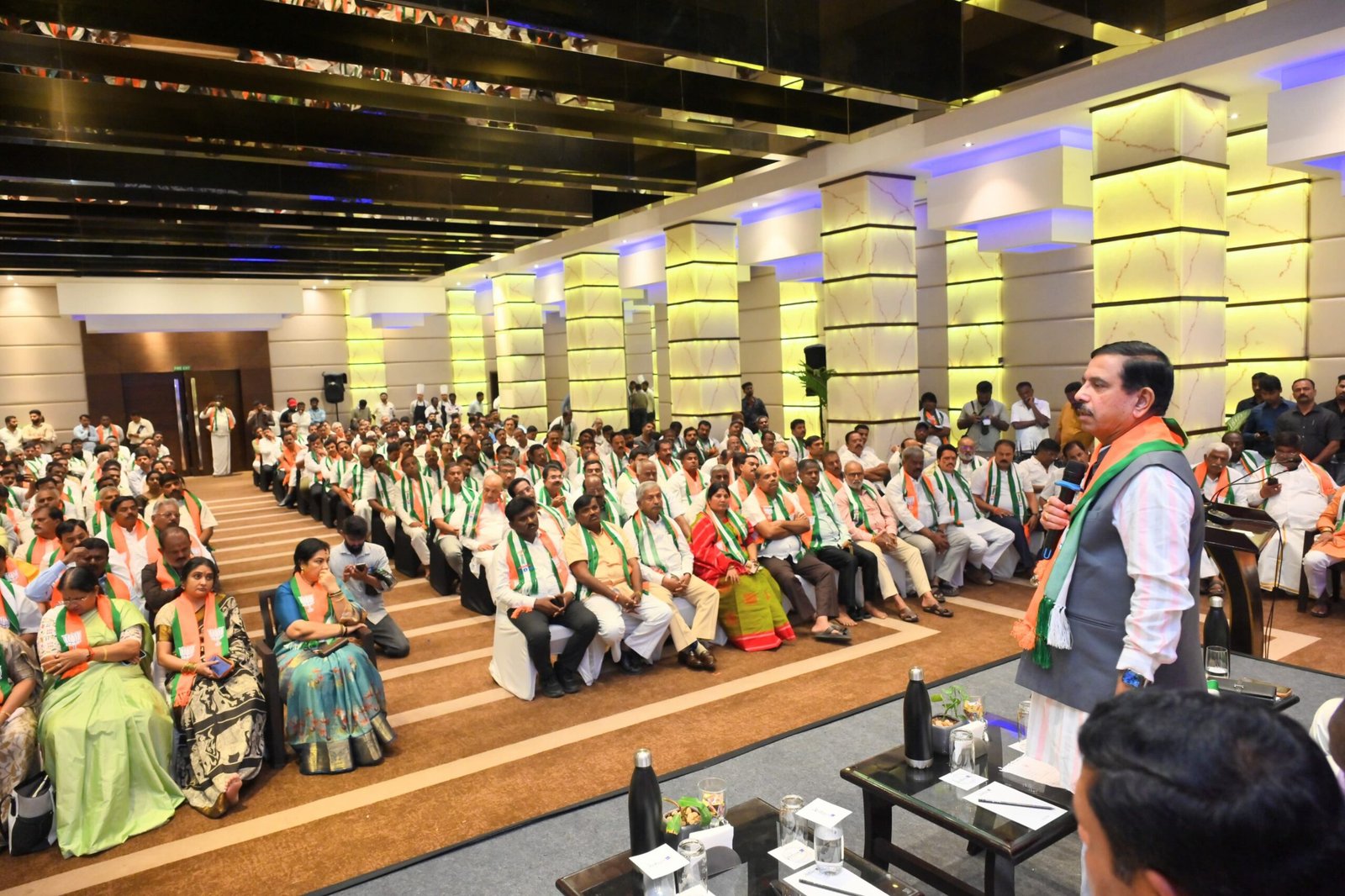
Speaking to reporters after a BJP–JD(S) meeting in Bengaluru, Joshi alleged that Gandhi was targeting the Election Commission to demonstrate that he was not responsible for the Congress’s losses.
Joshi also criticised Gandhi’s leadership, claiming that it was being questioned within the Congress and was contributing to the party’s difficulties. He alleged that the party was using what he described as minor issues arising after SIR to revive its political fortunes.
The minister further accused the Congress of seeking to create disorder in the country and alleged that Gandhi was blaming the Election Commission rather than accepting responsibility for electoral setbacks.
Kerala Result Cited to Question Congress’s Position
Joshi cited what he described as a Congress victory in Kerala following SIR to challenge the party’s criticism of the electoral-roll revision.
He claimed that the Congress accepted SIR when it won an election but questioned the exercise when it lost.
According to Joshi, Congress leaders in Kerala had supported SIR. He asked whether Gandhi would remove those leaders from the party for backing the exercise.
The Kerala election claim formed part of Joshi’s argument against the Congress’s position; he did not identify a particular election or provide further details in the supplied statement.
Joshi Rejects Allegation of Unilateral Decisions
Responding to reports concerning the Election Commission’s handling of SIR, Joshi denied that the Commission had acted unilaterally.
He argued that there was no scope for unilateral action and cited Supreme Court directions in support of his position. The statement did not specify the court order or directions to which he was referring.
Joshi alleged that Gandhi was aware of the position but was nevertheless using the issue to organise protests and direct criticism at the Commission.
About the Author