Petrol Jumps to ₹106.17, Diesel to ₹94.10 in Karnataka After US-Iran War Shock; Massive ₹64 Per Litre Price Gap Triggers Revenue Leakage
Bengaluru: The impact of the escalating US-Iran conflict and the political-economic developments following the recently concluded five-state elections has begun hitting common citizens hard, with fuel prices witnessing a sharp increase across Karnataka.
The sudden hike in petrol and diesel prices has triggered concern among consumers and transport operators, with experts warning of a possible ripple effect on inflation and commodity prices in the coming days.
Sharp Fuel Price Increase in Karnataka
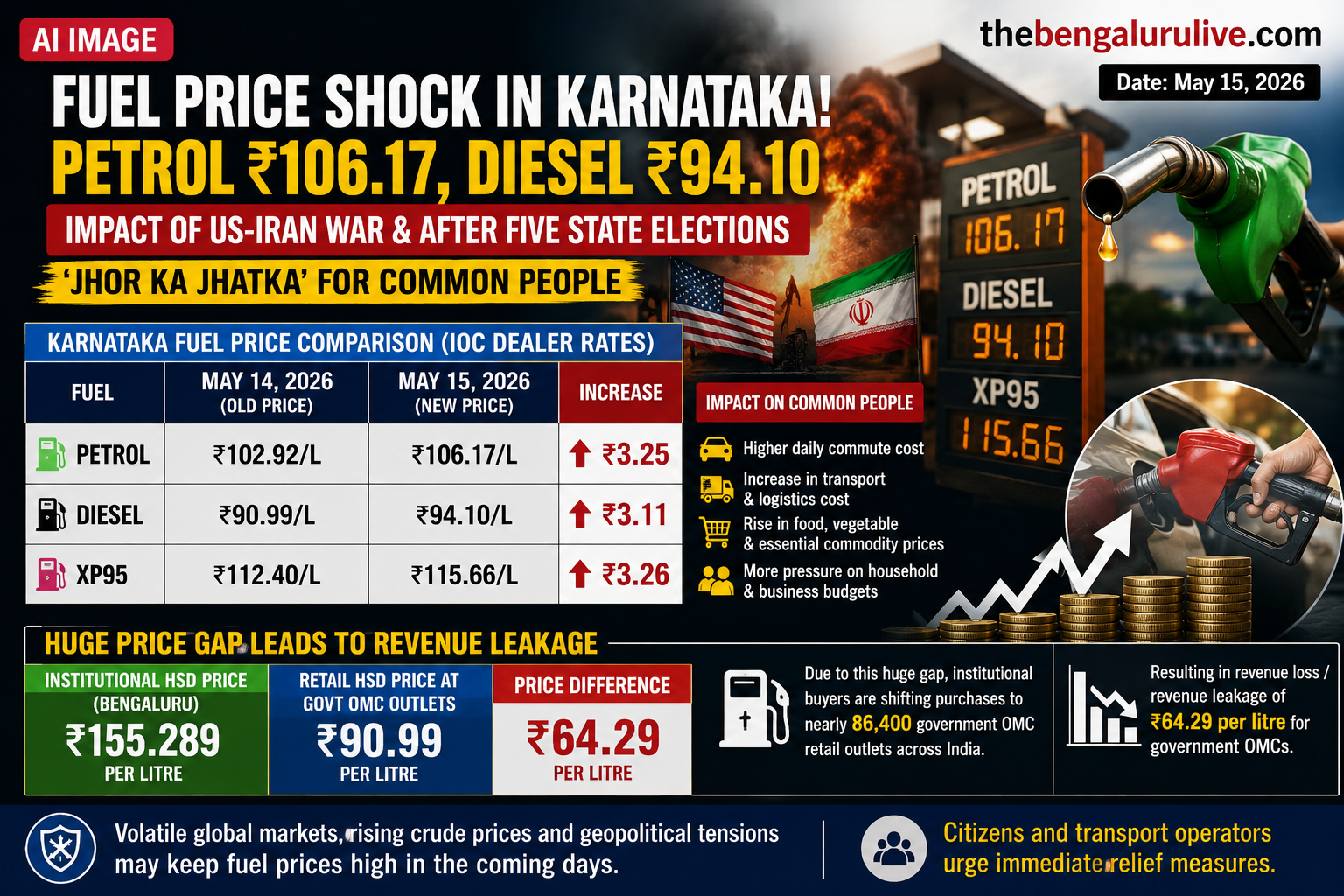
According to Indian Oil Corporation Limited (IOCL), revised fuel prices effective from 6:00 AM on May 15, 2026, show a significant increase compared to the previous day.
Fuel Price Comparison (Karnataka – IOC Dealer Rates)
| Fuel Type | May 14, 2026 | May 15, 2026 | Increase |
|---|---|---|---|
| Petrol | ₹102.92/L | ₹106.17/L | ₹3.25 |
| Diesel | ₹90.99/L | ₹94.10/L | ₹3.11 |
| XP95 Petrol | ₹112.40/L | ₹115.66/L | ₹3.26 |
The steep hike has come amid rising global crude oil concerns linked to geopolitical tensions in West Asia, especially the ongoing US-Iran situation.
“Jhor Ka Jhatka” for Common People
The increase is expected to directly impact:
- Daily commuters
- Goods transport costs
- Food and vegetable prices
- Public transport expenses
- Industrial logistics
Citizens and transport associations fear that continued volatility in international crude oil markets could push prices even higher in the coming weeks.
Massive Gap Between Institutional and Retail Diesel Prices
Industry sources also pointed out a significant pricing anomaly involving institutional diesel (HSD) supply.
According to official data:
- Institutional HSD price in Bengaluru: ₹155.289 per litre
- Regular retail HSD price at government OMC outlets: ₹90.99 per litre
This has created a staggering price difference of nearly ₹64.29 per litre.
Revenue Leakage Concerns
Because of this huge price gap, several institutional consumers are reportedly shifting diesel purchases from institutional supply channels to retail fuel stations operated by government Oil Marketing Companies (OMCs).
Officials stated that institutional buyers are increasingly sourcing diesel through the country’s nearly 86,400 government OMC retail outlets, instead of official institutional supply mechanisms.
As a result, authorities fear substantial revenue leakage and financial loss to government OMCs, since diesel meant for institutional channels is effectively being diverted to retail purchase systems at much lower prices.
Inflationary Pressure Likely
Economists believe the fresh fuel price increase could further intensify inflationary pressure across sectors including transportation, agriculture, logistics and essential commodities.
With geopolitical uncertainty continuing globally, fuel market volatility is expected to remain high in the near future.
About the Author