
Online Shopping Rules Tightened: E-Commerce Platforms Must Reveal 30-Day Lowest Price, Sponsored Listings and Dark Pattern Compliance From Jan 1
New Delhi/Bengaluru, September 10: Online shoppers will get greater visibility into discounts, sponsored search results and potentially deceptive digital practices from January 1, 2027, with the Centre amending India’s e-commerce rules to require platforms to disclose the lowest price offered during the previous 30 days when announcing a price reduction, clearly identify sponsored listings and conduct annual self-audits for dark patterns.
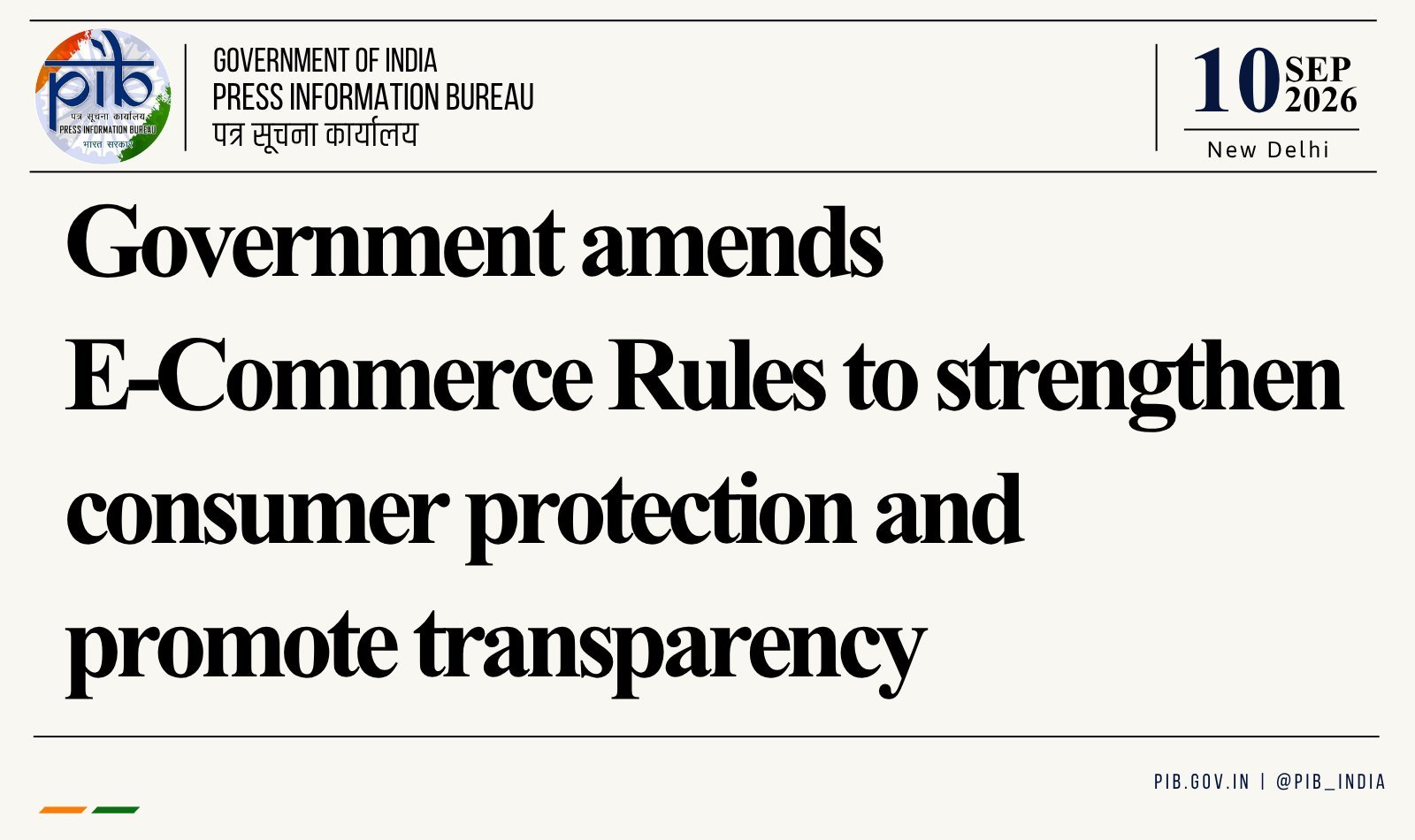
The Department of Consumer Affairs has notified the Consumer Protection (E-Commerce) (Amendment) Rules, 2026, amending the Consumer Protection (E-Commerce) Rules, 2020, with a series of requirements covering consumer grievances, search results, discounts, seller and product disclosures, consumer data, bundled fees and imported goods.
One of the most significant changes concerns online discounts. Whenever an e-commerce entity announces a price reduction, both the reduced price and the prior price must be displayed. Under the amended rules, the “prior price” will mean the lowest price at which the goods or services were offered during the 30 days immediately preceding the announcement of the reduction.
The provision is aimed at giving consumers a clearer reference point when evaluating advertised discounts rather than relying only on a displayed comparison price.
The amendments also address how products and services appear in online searches. E-commerce entities will not be permitted to manipulate search results in a manner that misleads users or adversely affects the relevance of results to a consumer’s search query.
Paid or sponsored listings will have to be identified through clear and prominent disclosures, making the commercial nature of such placements visible to consumers.
The government has also brought dark-pattern compliance directly into the e-commerce framework. E-commerce entities will be required to comply with the Guidelines for Prevention and Regulation of Dark Patterns, 2023, undertake a self-audit every year and prominently display a certificate showing compliance.
Every e-commerce entity will also be required to become a partner in the convergence process of the National Consumer Helpline, strengthening the link between online platforms and the national consumer grievance redressal mechanism.
The scale of consumer complaints from the sector was highlighted by the government while announcing the amendments. The National Consumer Helpline received 17,71,622 grievances during 2025, of which 5,11,196 — around 29 per cent — were related to the e-commerce sector.
The amended rules introduce an additional requirement in the handling of complaints. Every e-commerce entity must provide a complainant with a copy of the complaint as recorded by its grievance officer.
Marketplace e-commerce entities will also have to provide consumers with key seller and product information intended to help them make informed purchasing decisions. This includes best-before or use-before dates, return and refund information, warranty details and information relating to delivery and payment.
For imported goods, importer details and the country of origin will have to be disclosed.
The amendments also place restrictions on the use of consumer information. Marketplace e-commerce entities will not be allowed to use consumer information for specified purposes without the consumer’s express and affirmative consent.
Another provision targets bundled charges. Marketplace e-commerce entities will not be permitted to collect bundled fees for services unrelated to the e-commerce platform, subject to a specified exception for loyalty or membership programmes.
The Department of Consumer Affairs said the changes were designed to address emerging consumer concerns in the digital marketplace while also taking into account Ease of Doing Business and avoiding unnecessary regulatory burdens on e-commerce entities.
The Consumer Protection (E-Commerce) Rules, 2020 were framed under the Consumer Protection Act, 2019 to protect consumers against unfair trade practices in the e-commerce sector. The government said evolving business models, digital practices and consumer expectations had created the need to further strengthen the framework.
According to the department, the amendments are intended to create a more transparent, accountable and consumer-centric e-commerce ecosystem, while providing greater clarity to businesses about their responsibilities and supporting a level playing field in the digital marketplace.
The Consumer Protection (E-Commerce) (Amendment) Rules, 2026 will come into force on January 1, 2027.
About the Author