Even After Resigning, Could Siddaramaiah Become a Headache for DK Shivakumar and Rahul Gandhi?
New Delhi, May 29: As Karnataka prepares for a major leadership transition with D.K. Shivakumar set to take over as Chief Minister, political discussions within the Congress have shifted from the change of guard itself to a more complex question — could Siddaramaiah become a challenge for both the incoming Chief Minister and the Congress high command even after stepping down?
The question is being asked because Siddaramaiah has made it clear that he is not retiring from active politics. More importantly, he has reportedly declined suggestions to move to the Rajya Sabha and has instead chosen to remain in Karnataka politics, where he continues to command significant influence among legislators, party workers and key social groups.
Political observers point out that Siddaramaiah has historically been at his most influential not only while holding power but also when operating outside government. Whether as Leader of the Opposition or as the Congress party’s tallest mass leader in Karnataka, he has consistently remained a dominant force in state politics.
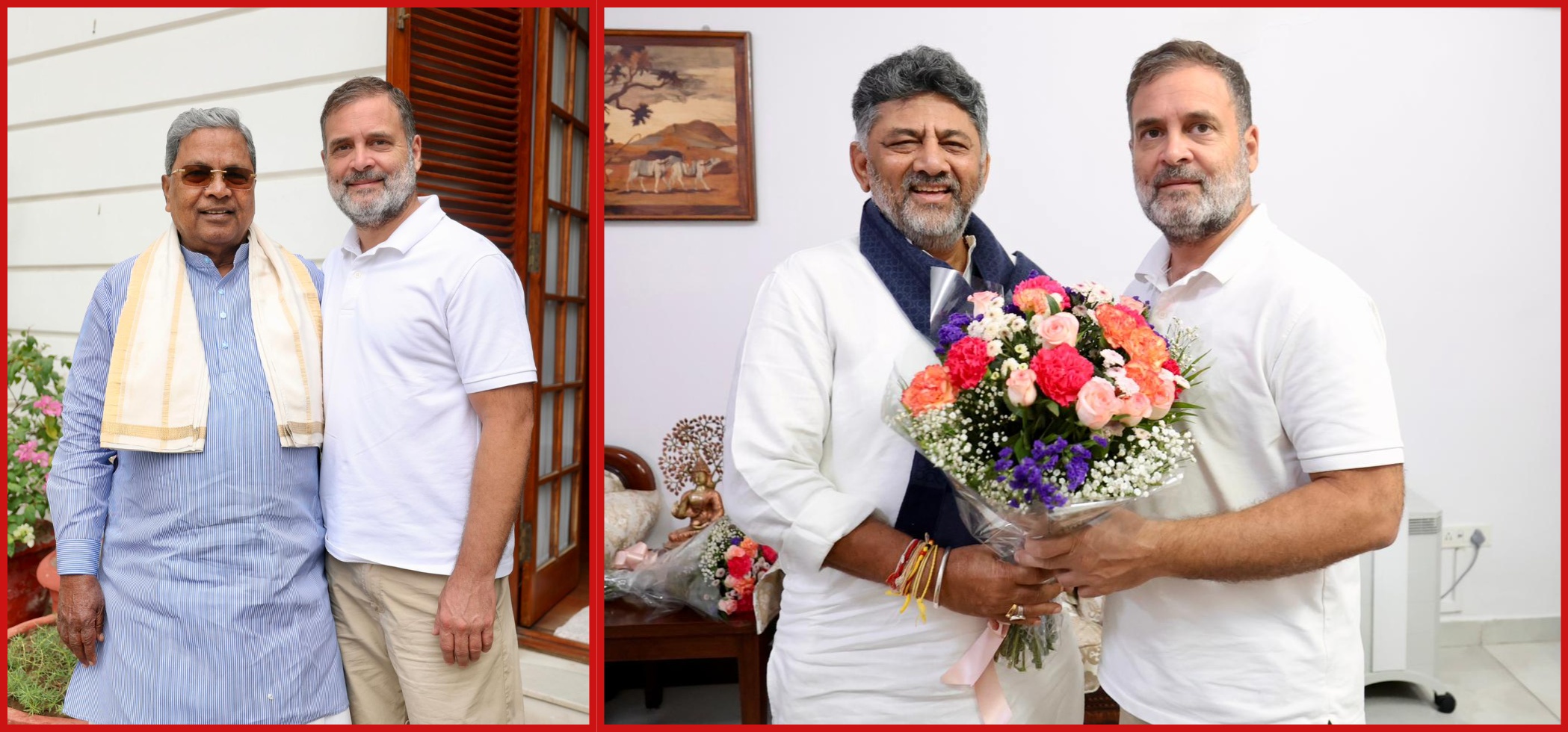
Just hours after resigning as Chief Minister, Siddaramaiah flew to Delhi and held a series of high-level meetings with Rahul Gandhi, Congress President Mallikarjun Kharge and senior party leaders. He was accompanied by his son and MLC Dr. Yathindra Siddaramaiah, signalling that discussions extended beyond the immediate leadership transition and into the future political roadmap of both Siddaramaiah and his camp within the Congress.
According to political observers, one of the most significant outcomes of these discussions is Siddaramaiah’s reported rejection of a Rajya Sabha berth. Congress leaders are understood to have explored the possibility of moving him to national politics, where he could emerge as one of the party’s prominent OBC faces. However, Siddaramaiah is said to have made it clear that he has no interest in shifting to Delhi and intends to remain actively involved in Karnataka politics.
The decision carries major political implications.
Unlike several former chief ministers who move to Parliament after stepping down, Siddaramaiah’s choice means that he will continue to operate directly from Karnataka, where he remains one of the Congress party’s most influential mass leaders.
Political analysts point out that Siddaramaiah’s strength lies not merely in his position but in the extensive social coalition he has built over the years through the AHINDA formula — a political strategy aimed at uniting minorities, backward classes and Dalits. This social coalition has played a crucial role in Congress victories and continues to form the backbone of the party’s support base in Karnataka.
Many Congress legislators are also believed to remain politically aligned with Siddaramaiah. While the exact numbers are a matter of debate, there is little disagreement that he continues to enjoy substantial influence within the legislature party.
This reality explains why D.K. Shivakumar has repeatedly gone out of his way in recent days to publicly praise Siddaramaiah and highlight their partnership.
On Friday, Shivakumar shared a detailed message on social media praising Siddaramaiah’s political journey and describing him as a towering leader. He also stressed the importance of working together for Karnataka’s future.
Political observers view these statements as an effort to reassure Siddaramaiah’s supporters that the outgoing Chief Minister will continue to play an important role in the party and government even after the formal transfer of power.
The Congress high command, meanwhile, faces the delicate task of balancing two powerful leaders with distinct political strengths.
Siddaramaiah remains the party’s strongest mass leader among OBCs and AHINDA communities, while Shivakumar is widely regarded as the Congress’s most effective organisational strategist in Karnataka. His role in strengthening the party structure, managing elections and navigating political crises has earned him significant influence within the national leadership.
Congress leaders are aware that the success of the next government may depend on maintaining harmony between these two centres of power.
Party sources indicate that discussions are also underway regarding the composition of the new Cabinet, possible deputy chief minister positions and the allocation of key portfolios. Several reports suggest that Siddaramaiah’s camp is keen to ensure adequate representation for leaders aligned with him in the new government.
There is also speculation regarding a larger role for younger leaders from Siddaramaiah’s political camp in the coming years, though no official decisions have been announced.
Political commentators believe that Rahul Gandhi’s immediate priority is to ensure that the transition takes place without internal unrest. The Congress Legislature Party is expected to formally elect D.K. Shivakumar as its leader, after which he will stake claim to form the government.
However, the more complex challenge may begin after the swearing-in ceremony.
The incoming Chief Minister will not only have to govern Karnataka but also prepare the Congress for the 2028 Assembly elections and strengthen the party ahead of the 2029 Lok Sabha polls. Achieving those goals will likely require close coordination with Siddaramaiah, whose political influence remains significant despite his resignation.
For Siddaramaiah, stepping down as Chief Minister does not appear to signal retirement or withdrawal from active politics. He has publicly stated that he will continue in active politics and remain engaged in the fight against communal forces and in advancing the Congress party’s agenda.
That stance has reassured his supporters but has also raised questions about how authority will be shared within the Congress government going forward.
While there is currently no indication of an open power struggle, political observers believe Karnataka could witness an unusual arrangement in which formal authority rests with D.K. Shivakumar while Siddaramaiah continues to exercise considerable political influence as the party’s senior-most mass leader.
Whether that relationship evolves into a successful partnership or becomes a source of future friction will be one of the defining political stories in Karnataka over the next two years.
For now, the Congress leadership is projecting complete unity. Yet behind the scenes, the challenge of balancing ambition, representation, electoral strategy and leadership aspirations remains one of the most important tests facing the party as it enters the post-Siddaramaiah era.
About the Author