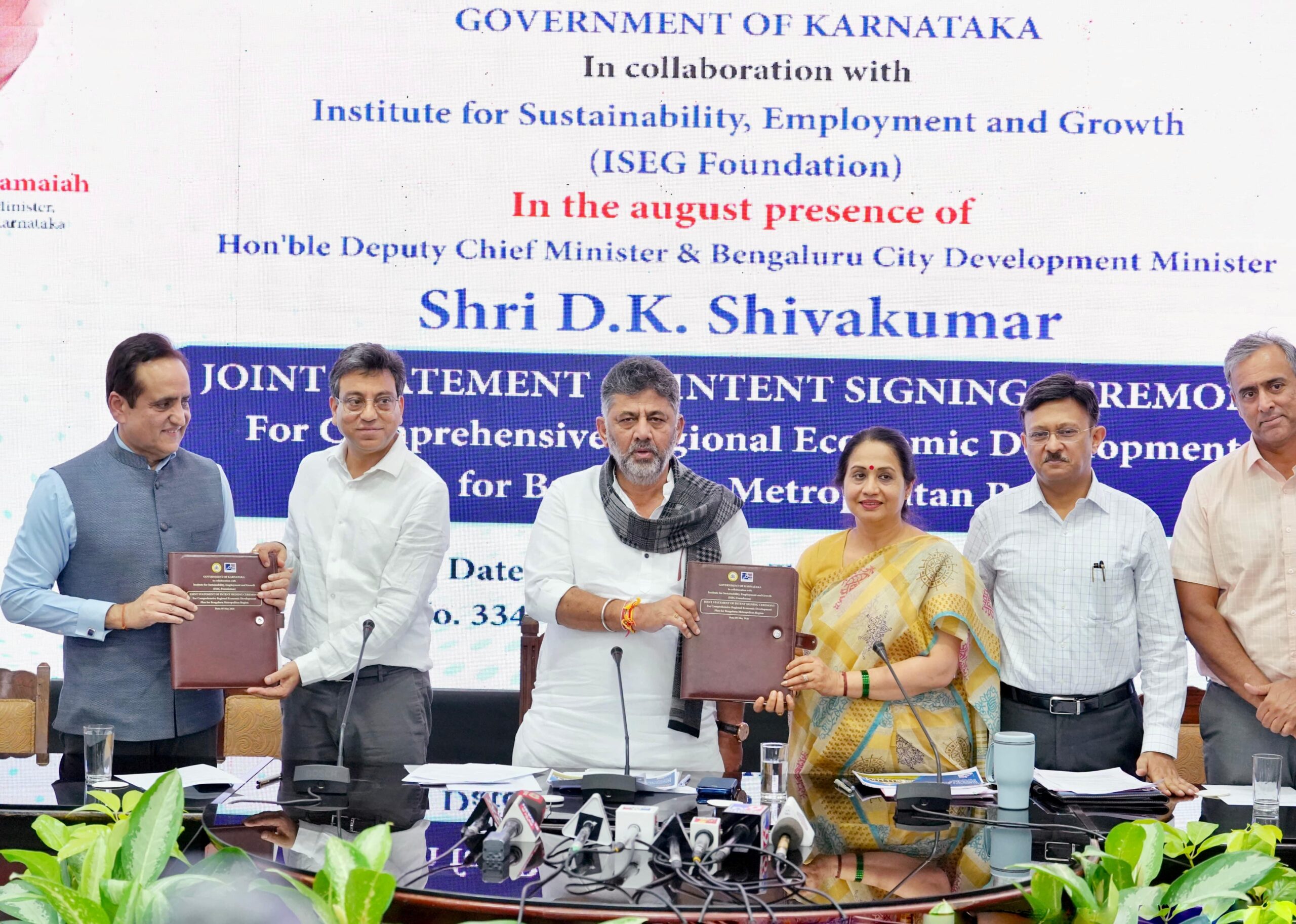
Karnataka Signs Pact to Create Bengaluru Economic Masterplan, Targets Global City Status by 2032
Bengaluru, May 5, 2026: In a major push to transform Bengaluru into a world-class economic powerhouse, the Government of Karnataka on Tuesday signed a Statement of Intent (SOI) with the ISEG Foundation to jointly develop a comprehensive Economic Masterplan for the Bengaluru Metropolitan Region (BMR). The agreement was formalised in the presence of Deputy Chief Minister D.K. Shivakumar at Vidhana Soudha.
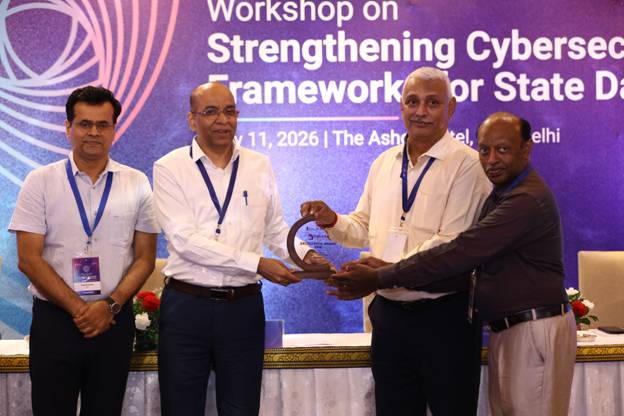
The SOI was signed by Urban Development Department Additional Chief Secretary Tushar Giri Nath and ISEG Director Dr. Shirish Sankhe, marking the beginning of a data-driven and action-oriented roadmap aimed at shaping Bengaluru’s growth trajectory for 2032 and 2037.
The proposed Economic Masterplan will cover key pillars including economy, infrastructure, liveability, and sustainability, with a strong focus on making Bengaluru globally competitive. Spread across more than 8,000 sq km, the BMR includes Bengaluru Urban, Rural and South districts, housing a population of nearly 16 million and contributing over 43% to Karnataka’s GSDP. The region’s GDP currently stands at approximately $149 billion (FY25).
Highlighting Bengaluru’s economic strength, officials noted that the city contributes 42% of India’s software exports, hosts over 875 Global Capability Centres, and is the second-largest hub for artificial intelligence talent globally. The city’s per capita income of $8,850 is nearly double the state average, with annual economic growth exceeding 9%, making it one of India’s fastest-growing metropolitan regions.
Despite these strengths, the government acknowledged key urban challenges including traffic congestion, rising real estate costs, and increasing pressure on infrastructure and talent pools, which could impact the city’s long-term competitiveness if not addressed.
The blueprint phase of the masterplan is expected to be completed within 4–5 months (by mid-September 2026). It will include a comprehensive economic diagnostic benchmarked against global city-regions, identification of key growth drivers, and development of 6–8 high-impact interventions across sectors such as technology, advanced manufacturing, biotechnology, tourism, housing, and sustainability. A phased implementation roadmap with financing strategies and governance mechanisms will also be prepared.
The initiative follows the model of the NITI Aayog-led G-Hub programme, aimed at developing economic masterplans for high-growth regions across India, targeting up to $750 billion in incremental GDP and 25 million jobs. Similar plans have already been implemented or are underway in regions such as Mumbai, Pune, Visakhapatnam, and Varanasi.
Speaking on the occasion, Deputy Chief Minister D.K. Shivakumar said the government has been working over the past three years to strengthen Bengaluru’s economic base and now aims to give the city a “new shape and direction.” He added that the masterplan will focus on job creation, tourism development, housing expansion, and traffic decongestion, while ensuring sustainable growth.
“The vision is to more than double Bengaluru’s economy by 2032 and position it alongside global cities like Tokyo, London and Singapore in terms of quality of life, employment opportunities and sustainability,” he said.
To ensure effective execution, the state has constituted a high-level Steering Committee chaired by the Chief Secretary, with representation from key departments including Urban Development, Finance, IT & Biotechnology, Industry, Transport, Tourism, and BMRDA. The Chief Commissioner of the Greater Bengaluru Authority has been appointed as the Senior Nodal Officer for coordination.
Sector-specific advisory groups comprising industry experts and private stakeholders will also be formed, while citizen participation will be integrated into the planning process. The Chief Minister and Deputy Chief Minister will conduct quarterly reviews to monitor progress.ISEG Foundation, a not-for-profit organisation working on employment generation and sustainable growth, will serve as the knowledge partner for the initiative, bringing experience from similar economic masterplans developed for major Indian city-regions.Senior officials including Chief Secretary Shalini Rajneesh, Additional Chief Secretary Gaurav Gupta, and GBA Chief Commissioner Maheshwar Rao were present during the signing ceremony.
About the Author