

Skip to content
The bengaluru live

The Bengaluru Live | Bengaluru News, Breaking Updates

It's Your Voice

BWSSB 5
Primary Menu
  • HOME
  • Bengaluru
  • Karnataka
  • POLITICS
  • CRIME
  • Delhi
  • Kannada News
  • Hindi News
  • MORE NEWS
    • Supreme Court
    • CITY UPDATES
    • PM
    • SPORTS
    • STATE
    • EDUCATION
    • ENTERTAINMENT
    • HEALTH
    • Real Estate
    • SPORTS
    • CORONA
    • MOBILITY/TRANSPORT
    • Horoscope
  • Home
  • CITY UPDATES
  • What did Roman wine taste like? Much better than previously thought, according to new research
  • CITY UPDATES
  • STATE

What did Roman wine taste like? Much better than previously thought, according to new research

11 April 2024 4 minutes read
0
📘 Read this story in Kannada

Ghent, Apr 11 (The Conversation) From a modern, scientific perspective, the wine Romans drank is often seen as an inconsistent, poorly made and thoroughly unpleasant beverage.

It is alleged that Roman winemakers had to mask their products’ flaws by adding spices, herbs and other ingredients to the freshly pressed grape juice, which is known as must.

However, our research has shown this may not have been the case: a recent study of earthenware vessels used in wine fermentation – both ancient and contemporary – has challenged traditional views on the taste and quality of Roman wine, some of which may even have rivalled the fine wines of today.

Many of the longstanding misconceptions surrounding Roman wine come from a lack of insight into one of the most characteristic features of Roman winemaking: fermentation in clay jars or dolia.

Huge wine cellars filled with hundreds of these vessels have been found all over the Roman world, but until we began our study no one had looked closely at their role in ancient wine production.

In our research, we compared Roman dolia with traditional Georgian production vessels, called qvevri, which are still in use today.

This traditional process was given protected status by UNESCO in 2013, and the similarities between Georgian and Roman winemaking procedures, along with archaeology and ancient texts, point to wines with comparable tastes and aromas. The results of our study were published in January 2024 in the journal Antiquity.

Porous eggs buried in the ground Unlike the metal or concrete containers used in modern winemaking, clay jars are porous, meaning the wine is exposed to air during fermentation.

This contact, however, is limited by coating the interior of the vessels with an impermeable substance. The Romans used pitch from pine resin, while nowadays, in Georgia, neutral beeswax is applied. This controlled air contact makes for great wines, typically with grassy, nutty and dried fruit flavours.

The shape of the vessel is also important. Its rounded, egg-like form causes the fermenting must to move around, which in turn leads to more balanced and rich wines. At the same time, its narrow base prevents grape solids that sink to the bottom from having too much contact with the maturing wine, keeping harsh and unpleasant flavours from appearing.

By burying the vessels in the ground, winemakers can control temperature and provide a stable environment for wine to ferment and mature during its many months inside the jars.

Temperatures in modern qvevri commonly range from 13° C to 28°C. This is ideal for malolactic fermentation, which turns sharp malic acids into softer lactic acids, often giving today’s white wines macerated in clay jars caramel and nutty tones.

Macerated wines Modern wine is typically grouped into whites, rosés and reds. To produce these styles, whites get little or no contact with the grape skins, while rosés get just enough to receive a soft pinkish colour. Longer macerations are reserved for reds.

In clay jar winemaking, however, white wines regularly undergo long macerations with the grape solids (skins, seeds, and so on). This gives beautiful dark yellow, amber coloured wines, today commonly known as “orange wines”. This wine – increasingly popular today – is similar to descriptions of some of the most prized wines in antiquity.

Protective yeast: the miracle of flor Buried clay jars encourage the formation of yeasts on the surface of the fermenting must. Many of these are what we call “flor” yeasts, a thick white foam layer that protects the wine from contact with the air. Ancient Greek and Roman texts are filled with descriptions of such surface yeasts in wines.

Flor produces several chemicals, including sotolon, which gives wine a spicy taste. It also gives aromas of toasted bread, apples, roasted nuts and curry. This is a sensory profile quite comparable with the herb fenugreek, which the Romans often added to grape must to strengthen this desirable flavour.

Roman wines revisited Evidently, the Romans were well aware of many different techniques to master and alter the qualities of their wines. By varying the size, shape and the position of dolia, Roman winemakers were able to have great control over the end product, as Georgian winemakers do today.

Our research emphasises the value of comparing ancient and modern wine production techniques. It not only debunks the alleged amateurish nature of Roman winemaking, but it also uncovers common traits in millennia-old winemaking techniques.

In some parts of Europe today, including France and Italy, modern winemakers are reviving these ancient methods to produce “new” clay jar wines. While such wines are often mistakenly termed “amphora wines” (amphorae were two-handled earthenware vessels used to transport wines and other liquids, not store them) they show the robustness of clay jar winemaking, and the cyclical nature of wine history. (The Conversation) GRS GRS

About the Author

View All Posts

Post navigation

Previous: India’s economic performance good, efforts needed to sustain it: EAC-PM member Sanjeev Sanyal
Next: Faltering Delhi Capitals eye improvement; LSG look to keep winning juggernaut rolling

Leave a Reply Cancel reply

Your email address will not be published. Required fields are marked *

Related Stories

  • STATE

Karnataka Backward Classes Commission Warns Against Sharing Survey Data, Cites High Court Confidentiality Orders

Satya Prakash Chaubey 2 June 2026
  • STATE

Supreme Court Dismisses Tamil Nadu Plea on Mekedatu Project; DK Shivakumar Calls It ‘Good News’ for Karnataka

Satya Prakash Chaubey 26 May 2026
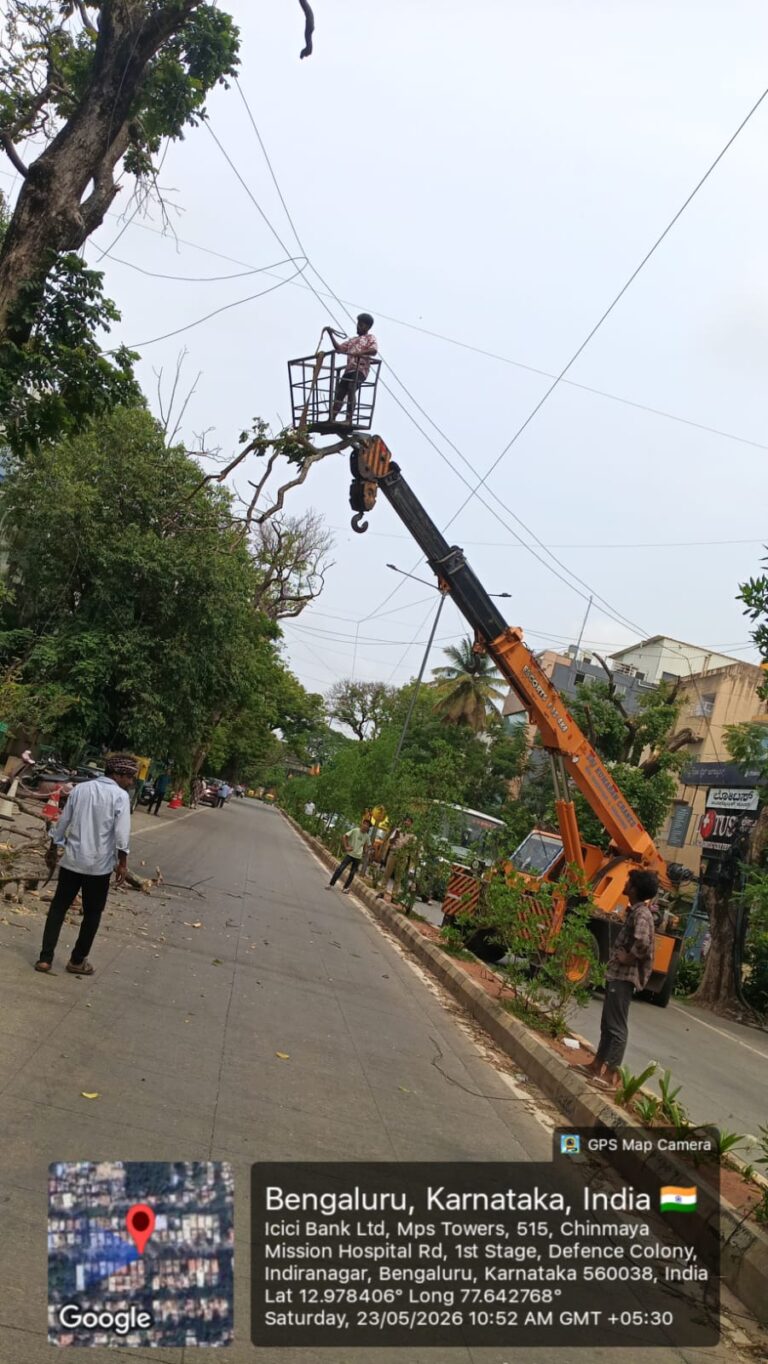
Bengaluru Central City Corporation Intensifies Removal of Fallen and Dangerous Trees Across City
  • Bengaluru
  • CITY UPDATES

Bengaluru Central City Corporation Intensifies Removal of Fallen and Dangerous Trees Across City

Satya Prakash Chaubey 23 May 2026

Latest Post

DK Shivakumar Keeps Finance, But Bengaluru Slips Away; Krishna Byre Gowda Gets Mega City Development Portfolio DK Shivakumar Keeps Finance, But Bengaluru Slips Away; Krishna Byre Gowda Gets Mega City Development Portfolio
  • POLITICS

DK Shivakumar Keeps Finance, But Bengaluru Slips Away; Krishna Byre Gowda Gets Mega City Development Portfolio

4 June 2026
Bengaluru Completes 72% Mapping for Special Electoral Roll Revision, Says District Election Officer Maheshwar Rao
  • Bengaluru

Bengaluru Completes 72% Mapping for Special Electoral Roll Revision, Says District Election Officer Maheshwar Rao

4 June 2026
CM D.K. Shivakumar Directs Bureaucracy to Deliver People-Centric Governance, Expand Student Benefits and Strengthen Rural Economy
  • Bengaluru
  • Government

CM D.K. Shivakumar Directs Bureaucracy to Deliver People-Centric Governance, Expand Student Benefits and Strengthen Rural Economy

4 June 2026
Bengaluru Set to Become Global Water Innovation Hub as BWSSB Plans ‘BGWIN’ Network Under CM D.K. Shivakumar’s Vision
  • Bengaluru

Bengaluru Set to Become Global Water Innovation Hub as BWSSB Plans ‘BGWIN’ Network Under CM D.K. Shivakumar’s Vision

4 June 2026
BK Hariprasad Draws Line Between Government and Party, Says ‘Those Seeking Power Can Go With DK Shivakumar’ BK Hariprasad Draws Line Between Government and Party, Says ‘Those Seeking Power Can Go With DK Shivakumar’
  • POLITICS

BK Hariprasad Draws Line Between Government and Party, Says ‘Those Seeking Power Can Go With DK Shivakumar’

4 June 2026
Shivakumar Cabinet Approves Free Bus Passes for All Students Across Karnataka Shivakumar Cabinet Approves Free Bus Passes for All Students Across Karnataka
  • Bengaluru
  • Karnataka

Shivakumar Cabinet Approves Free Bus Passes for All Students Across Karnataka

3 June 2026

You may have missed

DK Shivakumar Keeps Finance, But Bengaluru Slips Away; Krishna Byre Gowda Gets Mega City Development Portfolio
  • POLITICS

DK Shivakumar Keeps Finance, But Bengaluru Slips Away; Krishna Byre Gowda Gets Mega City Development Portfolio

Atul Chaturvedi 4 June 2026
  • Bengaluru

Bengaluru Completes 72% Mapping for Special Electoral Roll Revision, Says District Election Officer Maheshwar Rao

Satya Prakash Chaubey 4 June 2026
  • Bengaluru
  • Government

CM D.K. Shivakumar Directs Bureaucracy to Deliver People-Centric Governance, Expand Student Benefits and Strengthen Rural Economy

The Bengaluru Live 4 June 2026
  • Bengaluru

Bengaluru Set to Become Global Water Innovation Hub as BWSSB Plans ‘BGWIN’ Network Under CM D.K. Shivakumar’s Vision

The Bengaluru Live 4 June 2026

About us

The Bengaluru Live is one of the local digital media house which is publishing news in English and in Kannada language. We are also one of the largest local news providers on the internet through our news websites.

Useful Links

  • Advertise with us
  • Contact us
  • Privacy Policy

Recent News

  • DK Shivakumar Keeps Finance, But Bengaluru Slips Away; Krishna Byre Gowda Gets Mega City Development Portfolio
  • Bengaluru Completes 72% Mapping for Special Electoral Roll Revision, Says District Election Officer Maheshwar Rao
  • CM D.K. Shivakumar Directs Bureaucracy to Deliver People-Centric Governance, Expand Student Benefits and Strengthen Rural Economy
  • Bengaluru Set to Become Global Water Innovation Hub as BWSSB Plans ‘BGWIN’ Network Under CM D.K. Shivakumar’s Vision
©Copyright 2025 The Bengaluru Live All rights reserved. | MoreNews by AF themes.