
Skip to content
The Bengaluru Live | Bengaluru News, Breaking Updates

The Bengaluru Live | Bengaluru News, Breaking Updates

Bengaluru’s Leading News Portal

bmc-ad
Primary Menu
  • HOME
  • Bengaluru
  • Karnataka
  • POLITICS
  • CRIME
  • Delhi
  • Kannada News
  • Hindi News
  • MORE NEWS
    • Supreme Court
    • CITY UPDATES
    • PM
    • SPORTS
    • STATE
    • EDUCATION
    • ENTERTAINMENT
    • HEALTH
    • Real Estate
    • SPORTS
    • CORONA
    • MOBILITY/TRANSPORT
    • Horoscope
  • Home
  • CITY UPDATES
  • The next pandemic? It’s already here for Earth’s wildlife

  • CITY UPDATES
  • STATE

The next pandemic? It’s already here for Earth’s wildlife

12 March 2024 5 minutes read
0
The next pandemic? It’s already here for Earth’s wildlife

The next pandemic? It’s already here for Earth’s wildlife

📘 Read this story in Kannada

Norwich (UK): I am a conservation biologist who studies emerging infectious diseases. When people ask me what I think the next pandemic will be I often say that we are in the midst of one – it’s just afflicting a great many species more than ours.

I am referring to the highly pathogenic strain of avian influenza H5N1 (HPAI H5N1), otherwise known as bird flu, which has killed millions of birds and unknown numbers of mammals, particularly during the past three years.

This is the strain that emerged in domestic geese in China in 1997 and quickly jumped to humans in southeast Asia with a mortality rate of around 40-50%. My research group encountered the virus when it killed a mammal, an endangered Owston’s palm civet, in a captive breeding programme in Cuc Phuong National Park Vietnam in 2005.

How these animals caught bird flu was never confirmed. Their diet is mainly earthworms, so they had not been infected by eating diseased poultry like many captive tigers in the region.

This discovery prompted us to collate all confirmed reports of fatal infection with bird flu to assess just how broad a threat to wildlife this virus might pose.

This is how a newly discovered virus in Chinese poultry came to threaten so much of the world’s biodiversity.

The first signs

Until December 2005, most confirmed infections had been found in a few zoos and rescue centres in Thailand and Cambodia. Our analysis in 2006 showed that nearly half (48%) of all the different groups of birds (known to taxonomists as “orders”) contained a species in which a fatal infection of bird flu had been reported. These 13 orders comprised 84% of all bird species.

We reasoned 20 years ago that the strains of H5N1 circulating were probably highly pathogenic to all bird orders. We also showed that the list of confirmed infected species included those that were globally threatened and that important habitats, such as Vietnam’s Mekong Delta, lay close to reported poultry outbreaks.

Mammals known to be susceptible to bird flu during the early 2000s included primates, rodents, pigs and rabbits. Large carnivores such as Bengal tigers and clouded leopards were reported to have been killed, as well as domestic cats.

Our 2006 paper showed the ease with which this virus crossed species barriers and suggested it might one day produce a pandemic-scale threat to global biodiversity.

Unfortunately, our warnings were correct.

A roving sickness

Two decades on, bird flu is killing species from the high Arctic to mainland Antarctica.

In the past couple of years, bird flu has spread rapidly across Europe and infiltrated North and South America, killing millions of poultry and a variety of bird and mammal species. A recent paper found that 26 countries have reported at least 48 mammal species that have died from the virus since 2020 when the latest increase in reported infections started.

Not even the ocean is safe. Since 2020, 13 species of aquatic mammals have succumbed, including American sea lions, porpoises and dolphins, often dying in their thousands in South America. A wide range of scavenging and predatory mammals that live on land are now also confirmed to be susceptible, including mountain lions, lynx, brown, black and polar bears.

The UK alone has lost over 75% of its great skuas and seen a 25% decline in northern gannets. Recent declines in sandwich terns (35%) and common terns (42%) were also largely driven by the virus.

Scientists haven’t managed to completely sequence the virus in all affected species. Research and continuous surveillance could tell us how adaptable it ultimately becomes, and whether it can jump to even more species. We know it can already infect humans – one or more genetic mutations may make it more infectious.

At the crossroads

Between January 1 2003 and December 21 2023, 882 cases of human infection with the H5N1 virus were reported from 23 countries, of which 461 (52%) were fatal.

Of these fatal cases, more than half were in Vietnam, China, Cambodia and Laos. Poultry-to-human infections were first recorded in Cambodia in December 2003. Intermittent cases were reported until 2014, followed by a gap until 2023, yielding 41 deaths from 64 cases. The subtype of the H5N1 virus responsible has been detected in poultry in Cambodia since 2014. In the early 2000s, the H5N1 virus circulating had a high human mortality rate, so it is worrying that we are now starting to see people dying after contact with poultry again.

It’s not just H5 subtypes of bird flu that concern humans. The H10N1 virus was originally isolated from wild birds in South Korea but has also been reported in samples from China and Mongolia.

Recent research found that these particular virus subtypes may be able to jump to humans after they were found to be pathogenic in laboratory mice and ferrets. The first person who was confirmed to be infected with H10N5 died in China on January 27 2024, but this patient was also suffering from seasonal flu (H3N2). They had been exposed to live poultry which also tested positive for H10N5.

Species already threatened with extinction are among those which have died due to bird flu in the past three years. The first deaths from the virus in mainland Antarctica have just been confirmed in skuas, highlighting a looming threat to penguin colonies whose eggs and chicks skuas prey on. Humboldt penguins have already been killed by the virus in Chile.

How can we stem this tsunami of H5N1 and other avian influenzas? Completely overhaul poultry production on a global scale. Make farms self-sufficient in rearing eggs and chicks instead of exporting them internationally. The trend towards megafarms containing over a million birds must be stopped in its tracks.

To prevent the worst outcomes for this virus, we must revisit its primary source: the incubator of intensive poultry farms. (The Conversation)

About the Author

View All Posts

Post navigation

Previous: India, Russia in discussions on thermonuclear research, transit potential of North sea: Rosatom CEO
Next: England couldn’t apply themselves despite getting English conditions in Dharamsala: Dhumal

Leave a Reply Cancel reply

Your email address will not be published. Required fields are marked *

Related Stories

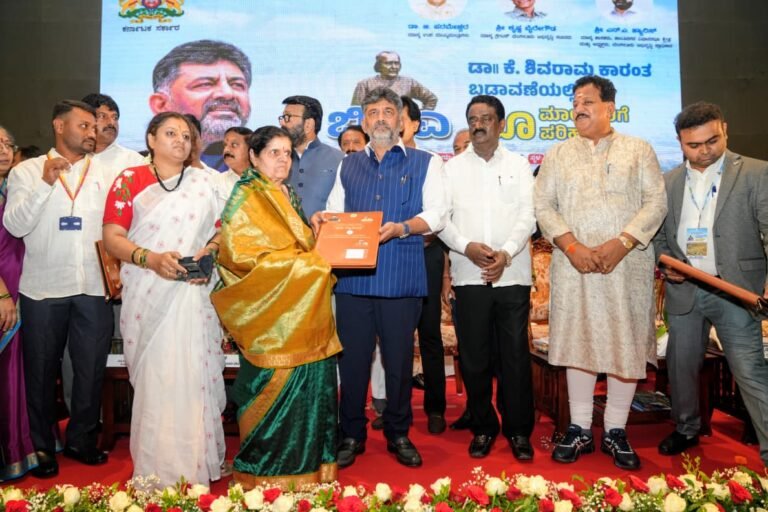
Shivaram Karanth Layout: DK Shivakumar Distributes Compensation, Urges Farmers Not to Sell Plots
  • Bengaluru
  • CITY UPDATES

Shivaram Karanth Layout: DK Shivakumar Distributes Compensation, Urges Farmers Not to Sell Plots

The Bengaluru Live 31 August 2026
Karnataka Takes Folk Arts to Bengaluru Campuses, Seeks Stronger Youth Connect With Cultural Heritage
  • Bengaluru
  • CITY UPDATES
  • EDUCATION

Karnataka Takes Folk Arts to Bengaluru Campuses, Seeks Stronger Youth Connect With Cultural Heritage

The Bengaluru Live 31 August 2026
Bengaluru Streetlight Failure: 63% Poles Dark on Hudson Circle–Chalukya Circle Stretch, Krishna Byre Gowda Seeks Action
  • Bengaluru
  • CITY UPDATES

Bengaluru Streetlight Failure: 63% Poles Dark on Hudson Circle–Chalukya Circle Stretch, Krishna Byre Gowda Seeks Action

The Bengaluru Live 30 August 2026

Latest Post

Bengaluru Traffic, Civic Issues: Krishna Byre Gowda Meets Former Mayors, Calls for Parking Discipline and Tougher Enforcement Bengaluru Traffic, Civic Issues: Krishna Byre Gowda Meets Former Mayors, Calls for Parking Discipline and Tougher Enforcement
  • CRIME

Bengaluru Traffic, Civic Issues: Krishna Byre Gowda Meets Former Mayors, Calls for Parking Discipline and Tougher Enforcement

31 August 2026
Shivaram Karanth Layout: DK Shivakumar Distributes Compensation, Urges Farmers Not to Sell Plots Shivaram Karanth Layout: DK Shivakumar Distributes Compensation, Urges Farmers Not to Sell Plots
  • Bengaluru
  • CITY UPDATES

Shivaram Karanth Layout: DK Shivakumar Distributes Compensation, Urges Farmers Not to Sell Plots

31 August 2026
Karnataka Takes Folk Arts to Bengaluru Campuses, Seeks Stronger Youth Connect With Cultural Heritage Karnataka Takes Folk Arts to Bengaluru Campuses, Seeks Stronger Youth Connect With Cultural Heritage
  • Bengaluru
  • CITY UPDATES
  • EDUCATION

Karnataka Takes Folk Arts to Bengaluru Campuses, Seeks Stronger Youth Connect With Cultural Heritage

31 August 2026
Bengaluru Streetlight Failure: 63% Poles Dark on Hudson Circle–Chalukya Circle Stretch, Krishna Byre Gowda Seeks Action Bengaluru Streetlight Failure: 63% Poles Dark on Hudson Circle–Chalukya Circle Stretch, Krishna Byre Gowda Seeks Action
  • Bengaluru
  • CITY UPDATES

Bengaluru Streetlight Failure: 63% Poles Dark on Hudson Circle–Chalukya Circle Stretch, Krishna Byre Gowda Seeks Action

30 August 2026
Karnataka Congress Protesters Accuse Centre of Favouring Subhash Chandra in Loan Settlement Karnataka Congress Protesters Accuse Centre of Favouring Subhash Chandra in Loan Settlement
  • POLITICS

Karnataka Congress Protesters Accuse Centre of Favouring Subhash Chandra in Loan Settlement

30 August 2026
Karnataka BJP to Mark PM Modi’s 25 Years in Public Service With Month-Long Campaign From Sept 17 Karnataka BJP to Mark PM Modi’s 25 Years in Public Service With Month-Long Campaign From Sept 17
  • POLITICS
  • Bengaluru

Karnataka BJP to Mark PM Modi’s 25 Years in Public Service With Month-Long Campaign From Sept 17

30 August 2026

You may have missed

Bengaluru Traffic, Civic Issues: Krishna Byre Gowda Meets Former Mayors, Calls for Parking Discipline and Tougher Enforcement
  • CRIME

Bengaluru Traffic, Civic Issues: Krishna Byre Gowda Meets Former Mayors, Calls for Parking Discipline and Tougher Enforcement

Satya Prakash Chaubey 31 August 2026
Shivaram Karanth Layout: DK Shivakumar Distributes Compensation, Urges Farmers Not to Sell Plots
  • Bengaluru
  • CITY UPDATES

Shivaram Karanth Layout: DK Shivakumar Distributes Compensation, Urges Farmers Not to Sell Plots

The Bengaluru Live 31 August 2026
Karnataka Takes Folk Arts to Bengaluru Campuses, Seeks Stronger Youth Connect With Cultural Heritage
  • Bengaluru
  • CITY UPDATES
  • EDUCATION

Karnataka Takes Folk Arts to Bengaluru Campuses, Seeks Stronger Youth Connect With Cultural Heritage

The Bengaluru Live 31 August 2026
Bengaluru Streetlight Failure: 63% Poles Dark on Hudson Circle–Chalukya Circle Stretch, Krishna Byre Gowda Seeks Action
  • Bengaluru
  • CITY UPDATES

Bengaluru Streetlight Failure: 63% Poles Dark on Hudson Circle–Chalukya Circle Stretch, Krishna Byre Gowda Seeks Action

The Bengaluru Live 30 August 2026

About us

The Bengaluru Live is one of the local digital media house which is publishing news in English and in Kannada language. We are also one of the largest local news providers on the internet through our news websites.

Useful Links

  • Advertise with us
  • Contact us
  • Privacy Policy

Recent News

  • Bengaluru Traffic, Civic Issues: Krishna Byre Gowda Meets Former Mayors, Calls for Parking Discipline and Tougher Enforcement
  • Shivaram Karanth Layout: DK Shivakumar Distributes Compensation, Urges Farmers Not to Sell Plots
  • Karnataka Takes Folk Arts to Bengaluru Campuses, Seeks Stronger Youth Connect With Cultural Heritage
  • Bengaluru Streetlight Failure: 63% Poles Dark on Hudson Circle–Chalukya Circle Stretch, Krishna Byre Gowda Seeks Action
©Copyright 2026 The Bengaluru Live All rights reserved. | MoreNews by AF themes.