“Every Rupee Must Deliver Public Value”: Bengaluru North Civic Body Maps ₹4,344 Cr Budget into Action Plan
Bengaluru: With a strong emphasis on accountability and public benefit, the Bengaluru North City Corporation has begun converting its ₹4,344 crore budget for 2026–27 into a concrete action plan, underlining that every rupee allocated must be effectively utilised for citizens.
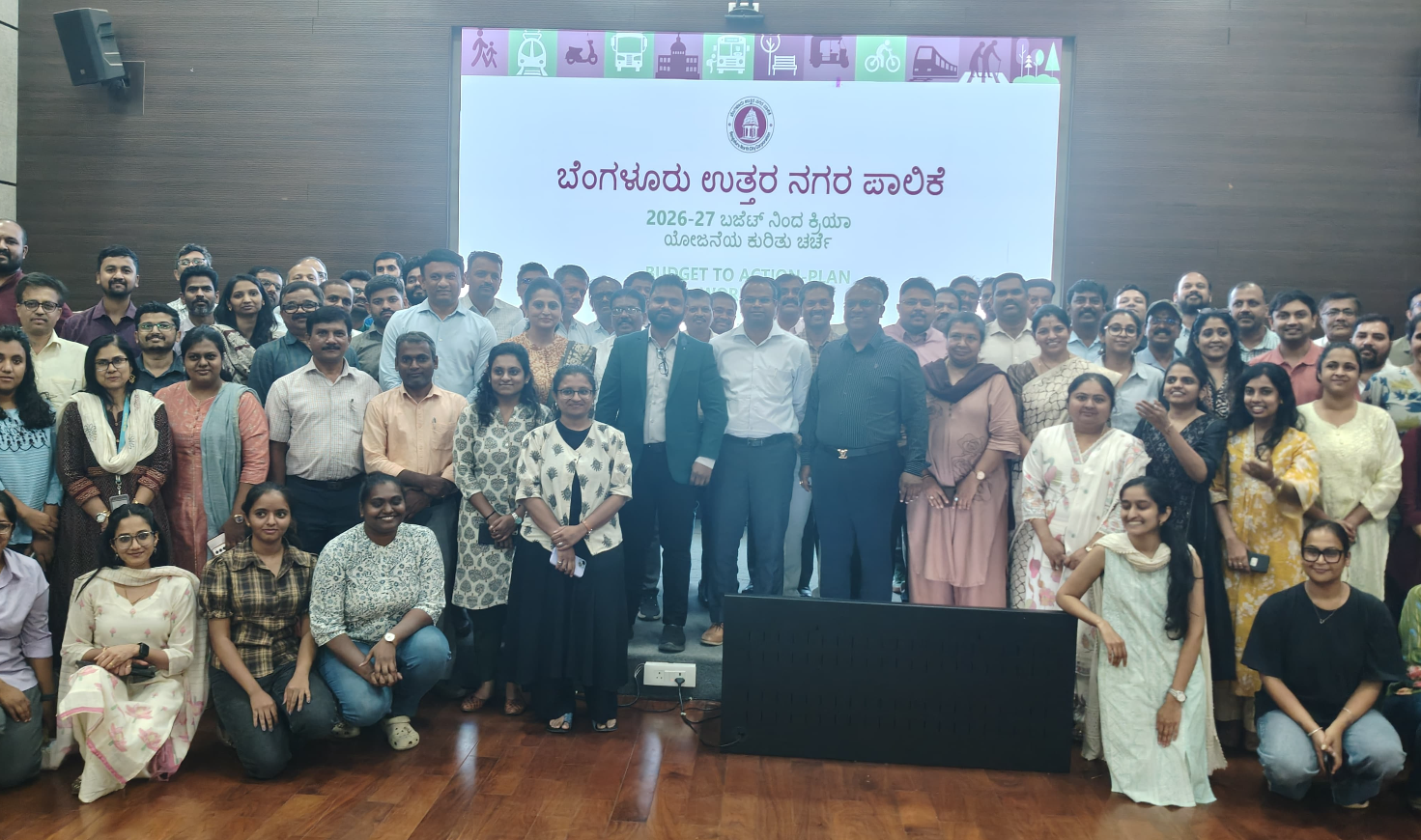
At a “Budget to Action Plan” workshop held at the IAS Officers’ Association Hall on Infantry Road, Commissioner Pommala Sunil Kumar set the tone by stressing that public funds must translate into visible, measurable outcomes on the ground. He noted that engineers and officials are already working diligently, with Additional Commissioners ensuring seamless coordination across departments.
The Commissioner highlighted that collaborative planning involving engineers, officials, experts, and stakeholders leads to more practical and implementable projects, ensuring that budget allocations do not remain on paper but result in tangible improvements in urban life.
The workshop focused on bridging the gap between financial allocation and on-ground execution, with detailed discussions on how to deploy resources efficiently to enhance the quality of life in the North Bengaluru region.
A key part of the deliberations centred on upcoming infrastructure developments, particularly the Pink Line and Blue Line Metro corridors, which are set to add 18 new metro stations within the corporation’s jurisdiction. Officials discussed strategies to ensure seamless integration of metro services with last-mile connectivity, including improved walkability, cycling infrastructure, and stronger bus networks.
Participants, including civic officials, domain experts, and NGOs, engaged in practical discussions to translate budget provisions into actionable, high-impact projects. The emphasis remained on creating solutions that are not only ambitious but also feasible and time-bound.
The workshop identified several priority areas for immediate focus: developing inclusive and universally accessible street infrastructure, strengthening first- and last-mile connectivity, enhancing climate resilience and heat mitigation, expanding green cover through parks and urban forests, improving stormwater and flood management systems, upgrading emergency response mechanisms, and protecting lakes and natural water bodies.
An implementation roadmap was also outlined, with draft action plans to be refined and submitted to the Commissioner. These will be rolled out in phases, supported by monthly review meetings and quarterly progress reports to ensure strict monitoring and timely execution.
The strong focus on monitoring reflects the administration’s intent to ensure that public money is not just spent, but spent well, delivering maximum benefit to citizens.
The workshop saw participation from senior officials including Additional Commissioner R. Latha, Joint Commissioner Pallavi, Mohammed Nayeem Momin, Chief Engineers, and representatives from agencies such as GBA, Metro, BMTC, and DULT. Experts from organisations like WRI India, C40 Cities, and Hasiru Dala also contributed insights, reinforcing a multi-stakeholder approach to urban governance.
With this initiative, Bengaluru North is setting a precedent for result-oriented governance, where financial planning is tightly linked to execution, transparency, and measurable public outcomes.
About the Author