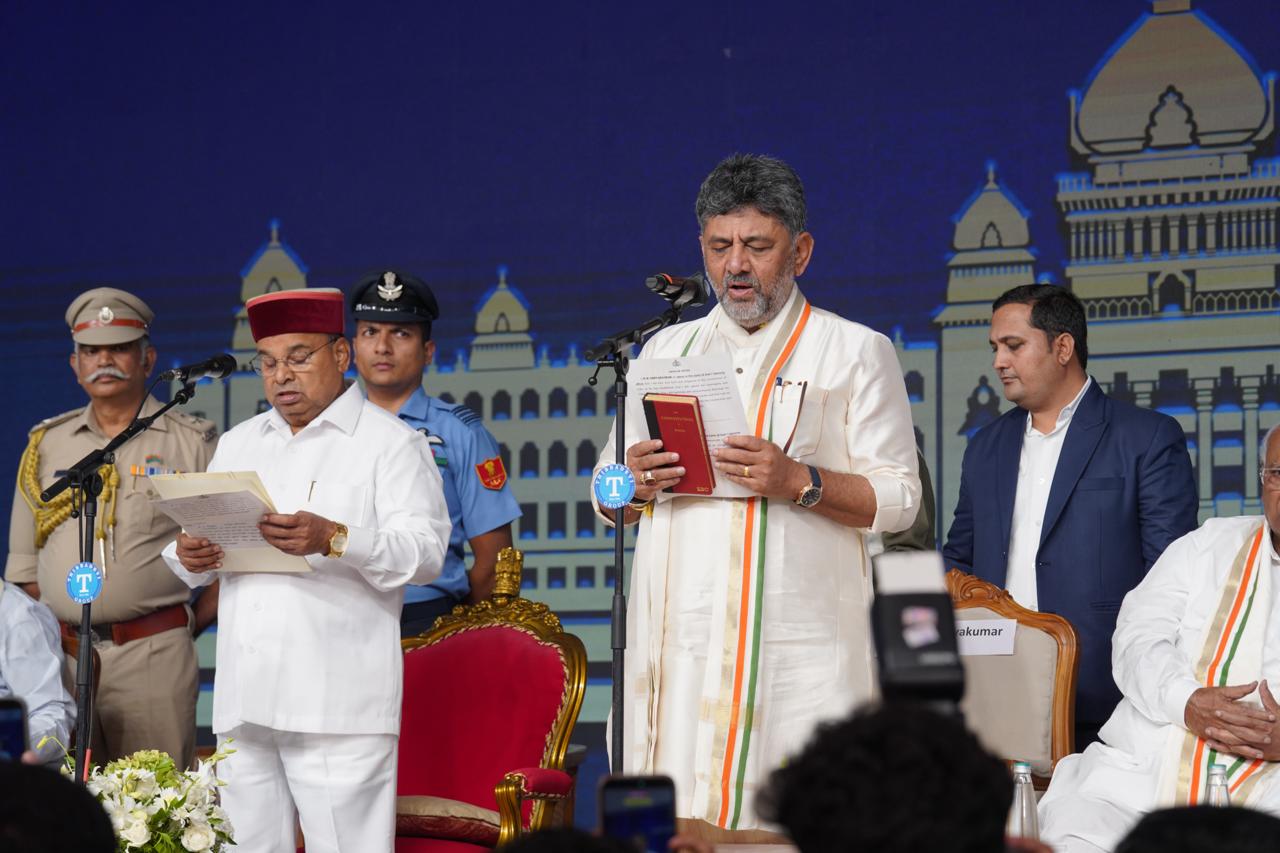
D.K. Shivakumar Takes Oath as Karnataka Chief Minister, 13 Ministers Sworn Into New Cabinet
Bengaluru, June 3: Senior Congress leader D.K. Shivakumar on Wednesday took oath as the Chief Minister of Karnataka at a grand swearing-in ceremony held in Bengaluru in the presence of Governor Thaawarchand Gehlot, senior political leaders and party workers.
The Governor administered the oath of office and secrecy to Shivakumar, who became the new Chief Minister of the state after being elected leader of the Congress Legislature Party.
During the ceremony, Shivakumar took the constitutional oath, pledging true faith and allegiance to the Constitution of India, upholding the sovereignty and integrity of the nation, and discharging his duties as Chief Minister without fear or favour, affection or ill-will.
He also took the oath of secrecy, affirming that he would not directly or indirectly disclose any matter brought before him as Chief Minister except as required for the due discharge of his duties.
According to the list submitted to the Governor by the Congress Legislature Party leadership, a 14-member ministry was sworn in along with the Chief Minister.
Dr. G. Parameshwara took oath as Deputy Chief Minister, while K.H. Muniyappa, K.J. George, M.B. Patil, Ramalinga Reddy, Satish Jarkiholi, Krishna Byre Gowda, Priyank Kharge, U.T. Khader, Eshwar Khandre, Yathindra Siddaramaiah, Byrathi Suresh and Sharan Prakash Patil were sworn in as Cabinet Ministers.
The swearing-in ceremony marked the formal commencement of the new Congress government’s tenure in Karnataka.
Political observers noted that the new cabinet includes a mix of experienced leaders and younger faces, reflecting the party’s attempt to balance governance experience with generational representation.
The formation of the new government comes at a time when Karnataka is focusing on infrastructure expansion, investment promotion, welfare delivery and urban development.
With the oath-taking ceremony completed, the new Chief Minister and his council of ministers are expected to begin administrative and policy decisions aimed at implementing the government’s priorities for the state.
About the Author