BWSSB Expansion Across Bengaluru Urban District, 6–6.5 Lakh Homes in BMR Plan
Bengaluru, October 5: Karnataka is planning to extend BWSSB coverage across the entire Bengaluru Urban district, with drinking-water and sewerage infrastructure developed in phases, as part of a broader 10–15-year development framework for the Bengaluru Metropolitan Region.
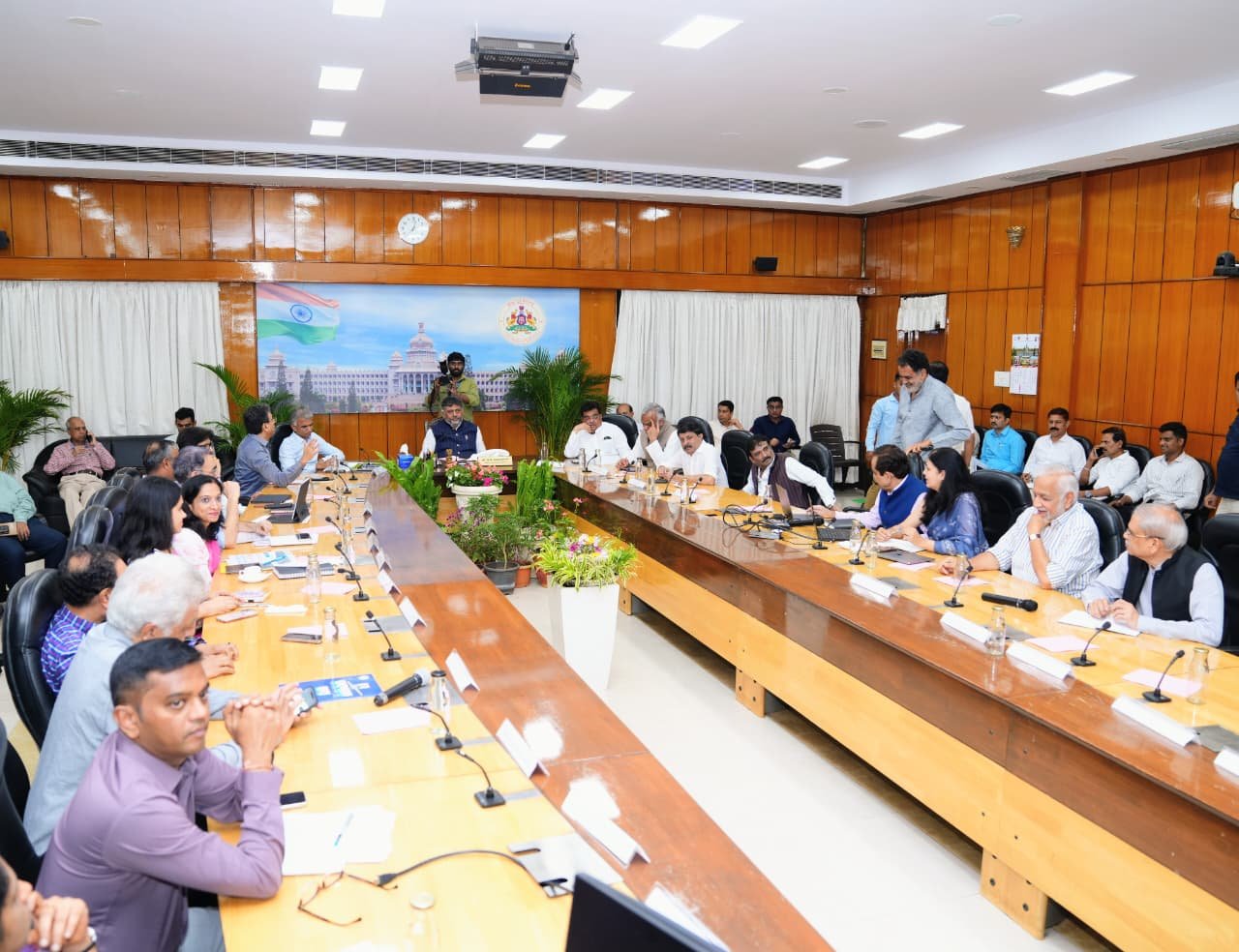
The plan also envisages 6–6.5 lakh affordable homes, including housing for 40,000–50,000 industrial workers. Water supply, transport links and industrial growth were discussed at an economic-development advisory committee meeting chaired by Chief Minister D.K. Shivakumar at his home office, Krishna, on Monday.
District-wide water and sewerage network
Minister Krishna Byre Gowda said the intention, in line with a decision at the previous meeting, was to bring the whole Bengaluru Urban district under BWSSB and progressively develop drinking-water and sewerage services. Officials would also map the district’s road network and prepare a development plan.
Shivakumar said all areas of Bengaluru Urban district would be brought within urban local-body limits to support the wider planning exercise.
The meeting discussed a projected water requirement of 3,600 million litres a day for the Bengaluru Metropolitan Region by 2037. Shivakumar directed officials to prioritise reuse of treated water and replenishing lakes while planning for drinking-water and industrial demand over the next decade.
Housing and nine industrial townships
The proposed housing programme aims to provide homes at affordable prices. The 6–6.5 lakh-home plan includes accommodation for 40,000–50,000 workers employed in industries.
Shivakumar said nine new integrated industrial townships needed to be developed in the metropolitan region. He said 7,900 acres had already been acquired and acquisition of another 5,600 acres was underway.
He also called for an AI City modelled on Singapore’s Punggol and asked officials to identify available land for an AI university.
Transport expansion targets for 2037
Proposals discussed included an additional 312 km of Metro connectivity, 72 km of suburban rail and 210 km of ring roads linking ten hubs by 2037. Linking the second phase of the Peripheral Ring Road with NICE Road was also discussed.
The meeting considered a 270-km RRTS proposal connecting the Bengaluru–Tumakuru, Bengaluru–Mysuru and Bengaluru–KGF corridors, along with suggestions to extend the proposed Mumbai–Bengaluru high-speed rail link to Mysuru.
Shivakumar said the framework would support Karnataka’s economic targets of $400–420 billion by 2037 and $1 trillion by 2047.
Ministers M.B. Patil, Krishna Byre Gowda, Priyank Kharge and Byrathi Suresh, MP and the Chief Minister’s principal adviser Dr. G.C. Chandrashekhar, economic adviser L.K. Atheeq, Additional Chief Secretary Tushar Girinath, GBA Chief Commissioner Dr. M. Maheshwar Rao, ISEG director Dr. Sirish Sankhe, business leaders Mohandas Pai and Kris Gopalakrishnan, and other participants attended.
About the Author