
Questions Raised Over Karnataka State Election Commission’s Meeting With Political Leadership Ahead of Bengaluru Civic Polls
Bengaluru: Serious questions are now being raised over the functioning and perceived independence of the Karnataka State Election Commission (SEC) after it convened a high-level meeting involving political executives and elected representatives regarding the schedule for elections to the five city corporations under the Greater Bengaluru Authority (GBA).
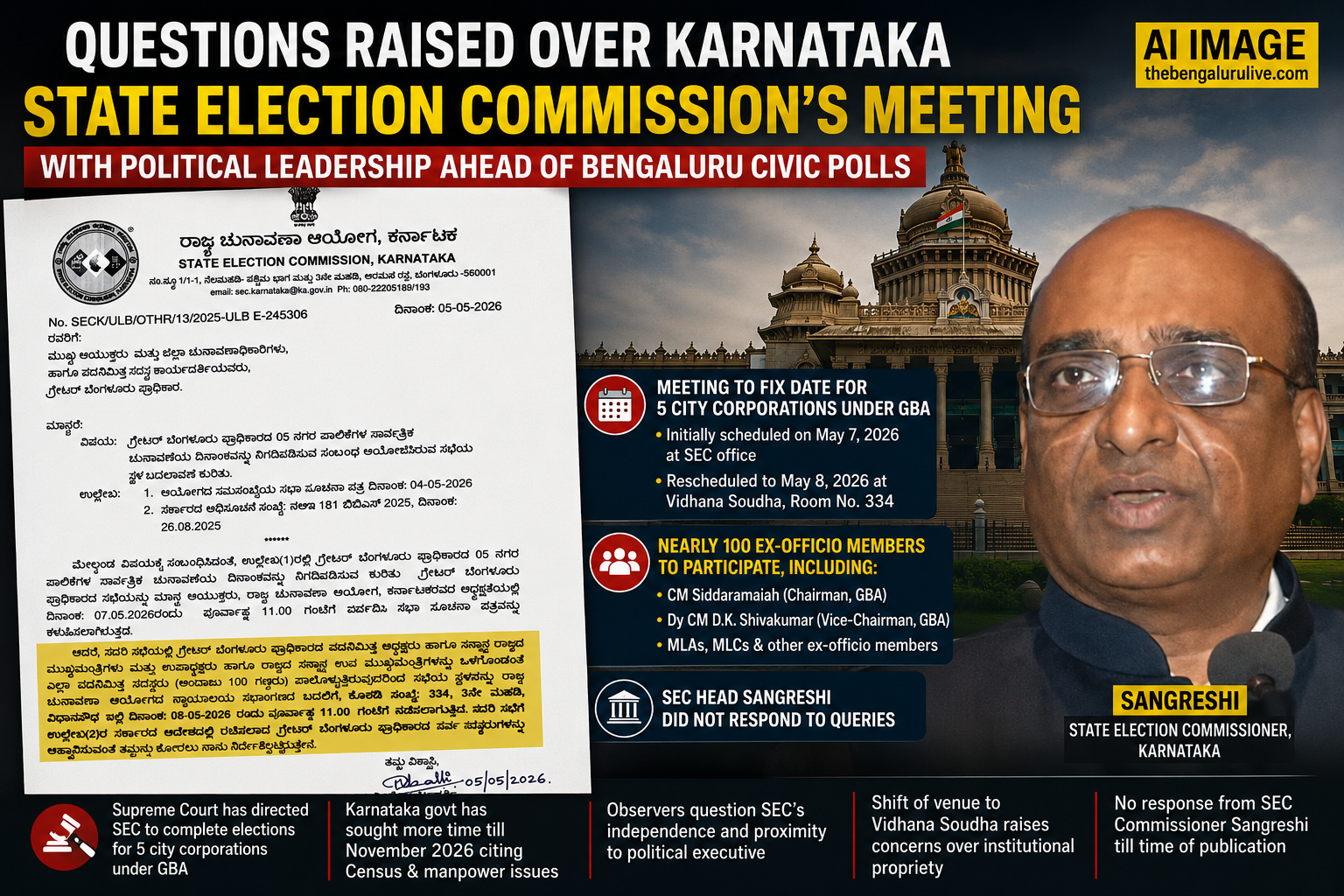
The controversy comes at a time when the Supreme Court has already directed the Karnataka State Election Commission to complete the entire election process for the five city corporations falling under the Greater Bengaluru Authority framework. However, sources indicate that the Karnataka government has sought more time until November 2026, citing reasons such as the ongoing Census-related exercise and shortage of manpower.
Amid this backdrop, a letter issued by the Karnataka State Election Commission dated May 5, 2026 has triggered sharp criticism and concerns over institutional propriety.
The official communication states that a meeting to discuss “fixing the date for the general elections” to the five city corporations was initially scheduled at the State Election Commission office on May 7, 2026 under the chairmanship of the State Election Commissioner.
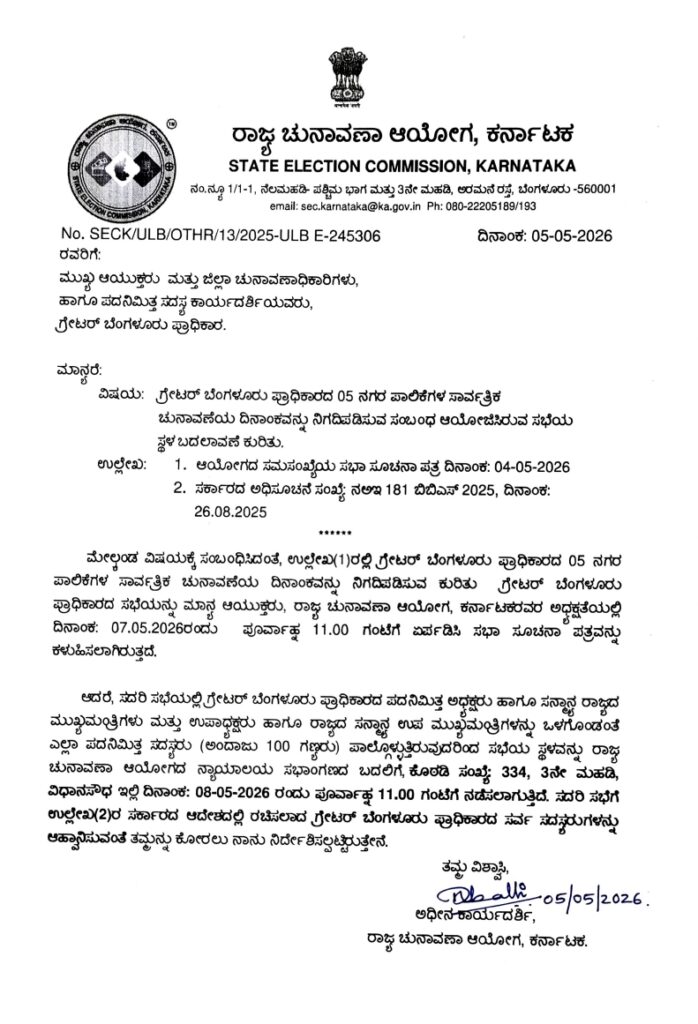
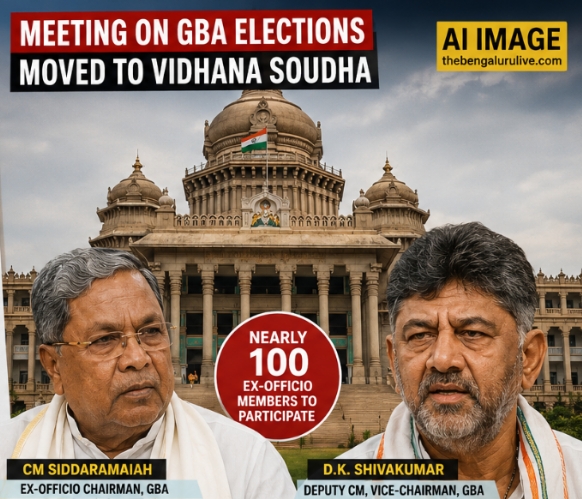
However, the venue was later shifted to Room No. 334, 3rd Floor, Vidhana Soudha, and rescheduled for May 8, 2026, citing participation of nearly 100 dignitaries, including:
- Chief Minister Siddaramaiah, who is the ex-officio Chairman of the Greater Bengaluru Authority
- Deputy Chief Minister D.K. Shivakumar, who serves as Vice-Chairman
- MLAs, MLCs and other ex-officio members linked to the authority
The development has sparked debate because election commissions are constitutionally expected to independently announce poll schedules and conduct elections without political consultation on the timing or execution of the electoral process.
Legal and political observers point out that it is extremely rare for an election commission to convene a formal meeting of ruling political executives and legislators to deliberate on election scheduling matters.
Critics argue that the role of an election commission is to independently notify elections and ensure free and fair conduct — not to hold consultative meetings with those currently in power.
“What makes this meeting unusual is not merely the administrative coordination, but the optics and institutional implications,” a senior observer told The Bengaluru Live. “You do not normally see the Election Commission of India sitting with the Prime Minister, Cabinet ministers, Member of Parliament or ruling political leadership to discuss how and when elections should be conducted.”
The shift of the meeting venue from the State Election Commission premises to the seat of political power — Vidhana Soudha — has further intensified scrutiny.
The letter specifically mentions that the meeting venue was changed because nearly 100 ex-officio members, including political representatives, would participate.
Observers say this blurs the line between an independent constitutional authority and the political executive.
The Bengaluru Live attempted to contact Karnataka State Election Commissioner Mr. Sangreshi to seek clarification regarding the purpose of the meeting, the role of elected representatives in discussions concerning election scheduling, and the reason for shifting the venue from the Commission office to Vidhana Soudha. However, no response or clarification was received till the time of publication.
About the Author