World Bank Team Praises Varthur Kodi Stormwater Drain Project Combining Wider Channel, 1-Km Walking Track and Green Corridor
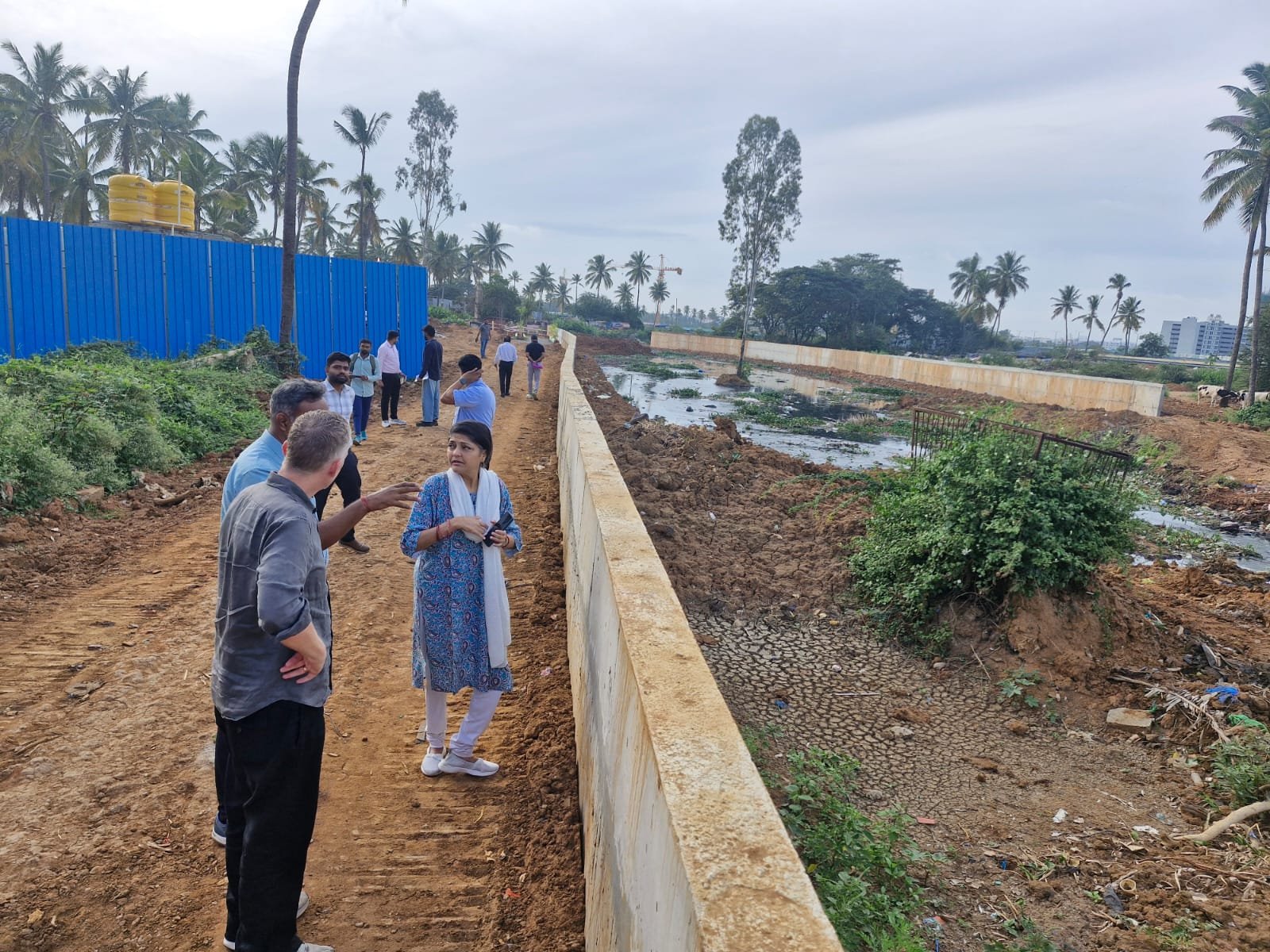
Bengaluru, September 4: A World Bank task team has praised an integrated stormwater drain development project at Varthur Kodi Circle in Bengaluru’s Mahadevapura Assembly constituency, where a previously 7-8-metre-wide earthen drain has been expanded to about 30-32 metres at locations where government land was available or could be secured, while a public walking track and green corridor have been created alongside it.
The team inspected the work during a visit to projects being implemented in Bengaluru under the World Bank-financed Karnataka Water Security and Resilience Programme (KWSRP).
During the site inspection, the team reviewed the model adopted by the Greater Bengaluru Authority (GBA) and its Project Implementation Unit (PIU), under which stormwater drain improvement has been combined with walking and recreational facilities for the public along the drain corridor.
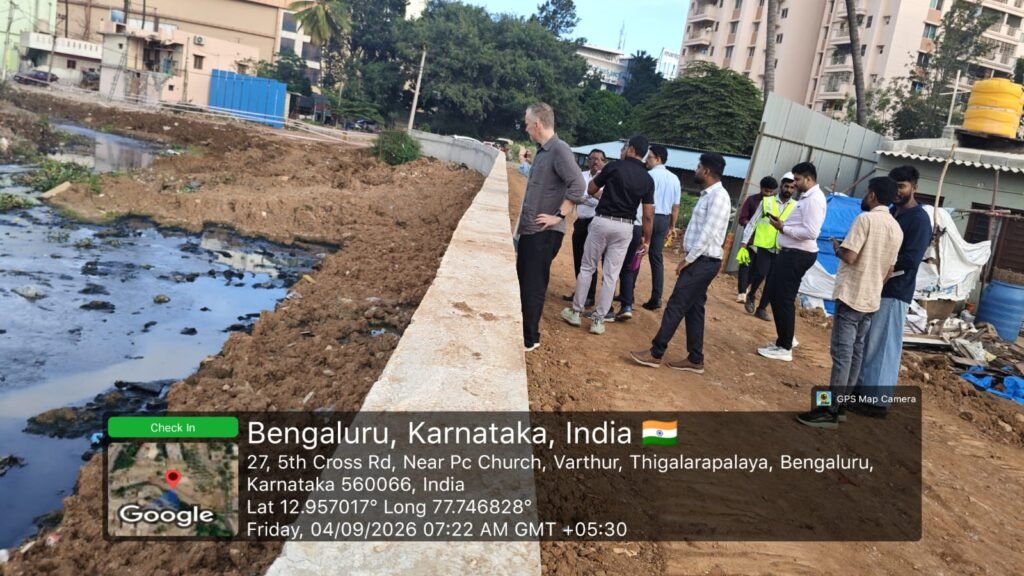
The World Bank team appreciated the measures undertaken by GBA/PIU engineers. According to the authority, the earlier earthen drain, which was around 7-8 metres wide, has been transformed into a properly developed stormwater drain corridor of about 30-32 metres in width at locations where government land was available and could be obtained.
A key feature highlighted during the inspection was the construction of a 3.5-metre-wide public walking track extending for about one kilometre along the developed stormwater drain.
Engineers told the visiting team that available government ‘kharab’ land had been identified and utilised, while encroachments were removed or prevented wherever feasible to widen the drain corridor. The walking facility has been provided without affecting the functioning and stormwater-carrying capacity of the drain.
The walking track has also been planned as a measure to protect government land from future encroachment and ensure continuous public use of the area, rather than being treated only as a recreational amenity, the engineers explained.
The project also includes landscaping and plantation along the drain. Dancing/facing bamboo has been planted along the sides, while suitable tree species, including Tabebuia, have been planted along the boundary of the corridor.
According to GBA, the landscaping is expected to improve the appearance of the stormwater drain corridor, provide pedestrians with a greener environment, help protect the boundaries of government land, improve the area’s environmental quality and create a safer and more attractive public walking space. It is also intended to encourage healthy outdoor activity among local residents.
The World Bank’s environmental and social specialists appreciated the approach of integrating environmental improvement, public access, protection of government land and social benefits with stormwater drain development.
Another feature shown to the visiting team was the provision of space within the corridor for future or associated sewerage infrastructure.
Engineers explained that space has been kept available for the required sewerage line to be constructed or installed within the corridor, reducing the need to disturb the newly created public facility after completion of the walking track.
The World Bank team appreciated the integrated planning approach, under which the stormwater drain, sewerage system, green areas and public pedestrian facilities can be coordinated within the available government corridor.
The World Bank task team leader and other visiting members also praised the concept adopted by GBA/PIU engineers, noting that the initiative goes beyond conventional stormwater drain construction by bringing together improved stormwater flow, protection of government land, a green corridor, a public walking facility and provision for future infrastructure within a single project.
The team particularly appreciated efforts to remove encroachments, protect the drain corridor, increase the effective width of the stormwater drain and transform an area that was previously not adequately utilised into an active public asset with environmental and social benefits.
Local residents present during the World Bank team’s interaction also expressed satisfaction with the development work, according to GBA.
Residents welcomed the walking track, improved stormwater flow arrangements and landscaping along the drain. They said the facility would provide a safe and accessible space for walking and daily physical activity while improving the appearance and environmental quality of the surrounding area.
GBA said the initiative demonstrates how World Bank-supported infrastructure projects can deliver multiple benefits to communities when engineering, environmental, social and public-use considerations are integrated at the implementation stage.
The GBA/PIU said it will continue identifying similar opportunities at locations where they are technically and legally feasible, with the aim of developing stormwater drain corridors that combine increased drainage capacity, environmental improvement, protection of government land and public-friendly walking and recreational facilities.
About the Author