

Sydney, Mar 13 (The Conversation) One afternoon last year, we sat in a village hall in Fiji chatting to residents about traditional ways of forecasting tropical cyclones. One man mentioned a black-winged storm bird known as “manumanunicagi” that glides above the land only when a cyclone is forming out to sea. As the conversation continued, residents named at least 11 bird species, the odd behaviour of which signalled imminent changes in the weather.
As we were leaving later that evening, an elder took us aside. He was pleased we had taken their beliefs seriously and said many older Pacific people won’t talk about traditional knowledge for fear of ridicule.
This reflects the dominance of science-based understandings in adapting to climate change and its threats to ways of life. Our new research suggests this attitude should change.
We reviewed evidence on traditional knowledge in the Pacific for coping with climate change, and found much of it was scientifically plausible. This indicates such knowledge should play a significant role in sustaining Pacific Island communities in future.
A proven, robust system Our research was co-authored with 26 others, most Pacific Islanders with long-standing research interests in traditional knowledge.
People have inhabited the Pacific Islands for 3,000 years or more and have experienced many climate-driven challenges to their livelihoods and survival. They have coped not by luck but by design – through robust systems of traditional knowledge built by diverse groups of people over time.
The main short-term climate-related threats to island livelihoods in the Pacific are tropical cyclones which can damage food crops, pollute fresh water and destroy infrastructure. Prolonged droughts – common during El Niño events in the southwest Pacific – also cause widespread damage.
Traditional knowledge in the Pacific explains the causes and manifestations of natural phenomena, and identifies the best ways to respond. It is commonly communicated orally between generations.
Here, we describe such knowledge relating to animals, plants, water and sky – and show how these beliefs make scientific sense.
It’s important to note, however, that traditional knowledge has its own intrinsic value. Scientific explanations are not required to validate it.
Reading the ocean and sky Residents of Fiji’s Druadrua Island interpret breaking waves to predict a cyclone as long as one month before it hits. In Vanuatu’s Torres Islands, 13 phrases exist to describe the state of the tide, including anomalies that herald uncommon events.
These observations make scientific sense. Distant storms can drive ocean swells onto coasts long before the winds and rain arrive, changing the usual patterns of waves.
In Samoa, ten types of wind are recognised in traditional lore. Winds that blow from the east (matā ‘upolu) indicate the imminent arrival of heavy rain, possibly a tropical cyclone. The south wind (tuā’oloa) is most feared. It will cease to blow, it is said, only when its appetite for death is sated.
Many Pacific Island communities believe a cloudless, dark blue sky signals the arrival of a tropical cyclone. Other signs include unusually rapid cloud movements and the appearance of “short rainbows”.
These beliefs are supported by science. Rainbows are sometimes “shortened” or partly obscured by a distant rain shower. And Western science has long recognised changes in clouds and winds can signal the development of cyclones.
In Vanuatu, a halo around a moon signals imminent rainfall. Again, this belief is scientifically sound. According to Western science, high thin cirrus clouds signal nearby storms. The clouds contain ice crystals through which moonlight is filtered, creating a halo effect.
The wisdom of animals and plants As mentioned above, birds are are said to herald weather changes across the Pacific.
In Tonga, when the frigate bird flies across the land – unusual behaviour for an ocean species – it signals a tropical cyclone is developing. This traditional knowledge is captured in the logo of the Tonga Meteorological Service. Birds are similarly interpreted in Fiji and northern Vanuatu.
This belief stacks up scientifically. One study in North America, for example, showed golden-winged warblers dodged tornadoes by detecting shifts in infrasound. Another study, which included data on frigate birds in the Pacific, found seabirds appeared to circumvent cyclones, probably by sensing wind strength and direction.
Traditional knowledge about insect behaviour in the Pacific Islands is also used to predict wet weather.
Bees, wasps and hornets usually build nests in tree branches. When nests are built close to the ground, Pacific Islanders know the forthcoming wet season will be wetter than normal, probably due to more tropical cyclones. This type of nest-building may prompt residents to make appropriate preparations such as storing food.
Studies suggest insect behaviour can predict changes in weather. For example, a study of wasp nesting in French Guiana found their ability to quickly move nests to more sheltered locations may help them survive wet years.
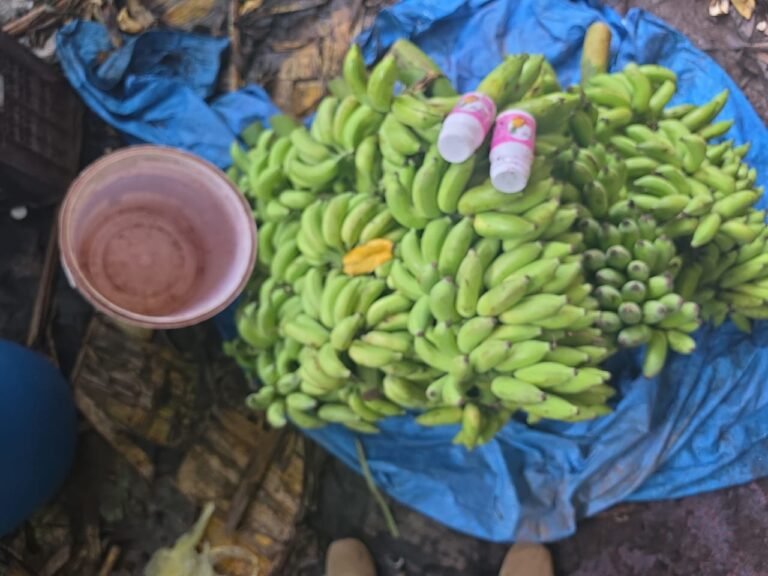
Across the Pacific, common signs of impending wet weather are found in the behaviours of some plants. The central shoot of the plantain, for example, will be conspicuously curled instead of straight.
This can be explained scientifically by a process in which plant leaves close to protect their reproductive organs from extreme weather.
Planning for a warmer future Since colonisation imposed Western worldviews around the world, traditional knowledge has been sidelined. This is true of the Pacific Islands, where in some places, traditional knowledge is all but forgotten.
But both Western and traditional knowledges have their pros and cons. Science-based knowledge, for example, is generic and often can’t realistically be applied at local scales.
As climate change impacts worsen, optimal planning for island peoples should combine both approaches. This will require open-mindedness and a respect for diverse sources of knowledge. (The Conversation) AMS AMS
About the Author