Minority Affairs Ministry Taps IISc, IIM Bangalore and IIT Madras Expertise to Monitor Public Projects, Build Startup Pipeline
Bengaluru: The Union Ministry of Minority Affairs has brought some of India’s leading academic, technology and entrepreneurship institutions into its minority-development programmes, with new partnerships aimed at independently monitoring training and infrastructure projects while creating pathways for minority entrepreneurs to build, incubate and scale startups.
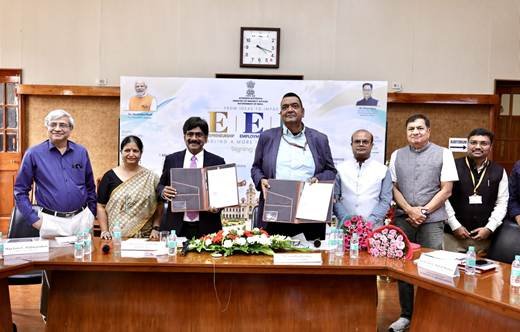
The Ministry signed a series of Memoranda of Understanding at the Indian Institute of Science (IISc) Bengaluru on September 25 with institutions and organisations linked to IISc Bengaluru, IIM Bangalore and IIT Madras.
The partnerships span two distinct areas: independent scrutiny of government programmes and infrastructure, and development of entrepreneurship, innovation and economic opportunities for minority communities.
The institutions involved include the Centre for Urbanization, Buildings & Environment (CUBE), IIT Madras; Foundation for Science Innovation and Development (FSID), IISc Bengaluru; Indian Institute of Management Bangalore (IIMB); and IIMB Innovations (NSRCEL).
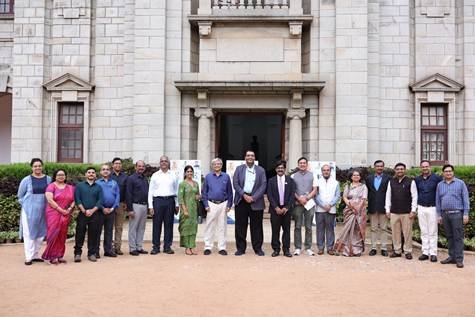
The agreements were signed in the presence of Dr. Srivatsa Krishna, Secretary, Ministry of Minority Affairs, and senior officials representing the Ministry and participating institutions.
At the centre of the initiative is what Krishna described as the government’s “EEE” approach — enabling employment through entrepreneurship.
He said the objective of bringing together premier institutions was to use their respective expertise to identify, curate and fund startups capable of creating employment through entrepreneurship, while also ensuring that infrastructure created for minority communities meets high standards and is properly utilised.
IIM Bangalore to Independently Monitor PM VIKAS Training in South India
One of the significant components of the initiative gives IIM Bangalore an independent monitoring role in the Pradhan Mantri Virasat Ka Samvardhan (PM VIKAS) Scheme.
The Ministry and IIMB have entered into an agreement for independent third-party monitoring of PM VIKAS training across the South zone.
Under the arrangement, IIM Bangalore will conduct field-level inspections and concurrent monitoring rather than relying solely on programme-level reporting.
Its assessment will cover how training is actually being delivered, the infrastructure available at training locations, participation of beneficiaries and trainers, attendance, certification and placement outcomes.
The monitoring will include on-ground verification and consultations with stakeholders.
The Ministry expects the independent assessment to generate evidence that can identify gaps in programme implementation, improve monitoring systems and strengthen outcomes under PM VIKAS.
This means the Bengaluru-based management institution will have a role not merely in academic analysis but in checking implementation and outcomes of training programmes on the ground across the South zone.
IIT Madras-Linked CUBE to Examine PMJVK Infrastructure
Infrastructure created under the Pradhan Mantri Jan Vikas Karyakram (PMJVK) will also be subjected to independent third-party assessment.
The Ministry has signed an MoU with CUBE, IIT Madras, for technical and social quality assessment of selected completed and ongoing PMJVK infrastructure projects.
The assessment will cover projects in education, health, skill development, and women and child development.
CUBE’s examination will look beyond whether a project has merely been constructed.
The parameters include the quality of infrastructure, whether the asset is functional, accessibility, actual utilisation, maintenance and long-term sustainability.
The stated objective is to provide independent, evidence-based findings and actionable recommendations to the Ministry.
The findings are expected to help identify implementation deficiencies, improve management of existing assets and inform planning for future PMJVK infrastructure.
The exercise will also examine whether infrastructure created under the programme is actually functioning and being used as intended.
IISc-FSID Partnership Targets Deep-Tech and Startup Development
The entrepreneurship component involves two tripartite MoUs entered into by the National Minorities Development & Finance Corporation (NMDFC).
One of these is with the Foundation for Science Innovation and Development (FSID), promoted by IISc Bengaluru.
The collaboration is aimed at startup ecosystem development, promotion of innovation and technology commercialisation.
It also covers data governance, digital transformation and public-interest technology.
The partnership potentially gives minority entrepreneurs access to an institutional ecosystem associated with deep science, deep technology, incubation and the commercialisation of research-driven technologies.
IIMB Innovations to Support Incubation and Market Access
The second entrepreneurship-focused collaboration involves IIMB Innovations (NSRCEL), IIM Bangalore’s entrepreneurship and incubation centre.
Its mandate under the collaboration includes strengthening the startup ecosystem, skilling and capacity building, promoting entrepreneurship and innovation, research studies, policy support and evidence-based decision-making.
The partnerships are envisaged within the Prime Minister Minority Venture Fund (PM-MVF) framework.
The proposed activities include entrepreneurship-awareness and capacity-building programmes, innovation challenges, identification of startups, incubation and mentoring.
They also envisage investor connections, market access and enterprise development.
Entrepreneurs could additionally gain access to knowledge networks, institutional support, industry connections and wider innovation ecosystems.
The focus, according to the Ministry, is on developing enterprises capable of becoming scalable, sustainable and innovation-driven.
IISc Deep-Tech Strength, IIMB Market Expertise to Be Combined
The two Bengaluru-linked partnerships have deliberately different strengths.
IISc-FSID brings expertise in deep-science and deep-technology incubation, innovation promotion and technology commercialisation.
IIMB-NSRCEL brings entrepreneurship and incubation expertise, market-oriented opportunities and fintech capabilities.
By bringing these institutional ecosystems together under the minority entrepreneurship initiative, the Ministry intends to improve access for minority entrepreneurs to startup development, mentoring, innovation and commercialisation opportunities.
The broader objective is not limited to conventional financial assistance. The framework seeks to build institutional pathways through which potential entrepreneurs can be identified, trained, incubated, connected with investors and markets, and supported in developing enterprises.
‘Employment Through Entrepreneurship’
Addressing the gathering, Minority Affairs Secretary Srivatsa Krishna said the government’s focus was “EEE” — enabling employment through entrepreneurship.
He said the collaboration with IISc Bangalore, IIM Bangalore and CUBE of IIT Madras was intended to combine their expertise to advance that mission.
“The end goal is to select, curate and fund those startups which can create employment through entrepreneurship and ensure that the quality of built assets for the minority community and their utilisation is at par with the best,” Krishna said.
The initiative therefore connects the Ministry’s entrepreneurship push with a parallel effort to independently scrutinise the quality and actual utilisation of infrastructure created for minority communities.
IIMB Says Expertise Can Strengthen Public Programmes
Professor U. Dinesh Kumar, Director-in-charge of IIM Bangalore, said the institution valued the responsibility given to it where its expertise could strengthen public programmes and their outcomes.
He said IIMB’s Centres of Excellence involved in the initiative have more than 25 years of experience in creating impact on the ground.
IIMB intends to apply its knowledge and capabilities to programmes that can expand opportunities for minority communities and create pathways for enterprise, he said.
Bengaluru Institutions Get Multiple Roles
The agreements give Bengaluru-based institutions significant roles across different stages of the Ministry’s initiatives.
IIM Bangalore will independently monitor PM VIKAS training in the South zone, while its entrepreneurship ecosystem through IIMB Innovations (NSRCEL) will work on startup incubation, skills, mentoring and market-oriented opportunities.
IISc-linked FSID will focus on technology-led entrepreneurship, deep-tech incubation, commercialisation and innovation.
Meanwhile, CUBE, IIT Madras, will independently assess the quality and utilisation of selected PMJVK infrastructure.
Taken together, the partnerships are intended to introduce independent scrutiny into government-funded training and infrastructure while simultaneously building institutional support for entrepreneurship among minority communities.
The Ministry said the approach is aimed at strengthening quality assessment, monitoring, data-driven decision-making, innovation and enterprise development and at creating sustainable economic opportunities for minority communities.
About the Author