Bengaluru: The Government of Karnataka has constituted a Committee on Responsible Artificial Intelligence (AI) to develop a comprehensive framework for the safe, ethical and transparent adoption of AI across government systems and public services.
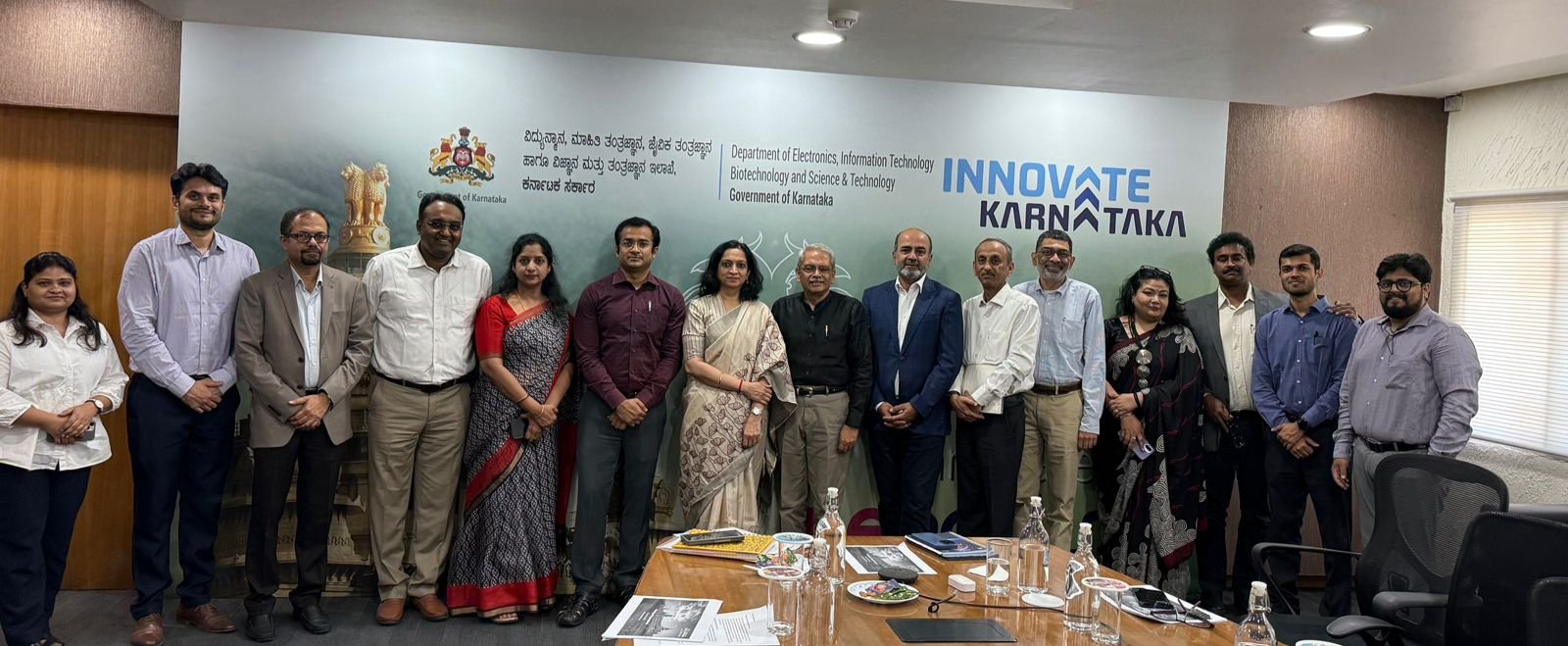
The committee is chaired by Kris Gopalakrishnan, Co-founder of Infosys, and co-chaired by Dr. N. Manjula, Secretary, Department of Electronics, IT, Biotechnology and Science & Technology, Government of Karnataka. It includes leading experts from industry, academia, policy and legal fields.
The first meeting of the committee was held in Bengaluru, where members deliberated on the rapidly evolving AI ecosystem and the need for strong governance mechanisms to ensure responsible deployment of AI technologies, particularly in public systems that directly impact citizens.
Responsible AI Policy and Roadmap
The committee will work on developing a Responsible AI policy and implementation roadmap for Karnataka, enabling innovation while ensuring that AI systems used across government departments remain safe, fair, transparent and accountable.
Key areas discussed during the meeting include the formulation of AI governance principles aligned with India’s AI guidelines and global best practices, focusing on legality, fairness, privacy, security, transparency, accountability, human oversight and inclusion.
Risk Classification and Safeguards
The committee will also develop a risk classification framework for AI systems used in governance, categorising them based on their impact and risk levels. This framework will help determine how AI technologies should be adopted across government departments in line with the Digital Personal Data Protection Act, sector-specific laws and India’s Digital Public Infrastructure.
Members also discussed identifying AI practices that should be restricted or prohibited, such as social scoring of citizens, unlawful surveillance, discriminatory profiling, or automated decision-making in critical areas without human oversight.
High-Risk Sector Oversight
Special safeguards are expected to be recommended for high-risk AI applications in sectors such as welfare delivery, healthcare, education, policing, recruitment, financial decision-making and public safety.
The framework will include data governance standards, addressing issues such as data quality, provenance, anonymisation, purpose limitation and secure data-sharing protocols.
Transparency measures will also be introduced to ensure citizens are informed when interacting with AI-enabled systems and have access to human review mechanisms, grievance redressal processes and appeal procedures in case of errors or discrimination.
Tackling AI Risks and Deepfakes
The committee will recommend independent audits, cybersecurity safeguards and incident response protocols to address risks such as algorithmic bias, adversarial attacks, data poisoning, deepfakes and misuse of generative AI technologies.
It will also study the impact of generative AI and social media technologies, including risks related to misinformation, synthetic content and algorithmic amplification that could influence society or elections.
Procurement and Capacity Building
Another key focus area is developing Responsible AI procurement guidelines for government departments adopting AI solutions, including vendor due diligence, transparency in training data, and audit rights.
The committee will also recommend capacity-building programmes and AI literacy initiatives for government officials, along with identifying priority AI use-cases that can be safely piloted across departments.
Expert Representation
The committee includes senior leaders from global technology companies and institutions such as Accenture, IBM, Kyndryl, Wipro, IIIT Bangalore and NASSCOM, along with experts in AI policy, law and governance.
The Managing Director of the Karnataka Innovation and Technology Society (KITS) will serve as the Member Secretary of the committee.
Timeline for Recommendations
The panel will submit an interim report within 60 days and a final report within 90 days, outlining a policy framework, risk classification model and implementation roadmap for responsible AI adoption across the government.
Electronics, IT and Biotechnology Minister Priyank Kharge said the initiative reflects Karnataka’s commitment to building a responsible and globally competitive AI ecosystem.
He noted that as Karnataka enters its “Deeptech Decade,” the state aims not only to accelerate AI innovation but also to ensure that such technologies are deployed responsibly and in the public interest.
According to Kharge, the Responsible AI Committee will help Karnataka create a governance framework that balances innovation with transparency, accountability and citizen trust, ensuring that the state remains a leader in emerging technologies while safeguarding public interest.
ಇದನ್ನೂ ಓದಿ: ಕರ್ನಾಟಕದಲ್ಲಿ ಜವಾಬ್ದಾರಿಯುತ AI ನೀತಿಗೆ ಚಾಲನೆ: ಕ್ರಿಸ್ ಗೋಪಾಲಕೃಷ್ಣನ್ ನೇತೃತ್ವದಲ್ಲಿ ಸಮಿತಿ ರಚನೆ
About the Author