
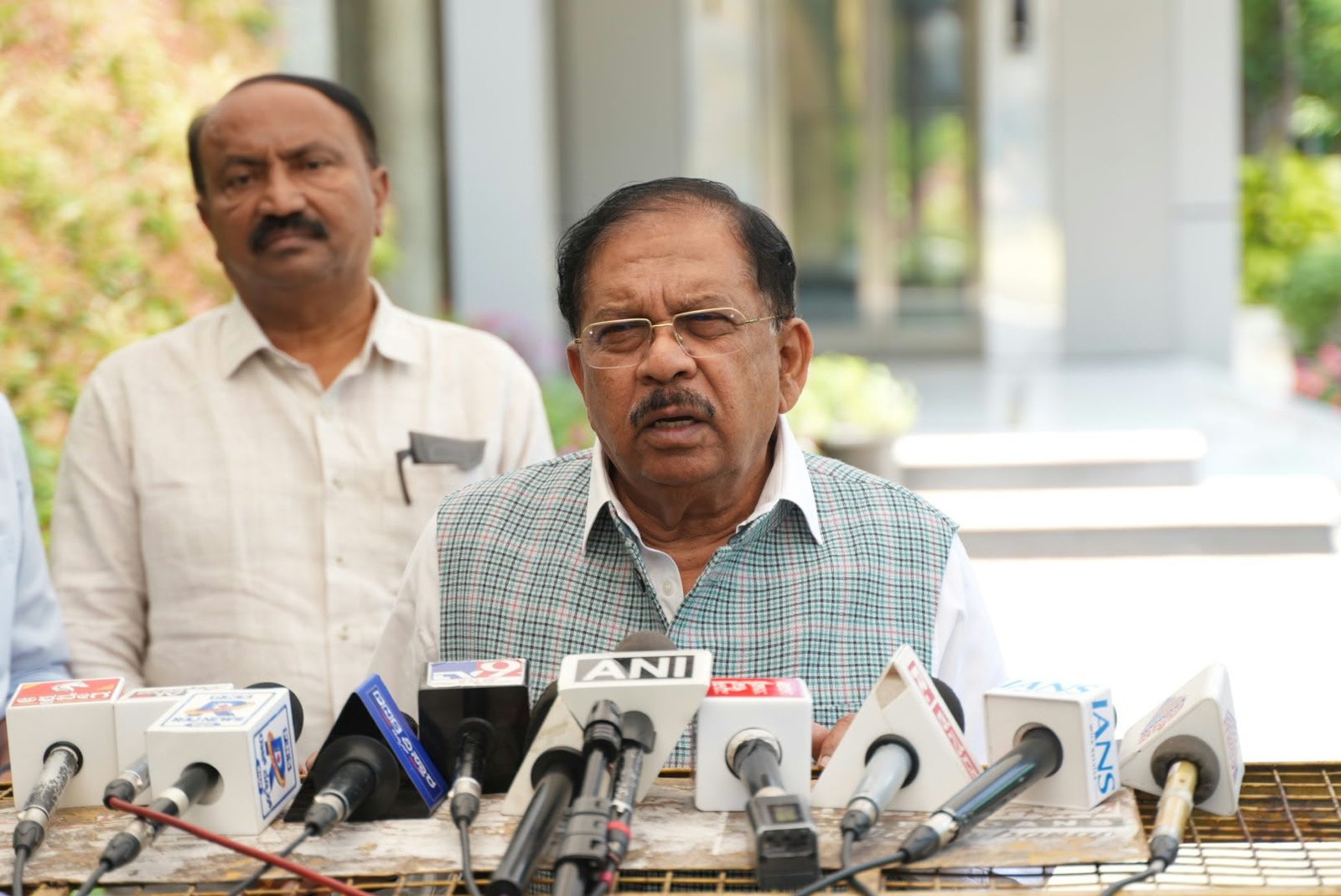
G. Parameshwara briefs the media on Karnataka’s drought situation. Photo: Supplied
Bengaluru: Recent showers cannot reverse crop damage caused by months of deficient rainfall, Karnataka has told the visiting central drought assessment team, urging it to evaluate the losses already sustained rather than view the latest rain as an end to the crisis.
Deputy Chief Minister G. Parameshwara said the rainfall deficit from June through September and the resulting crop losses must remain central to the assessment. Rain over the past two or three days would not revive crops already damaged, he said.
The showers had also not been sufficient to resolve drinking-water shortages, although they could help some grass grow, he said after a meeting with the central team.
Drinking water takes priority over irrigation
Parameshwara said the state had not released reservoir water for crops in order to protect drinking-water supplies. Officials had briefed the team on reservoir storage, shortages in lakes and plans to manage the available water in the coming months.
The briefing also covered fodder availability, measures to prevent distress migration, crop-insurance registration and input subsidies for affected farmers.
Field assessment across drought-hit areas
The team, led by central government Joint Secretary Ajit Kumar Sahu, had been divided into three groups to inspect north Karnataka, central Karnataka and other parts of the state, Parameshwara said. He said its field visits would extend over four days.
According to Parameshwara, 217 taluks had been declared drought-affected. Ground-truthing would be conducted in the remaining 23 taluks, with further declarations depending on whether they met the central guidelines.
He said around 39 lakh farmers had registered for crop insurance, describing it as the highest registration so far. The state had also briefed the team on employment works intended to protect livelihoods and reduce migration.
State seeks assessment under central norms
Parameshwara said Karnataka had submitted two drought memoranda and had calculated its losses and relief requests within the central government’s guidelines. He urged the team to inspect conditions on the ground and make a fair assessment.
The state was seeking the assistance it was entitled to under the rules, rather than additional or special assistance, he said. He expressed confidence that relief would be provided without a repeat of the earlier need to approach the Supreme Court.
On demands for higher input subsidies, he said the state would examine the issue after receiving central relief funds.
The assessment also follows Chief Minister D.K. Shivakumar’s renewed drought-relief request to the Central team.
About the Author