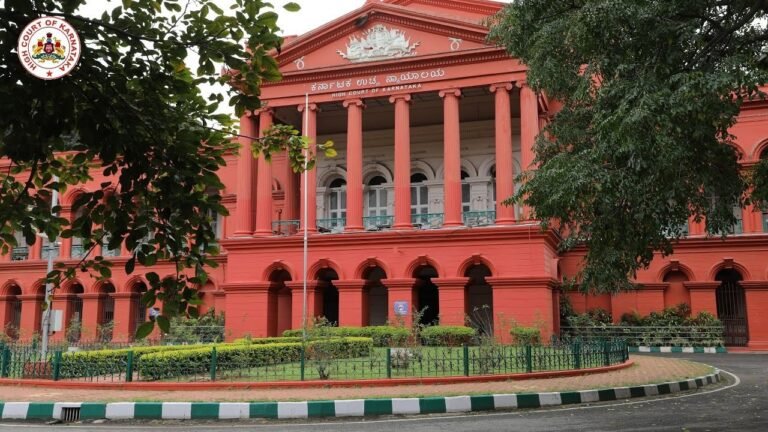
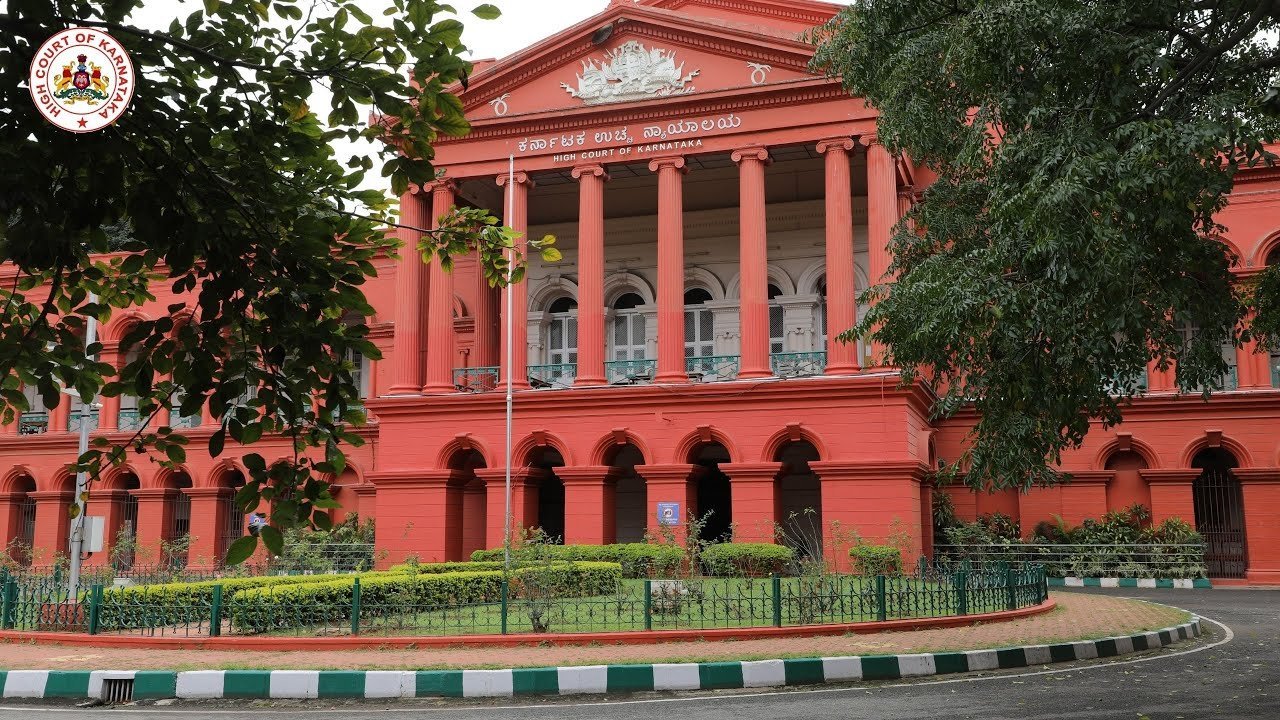
The High Court of Karnataka in Bengaluru. Image: High Court of Karnataka
Bengaluru: The Karnataka High Court has dismissed a petition by Vijayapura City MLA Basanagouda Patil Yatnal against a trial court’s order taking cognizance of a criminal defamation complaint filed by Shivananda S Patil, holding that a complainant is not necessarily required to examine a witness who says that the complainant’s reputation fell in that witness’s own estimation. Justice Anant Ramanath Hegde passed the order on November 12 in Criminal Petition No. 12881 of 2026, after reserving it on November 6.
The complaint, filed on July 18, 2025, concerns a statement Yatnal allegedly made on April 30, 2025 on a channel named Gadinada Kranti and broadcast on YouTube. The XLII Additional Chief Judicial Magistrate, Bengaluru, took cognizance of the offence under Section 356(2) of the Bharatiya Nyaya Sanhita (BNS), which corresponds to Section 500 of the Indian Penal Code, in PCR No. 11492/2025. The LXXXI Additional Sessions Judge, Bengaluru, upheld that order on August 18, 2026.
Yatnal argued that cognizance could not have been taken because Explanation 4 to Section 356(1) of the BNS requires a person other than the complainant to say that the complainant’s reputation was lowered in that person’s own estimation. The complainant and two witnesses had said his reputation was lowered in the estimation of others, but the two witnesses had also said the allegations were false. The complainant’s senior counsel argued that the statement was per se defamatory, was not disputed and had been widely circulated on social media.
Rejecting the argument, the court said the expression “in the estimation of others” does not mean that the particular person whose estimation is affected must always be examined at the stage of taking cognizance, and that damage to reputation may be prima facie inferred from the circumstances of the publication and the contents of the imputation.
The court held that whether a witness other than the complainant is needed depends on the nature of the imputation and the other material. If the imputation is prima facie capable of lowering the complainant’s moral or intellectual character, or shows him as a person of bad character, the court may take cognizance on the statements of the complainant and witnesses who say his reputation was lowered in the estimation of others. Where it is not, the magistrate may require further material or a witness who says the complainant’s reputation was lowered in that witness’s own estimation.
Finding no error in the orders of the trial court and the revisional court, the High Court distinguished the rulings cited by Yatnal, including the Supreme Court’s decision in Manoj Kumar Tiwari v. Manish Sisodia, saying the imputations in those cases were different. It dismissed the petition, adding that its observations are not an opinion on the merits of the complaint or the defence and that all contentions on merits are open to the trial court.
About the Author