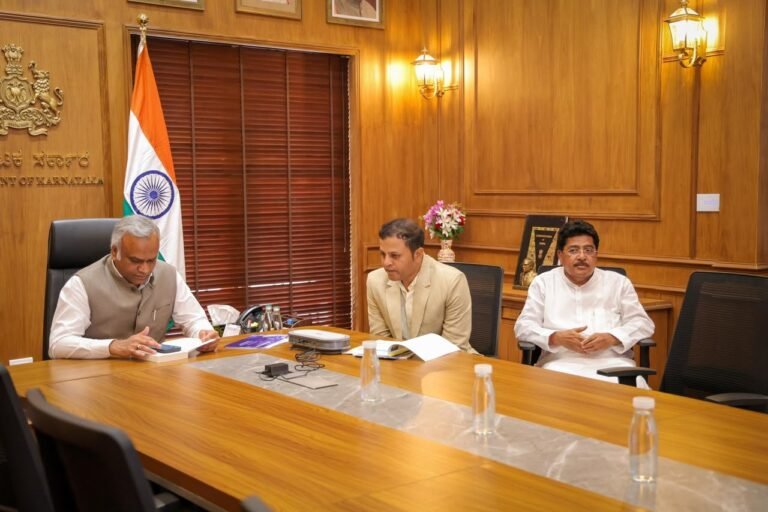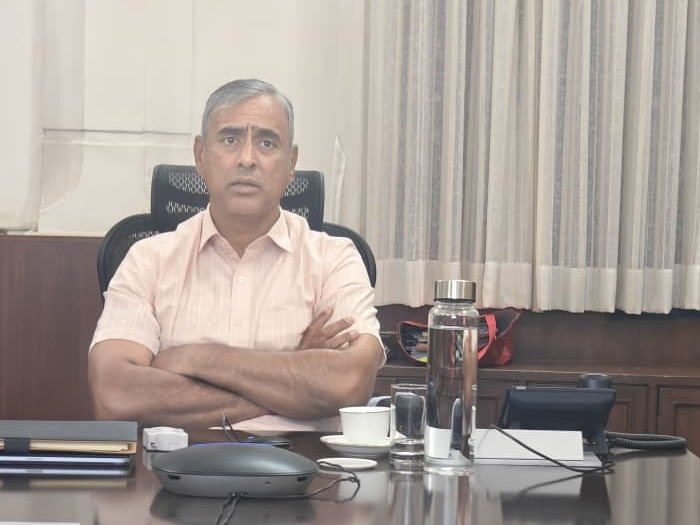
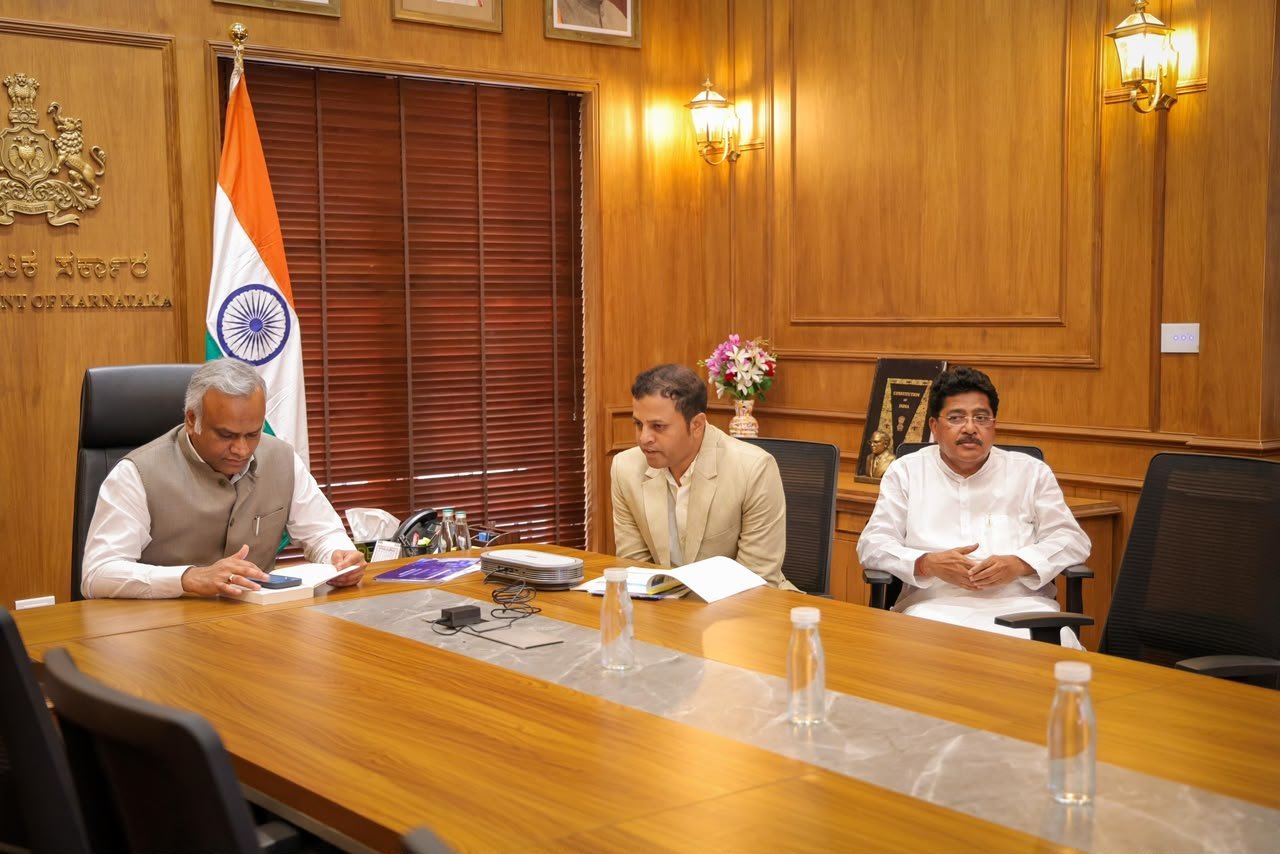
File photo: Minister Priyank Kharge at a review meeting on Kalaburagi district on November 7.
Bengaluru: A three-year, ₹50 crore “Kalaburagi Bio-Economy Mission 2026” has been proposed for the seven districts of Kalyana Karnataka to use local biological resources to raise farm productivity and farmers’ income, add value to local produce and create rural enterprises and jobs, Minister Priyank Kharge has said.
The programme, proposed by the Bangalore Bioinnovation Centre (BBC), needs an estimated ₹50 crore. It is planned for Kalaburagi, Bidar, Yadgir, Raichur, Koppal, Ballari and Vijayanagara districts, with Kalaburagi to be developed as its main hub, said Kharge, who is Home, Information Technology, Biotechnology and e-Governance Minister and Kalaburagi’s district in-charge minister.
The mission aims to identify the region’s plant wealth, local crops, microorganisms and agriculture-related bio-resources and, with modern biotechnology, convert them into farm technologies, value-added products and local manufacturing units. With scientific research and technology support, farmers could earn additional income, rural youth could find jobs and women could get entrepreneurship opportunities, Kharge said. The vision is to build Kalyana Karnataka into a major bio-economy centre.
Six focus areas
- Bio crop protection: bio-based solutions for wilt disease in tur (pigeon pea), anthracnose in chilli and thrips, to reduce dependence on chemicals and improve crop health and yield.
- Value addition to tur dal: instead of selling tur only as a raw farm product, converting it into protein bars, protein-concentrated products, high-protein flour, nutritious drinks and ready-to-eat foods, to support local food-processing industries.
- Kamalapur red banana conservation: conserving this distinctive Kalaburagi district variety and producing quality saplings through tissue culture, with a target capacity of 2 to 3 lakh saplings a month.
- Local microbe research: identifying native microorganisms and setting up a regional microbial biobank, with research on biofertilisers, biological pest control and soil health.
- Integrated bio-economy industrial park: a park in Kalaburagi with facilities for research, biomanufacturing, tissue culture, food processing, quality testing and incubation of startups.
- Rural entrepreneurship: training, guidance on starting enterprises, market linkages, value addition and export-readiness support for farmer producer organisations (FPOs), startups and rural entrepreneurs.
Over three years, the mission aims to implement the programme with an investment of about ₹50 crore across the seven districts, identify the potential of more than 40 local bio-products, collect and study 7,000 to 10,000 soil samples, conserve local crops and raise their productivity, promote value addition and local production units, and create new entrepreneurship opportunities for farmers, women and youth.
Conceived under the theme “From Native Biodiversity to Farmer Prosperity”, the mission is expected to improve crop protection and soil health, give tur and other local produce greater market value, conserve the Kamalapur red banana and encourage its wider cultivation, and lay a base for sustainable economic growth through biotechnology research and innovation, Kharge said.
The project is at the proposal stage and is subject to a detailed project report (DPR), a feasibility study and the state government’s approval, the minister said.
Related:
About the Author