Skip to content
The Bengaluru Live | Bengaluru News, Breaking Updates

The Bengaluru Live | Bengaluru News, Breaking Updates

Bengaluru’s Leading News Portal

Primary Menu
  • HOME
  • Bengaluru
  • Karnataka
  • POLITICS
  • CRIME
  • Delhi
  • Kannada News
  • Hindi News
  • MORE NEWS
    • Supreme Court
    • CITY UPDATES
    • PM
    • SPORTS
    • STATE
    • EDUCATION
    • ENTERTAINMENT
    • HEALTH
    • Real Estate
    • SPORTS
    • CORONA
    • MOBILITY/TRANSPORT
    • Horoscope
    • Submit a Press Release
  • Sponsored
  • Home
  • CITY UPDATES
  • Human exclamations of pain are similar across the world, new study reveals
  • CITY UPDATES
  • STATE

Human exclamations of pain are similar across the world, new study reveals

November 25, 2024 9:28 AM 5 minutes read
📘 Read this story in Kannada

Hong Kong, Nov 25 (The Conversation) We all know what words we might shout out when we stub a toe or touch something hot. For those of us who speak English, it’s probably “ouch”.

But what kinds of “pain words” (or “interjections”) do speakers of other languages use to express pain? And do these interjections feature similar sounds across languages, as we might expect if they are reflexive responses? A new article published in the Journal of the Acoustical Society of America examines this question for the first time. Our study measured vowels (“a”, “i”, “o”, etc.) in interjections expressing pain, disgust and joy in over 130 languages across the globe. We then compared these with the vowels in nonlinguistic vocalisations (like moans, screams etc.) to test whether interjections and vocalisations share similar sounds.

Our results suggest pain interjections can indeed be traced back to nonlinguistic vocalisations, but the story is less clear for joy and disgust.

What are interjections? Interjections are standalone words that can be used on their own (like “ouch!” or “wow!”). They don’t combine grammatically with other words.

Because linguists mostly study grammatical combinations, for a long time they didn’t pay much attention to interjections. This is why some very basic questions about them have yet to be answered – despite interjections being very frequent in speech and fundamental to communication.

Pain, disgust and joy The main goal of our research was to find out whether interjections share similar vowels across languages based on the emotion or affect they’re meant to express.

If so, we wanted to know whether these commonalities can be explained by the acoustic forms of nonlinguistic vocalisations like cries and moans.

To test this, we collected pain, disgust and joy interjections from dictionaries spanning many languages in Africa, Asia, Australia and Europe (more than 500 interjections in 131 languages).

To compare our interjections with noninterjection words, we used large databases with comprehensive lists of words for languages in our sample. This allowed us to run statistical tests to compare the distribution of vowels in interjections to those found in other words.

These tests showed that on average, the pain interjections we collected have more “a” vowels, and more successions of vowels, like “ai” (as in “ay!” in Spanish) or “au” (as in “ouch!” in English). This applies across all the regions of the world we investigated.

To be clear, this result doesn’t mean all pain interjections will contain an “a”, “ai” or “au” sound. But if you pick a random pain interjection, it has more chances to have these sounds than if you pick a random disgust or joy interjection, or any other word.

Of the three types of affective experiences we looked at, pain was the only one with such properties. Vowels in disgust and joy interjections, by contrast, did not differ markedly from other words.

This shows the vowels in pain interjections are not random. So, where do they come from? Pain interjections resemble pain vocalisations To explore this question, we looked at the nonlinguistic sounds people make to express pain, as well as disgust and joy.

We recorded a large number of English, Japanese, Mandarin, Spanish and Turkish speakers producing vocal sounds – without conventional words – to express these affective experiences. We then counted the vowels in these vocalisations.

We found each emotional experience has its own vowel profile for vocalisations: pain has more “a” vowels, disgust more central, “neutral” vowels (like the second vowel in “dragon”), and joy has more “i” vowels.

In other words, both interjections and nonlinguistic vocalisations for pain have more “a” vowels than expected. However, disgust and joy interjections don’t share the same vowels as the vocalisations expressing those emotions.

What does it tell us? Our study shows that while interjections are conventional and language-specific, their vowels are not fully random. Pain interjections have markedly more “a”, “ai” or “au” than expected. And with respect to “a”, they resemble nonlinguistic vocalisations.

This suggests that pain interjections could derive from the nonlinguistic sounds people produce when in pain, but this doesn’t seem to be the case for disgust and joy.

These results shed light on big questions about the origins of linguistic forms. We often think of words as arbitrary combinations of sounds. The fact people say “house” in English, but “casa” in Spanish, is often considered purely conventional.

But some aspects of language may be less arbitrary than others.

Pain – a central aspect of human experience – is associated with strong physiological and emotional responses, to the point that these spontaneous reactions could shape the conventional words humans use to express pain.

Much remains to be understood. In this study, we focused on vowels. But this raises the question: what about consonants (“p”, “t”, “s”, etc.)“? And what about emotions other than pain, disgust and joy? Such investigations will shed further light on how embodied human language is, and how it developed originally in our ancestors. (The Conversation) AMS

About the Author

View All Posts

Post navigation

Previous: High-level delegation from Belarus arrives in Pakistan amid PTI party’s protest march
Next: IPL auction list of all sold, unsold and retained players for 2025

Related Stories

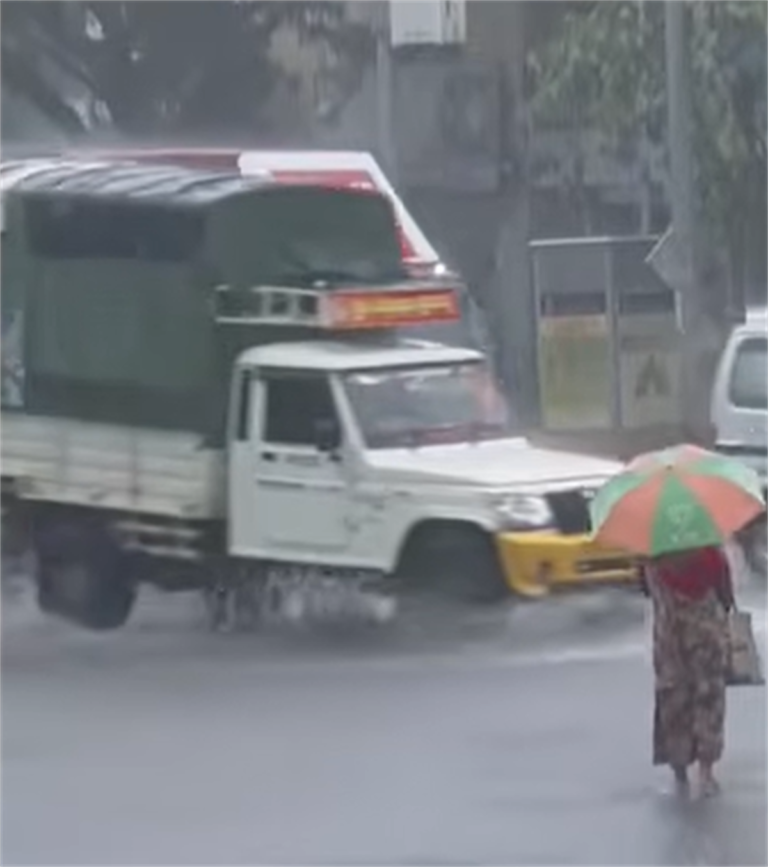
Rain on a city road; image used for representational purposes
  • Bengaluru
  • CITY UPDATES

IMD Forecasts Light Rain in Bengaluru From November 25 to 27

The Bengaluru Live November 25, 2026 10:00 AM
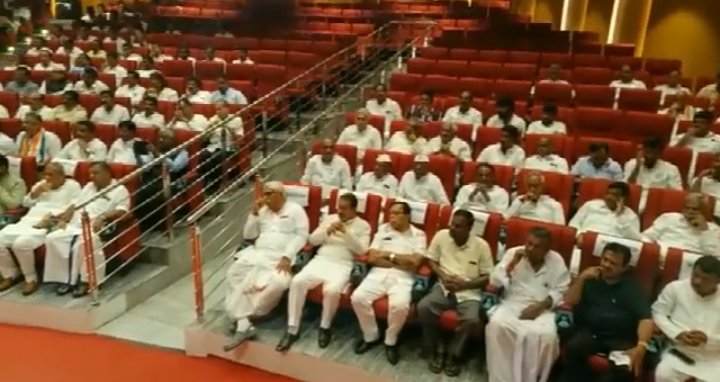
Congress MLAs seated at a Congress Legislative Party meeting at the party office in Bengaluru
  • Karnataka
  • STATE

Karnataka Appoints 11 MLAs as Chairpersons of Boards, Corporations and Commission With Cabinet-Rank Status

The Bengaluru Live November 24, 2026 8:23 PM
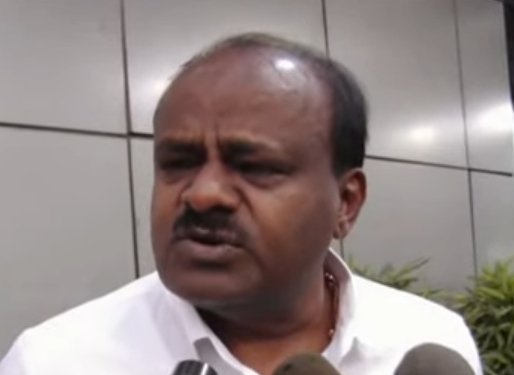
Union Minister H.D. Kumaraswamy speaking to reporters
  • Karnataka
  • STATE

Kumaraswamy Questions Hassan Cyber Police Notice: CM Gave Clean Chit the Day I Released WhatsApp Chat, So What Is the Probe For?

The Bengaluru Live November 24, 2026 7:39 PM

Latest Post

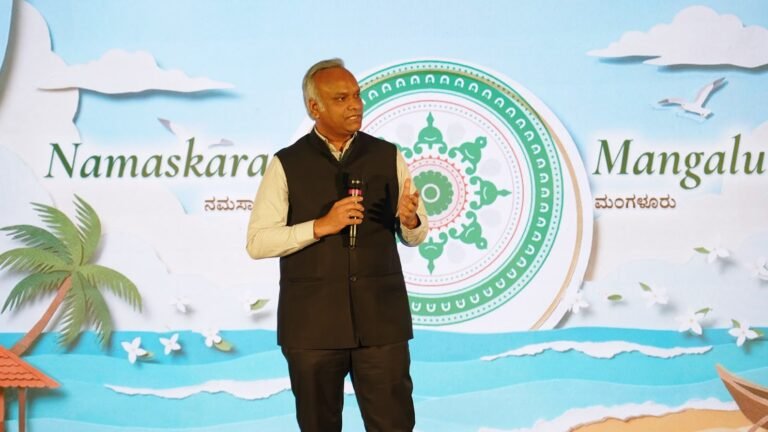
Dakshina Kannada Is Karnataka’s Second-Largest Contributor to State GDP: Priyank Kharge Minister Priyank Kharge speaking at the inauguration of Deloitte’s office in Mangaluru, with a Namaskara Mangaluru backdrop
  • Karnataka

Dakshina Kannada Is Karnataka’s Second-Largest Contributor to State GDP: Priyank Kharge

November 25, 2026 9:46 PM
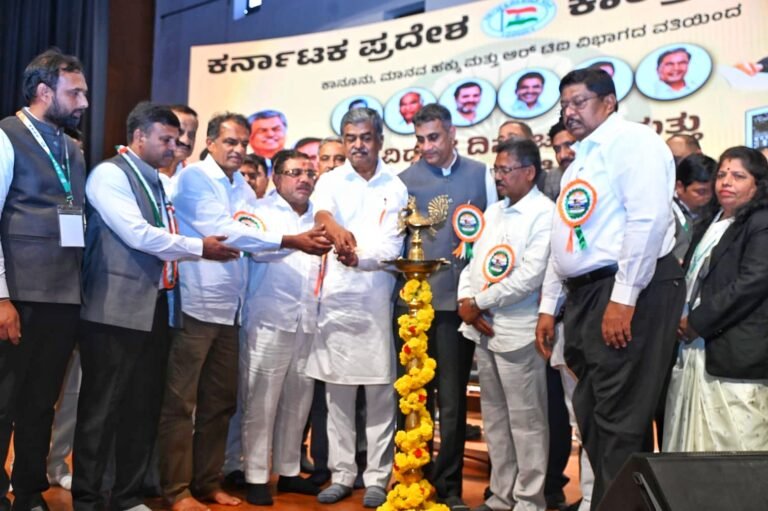
Constitution Is for the Last Person in Society, Not Only the Well-Off: KPCC President B.K. Hariprasad Congress leaders and office-bearers lighting a lamp at the Constitution Day seminar at the KPCC office in Bengaluru
  • Karnataka

Constitution Is for the Last Person in Society, Not Only the Well-Off: KPCC President B.K. Hariprasad

November 25, 2026 9:40 PM
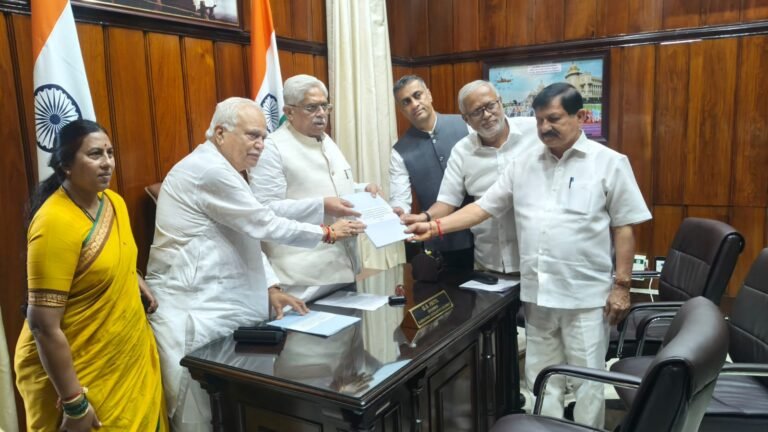
Assembly House Committee on KPSC Reforms Submits Report to Speaker G.S. Patil Members of the House Committee submitting its report on KPSC reforms to Speaker G.S. Patil
  • Karnataka

Assembly House Committee on KPSC Reforms Submits Report to Speaker G.S. Patil

November 25, 2026 9:26 PM
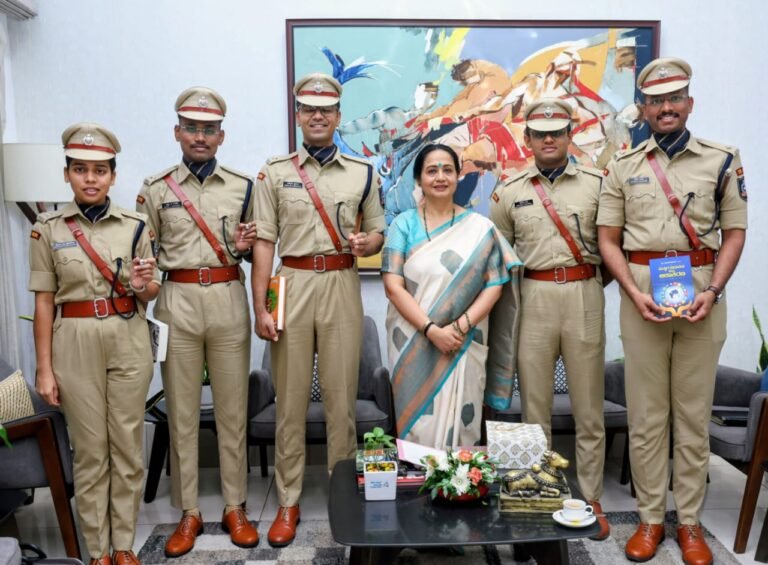
Learn Kannada, Put People’s Problems First: Chief Secretary Tells Five New IPS Probationers of Karnataka Cadre Five IPS probationers in uniform standing with Chief Secretary Dr Shalini Rajneesh, one holding a book, at Vidhana Soudha
  • Karnataka

Learn Kannada, Put People’s Problems First: Chief Secretary Tells Five New IPS Probationers of Karnataka Cadre

November 25, 2026 9:02 PM
State-Level Constitution Day on November 26 in Mysuru: Chief Minister to Inaugurate, One Lakh Expected Ministers and officials seated at a press conference in Mysuru in front of a Youth Parliament 2026 banner
  • Karnataka

State-Level Constitution Day on November 26 in Mysuru: Chief Minister to Inaugurate, One Lakh Expected

November 25, 2026 8:59 PM
Rs 27 Lakh, a Promotion Talk and a Deputy CM’s Name: What the GBA Audio Row Says Office-bearers of the GBA employees’ association handing a memorandum to GBA Chief Commissioner M. Maheshwar Rao on stage, with other members standing around
  • Bengaluru

Rs 27 Lakh, a Promotion Talk and a Deputy CM’s Name: What the GBA Audio Row Says

November 25, 2026 8:01 PM

You may have missed

Minister Priyank Kharge speaking at the inauguration of Deloitte’s office in Mangaluru, with a Namaskara Mangaluru backdrop
  • Karnataka

Dakshina Kannada Is Karnataka’s Second-Largest Contributor to State GDP: Priyank Kharge

The Bengaluru Live November 25, 2026 9:46 PM
Congress leaders and office-bearers lighting a lamp at the Constitution Day seminar at the KPCC office in Bengaluru
  • Karnataka

Constitution Is for the Last Person in Society, Not Only the Well-Off: KPCC President B.K. Hariprasad

The Bengaluru Live November 25, 2026 9:40 PM
Members of the House Committee submitting its report on KPSC reforms to Speaker G.S. Patil
  • Karnataka

Assembly House Committee on KPSC Reforms Submits Report to Speaker G.S. Patil

The Bengaluru Live November 25, 2026 9:26 PM
Five IPS probationers in uniform standing with Chief Secretary Dr Shalini Rajneesh, one holding a book, at Vidhana Soudha
  • Karnataka

Learn Kannada, Put People’s Problems First: Chief Secretary Tells Five New IPS Probationers of Karnataka Cadre

The Bengaluru Live November 25, 2026 9:02 PM

About us

The Bengaluru Live is an independent digital news publication focused on Bengaluru and Karnataka, publishing news and information in English and Kannada since February 2020.

Useful Links

  • About The Bengaluru Live
  • Contact Us
  • Editorial Standards & Corrections Policy
  • Publisher, Editorial Responsibility & Grievance
  • Ownership & Funding Transparency
  • Advertise with us
  • Privacy Policy
  • Terms of Service
  • Submit a Press Release

Recent News

  • Dakshina Kannada Is Karnataka’s Second-Largest Contributor to State GDP: Priyank Kharge
  • Constitution Is for the Last Person in Society, Not Only the Well-Off: KPCC President B.K. Hariprasad
  • Assembly House Committee on KPSC Reforms Submits Report to Speaker G.S. Patil
  • Learn Kannada, Put People’s Problems First: Chief Secretary Tells Five New IPS Probationers of Karnataka Cadre
©Copyright 2026 The Bengaluru Live All rights reserved. | MoreNews by AF themes.