
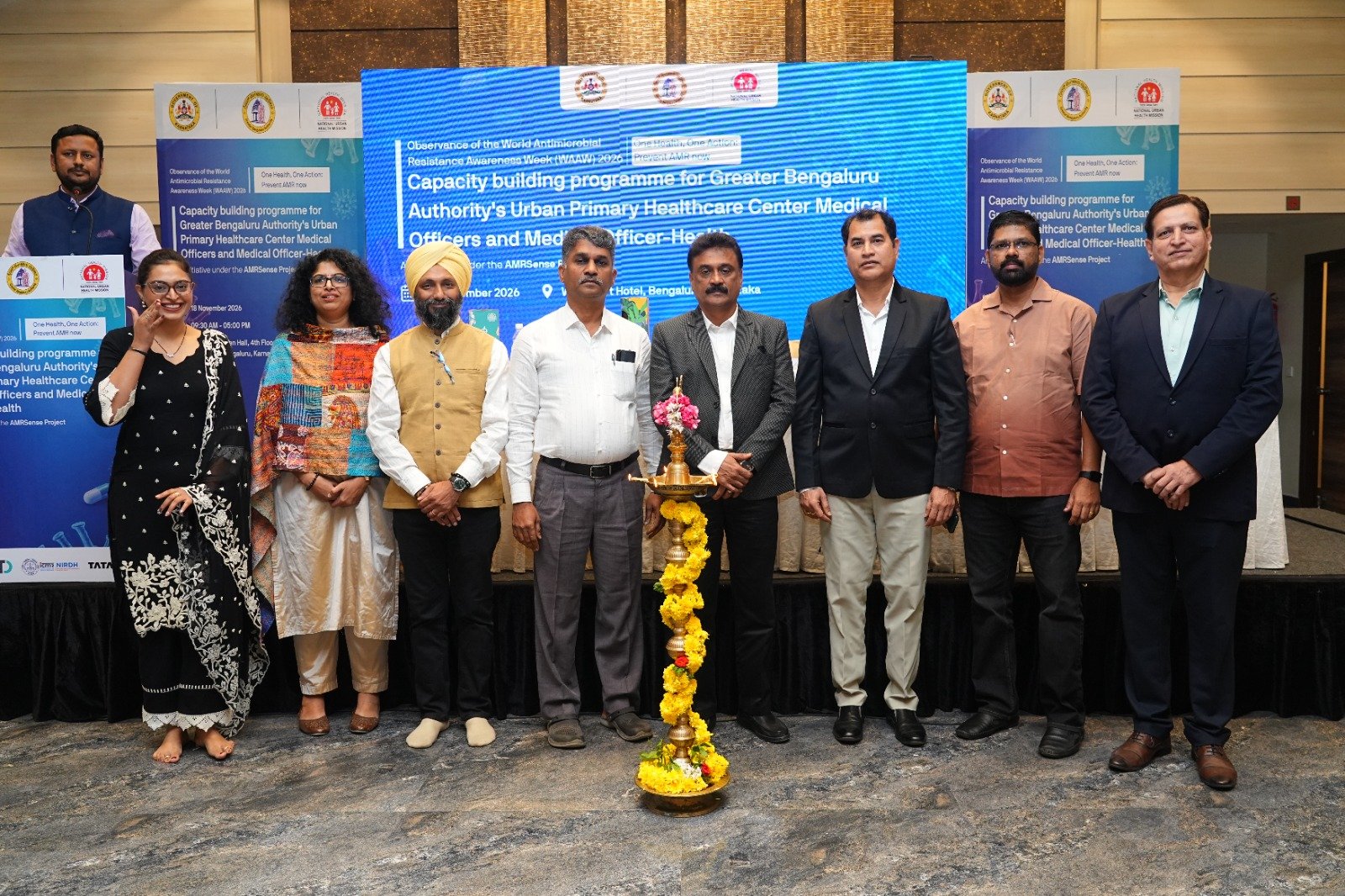
Officials and experts light the lamp at the opening of an antimicrobial resistance programme for GBA medical officers in Bengaluru on Thursday. Image: Supplied
Bengaluru: Doctors must prescribe antibiotics responsibly to curb rising antimicrobial resistance (AMR) caused by their unnecessary and excessive use, Greater Bengaluru Authority (GBA) Chief Health Officer Dr Syed Sirajuddin Madani said on Thursday. He was speaking after inaugurating a programme for health medical officers and urban primary health centre (UPHC) medical officers in the GBA area, held as part of World Antimicrobial Resistance Awareness Week 2026 by the Health Department’s Metropolitan Surveillance Unit in collaboration with the AMRSense consortium, according to a GBA release.
Doctors at primary health centres, Namma Clinics and hospitals in the GBA area should prescribe antibiotics only after a proper medical examination, he said. Some 60 to 70 per cent of cases are viral infections, in which antibiotics are not needed, and the trend of using strong antibiotics such as levofloxacin and cefixime even for common fever is worrying, he said.
He warned that action will be taken against medical stores that dispense medicines without a doctor’s advice and against the use of antibiotics by unqualified practitioners. Where needed, laboratory tests including blood culture should be done, and medicines should be given as per treatment guidelines only after a bacterial infection is confirmed. Today’s negligence could seriously affect the health of the next generation, he said.
Dr Chandramohan, the state AMR nodal officer in the Health and Family Welfare Department, said antimicrobial resistance is a major challenge for future public health. Unnecessary antibiotic use for colds, coughs and viral fevers must be stopped, and hand hygiene and infection control measures must be followed continuously in hospitals, he said.
He said the Access, Watch and Reserve classification should be followed in the use of antibiotics: Access-category drugs should be preferred for common infections, Watch-category drugs used with caution and the strong Reserve-category drugs used only in emergencies. To control AMR, unnecessary antibiotic use must also be prevented in animal husbandry, agriculture and fisheries, and all sectors must work together under the One Health approach, which considers human, animal and environmental health together, he said.
District Surveillance Officer and AMR district nodal officer Dr Venkatesh said deaths caused by antimicrobial resistance are worrying and the problem is likely to become more serious over the next 10 years. Medical officers should use the available antibiotics properly and follow responsible treatment practice, he said.
He said steps are being taken to set up a Metropolitan Surveillance Unit and a central laboratory in the GBA area to strengthen public health surveillance, and that the cooperation of medical officers is needed for the success of pilot projects undertaken with ICMR, Tata 1mg and other research institutions.
Dr Chandrashekar B, microbiologist of the state surveillance unit of the Health and Family Welfare Department; Dr Savitha, assistant programme officer of the MSU; Dr Sachin Gupte, senior adviser at PATH; and Nachiketu Gudi, AMR technical officer, were present.
About the Author