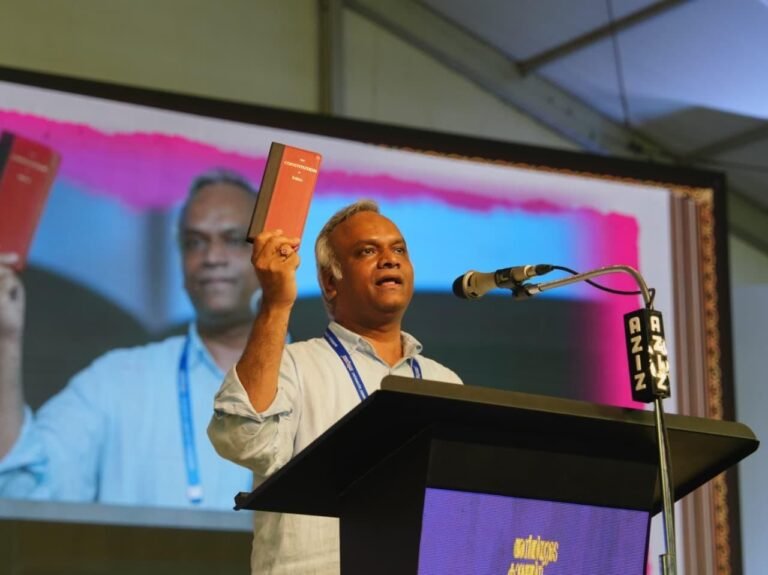
KATHMANDU : Chief Justice of India DY Chandrachud on Saturday delivered a lecture on juvenile justice at a symposium organized by the Supreme Court of Nepal in association with UNICEF and highlighted that children are often driven to delinquent behaviour due to economic disparity, domestic violence, poverty.
CJI explained the correlation between deprivation of economic resources and juvenile delinquency and a holistic approach focused on aspects such as deprivation and poverty is necessary to address this as children can become more susceptible to negative influences with no necessary guidance.
“Children are often driven towards delinquent behaviours by complex societal challenges like economic disparities and social inequalities. Family breakdowns resulting from issues like domestic violence or poverty can leave children without the necessary guidance, making them more susceptible to negative influences,” CJI said.
Referring to the American drama film “The Florida Project,” CJI raised the issue of economic disparity and societal inequity faced by a juvenile and increase their risk of delinquency.
“In the film “The Florida Project” (2017), young Moonee navigates her childhood in the shadow of economic hardship, residing with her single mother in a budget motel. As her mother grapples with personal obstacles, Moonee finds herself navigating the harsh realities of poverty largely on her own,” he said.
“The film tenderly portrays the impact of familial instability on children, shedding light on the delicate interplay between economic disparity, societal inequity, and familial bonds. Moreover, practices like child marriage and labour may deprive children of their childhoods, exposing them to exploitation and abuse, further heightening the risk of delinquency,” he added.
The landmark gathering was aimed at reshaping juvenile justice systems, the National Symposium on Juvenile Justice unfolded today with an array of stakeholders, including legal luminaries, government officials, and international representatives. CJI D.Y. Chandrachud delivered a keynote address, emphasizing the pivotal role of juvenile justice in shaping future societies.
Gathering at the symposium were distinguished figures such as Bishowambhar Prasad Shrestha, Chief Justice of Nepal, Bhagbati Chaudhary, Minister of Women, Children and Senior Citizens, Padam Giri, Minister of Law, Justice and Parliamentary Affairs, and Alice Akunga, UNICEF Representative to Nepal, among others.
Speaking at the event, CJI Chandrachud also lauded the efforts of the Supreme Court of Nepal, the Secretariat of the Central Child Justice Committee, and UNICEF Nepal for organizing a symposium that not only fosters discourse but underscores a collective commitment to safeguarding the rights and well-being of children, who epitomize the future of innovation, growth, and humanity.
In his address, CJI Chandrachud traced the historical evolution of juvenile justice systems, highlighting the establishment of separate structures for dealing with juveniles during the mid-nineteenth century. He underscored the pivotal role of international conventions such as the United Nations Convention on the Rights of the Child (CRC) in setting standards for juvenile justice.
Drawing parallels between Nepal and India, CJI Chandrachud emphasized both countries’ shared commitment to international conventions safeguarding children’s rights. He commended Nepal’s recent legislative milestone with the enactment of the Act Relating to Children 2018, which aligns with UN standards by raising the minimum age for children and introducing provisions for their protection.
“At the heart of the development of juvenile justice lies the United Nations Convention on the Rights of the Child (CRC) of 1989, a cornerstone document that every country in South Asia has ratified. The CRC is a successor of UN Standard Minimum Rules for the Administration of Juvenile Justice 1985 (the ‘Beijing Rules’),” he said.
“These conventions prescribe the minimum standard for handling juvenile delinquents. The focus is not only on the postconviction treatment of the juvenile. The emphasis is rather on ensuring that the process of criminal justice, right from the initial contact with police and prosecution is altered to suit the needs of juveniles,” he added.
Similarly, CJI highlighted India’s strides in evolving its juvenile justice system, particularly with the enactment of the Juvenile Justice (Care and Protection of Children) Act, 2015, which prioritizes rehabilitation and reintegration.
“India has been making consistent efforts to evolve its juvenile justice system. India first enacted the Juvenile Justice Act in 1986. Later, it was replaced by the Juvenile Justice Act of 2000, which was also subsequently replaced by the Juvenile Justice (Care and Protection of Children) Act, 2015, in a need for a more robust and practical justice framework focuses on reformative approaches,” he said.
“The Act of 2015 embodies a holistic approach, emphasizing the special needs and vulnerabilities of juveniles and prioritizing their rehabilitation and reintegration into society. The implementation of various juvenile justice legislations for around four decades in India has led to the establishment of facilities, structures, and systems addressing children’s needs within the protection system,” he added.
CJI Chandrachud delved into the core principles of juvenile justice, emphasizing the rights of the child during trial, the best interest of the child, and restorative justice. He cited specific provisions from both Nepalese and Indian legislations, emphasizing rehabilitation over detention and the paramount importance of the child’s well-being.
“Both Countries have a shared commitment to international conventions and treaties aimed at safeguarding the rights of children, such as the CRC. Nepal was among the first countries to ratify the CRC in 1990. Subsequently, Nepal enacted its initial juvenile law, the Children’s Act, in 1992, which was enacted to protect the rights and interests of children for the physical,
mental, and intellectual development of children,” he said.
“After nearly three decades, the enactment of the Act Relating to Children 2018 marked a significant milestone, replacing the 1992 law. This legislation raised the minimum age for children from 16 to 18, aligning with the UN Convention standards, and introduced provisions, ensuring that children under 18 are not held criminally liable for acts committed against the law,” he added.
Addressing challenges in juvenile justice implementation, CJI highlighted issues such as inadequate infrastructure, social realities, and the evolving landscape of cybercrimes. He stressed the need for tailored approaches to address the specific needs of marginalized groups, including juveniles with disabilities.
“In light of such realities, it becomes imperative for juvenile justice systems to adopt tailored approaches that address the specific needs and vulnerabilities of these marginalized groups, ensuring their protection and rehabilitation,” he said.
“At the same time, the changing nature of crimes, particularly with the increasing prevalence of digital crime, poses new challenges for juvenile justice systems globally. Recent data from the National Crime Records Bureau (NCRB) in India, unveiled last month, paints a concerning picture regarding cybercrimes. In 2022, the reported number of cases surged from 345 to 685 compared to 2021, nearly doubling within a year,” he added.
In his concluding remarks, CJI Chandrachud underscored the importance of capacity building and international cooperation in addressing transnational crimes involving juveniles. He emphasized the necessity of training programs to equip stakeholders with the knowledge and skills needed to safeguard children’s rights. (ANI)
About the Author