Bengaluru’s Sahaaya 3.0 to Let Citizens Reopen Complaints, Confirm Fixes Before Closure; RIMS Maps ₹9,151 Crore Road Works
Bengaluru’s Sahaaya 3.0 to Let Citizens Reopen Complaints, Confirm Fixes Before Closure; RIMS Maps ₹9,151 Crore Road Works
Bengaluru, September 9: Bengaluru’s next civic grievance platform is being designed to give citizens greater control over how complaints are closed, including the ability to reopen inadequately resolved cases and confirm whether a problem has actually been fixed before officials mark it closed, Greater Bengaluru Development Minister Krishna Byre Gowda said.
The proposed Sahaaya 3.0 platform will also support voice-based complaints, Indian languages, low-bandwidth access, anonymous reporting in selected cases, automatic service-level agreement alerts and a public performance dashboard, as the Greater Bengaluru Authority (GBA) seeks to make grievance redressal more transparent and accountable.
Alongside Sahaaya 3.0, the GBA is developing a digital infrastructure management system that already contains information on more than 2,000 km of road works and ₹9,151 crore in allocations across the five city corporations, covering five years from 2022-23 to 2026-27.
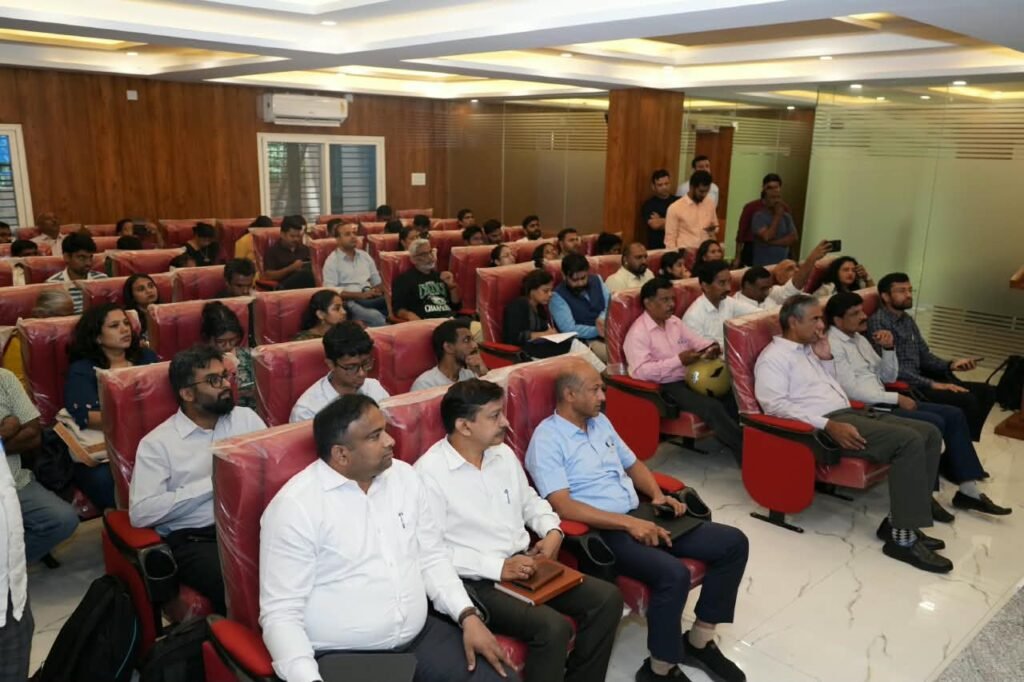
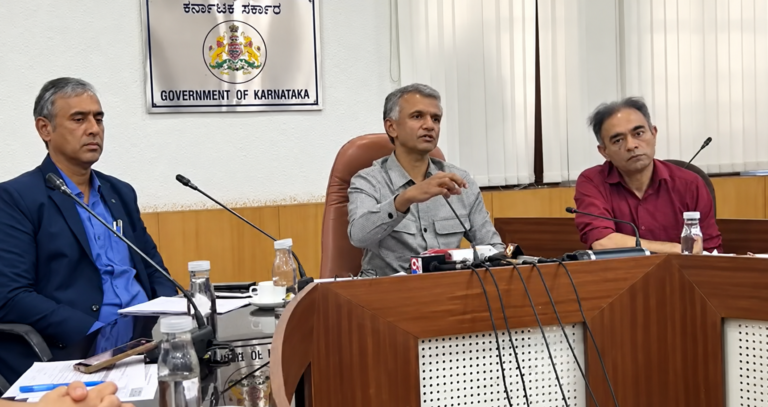
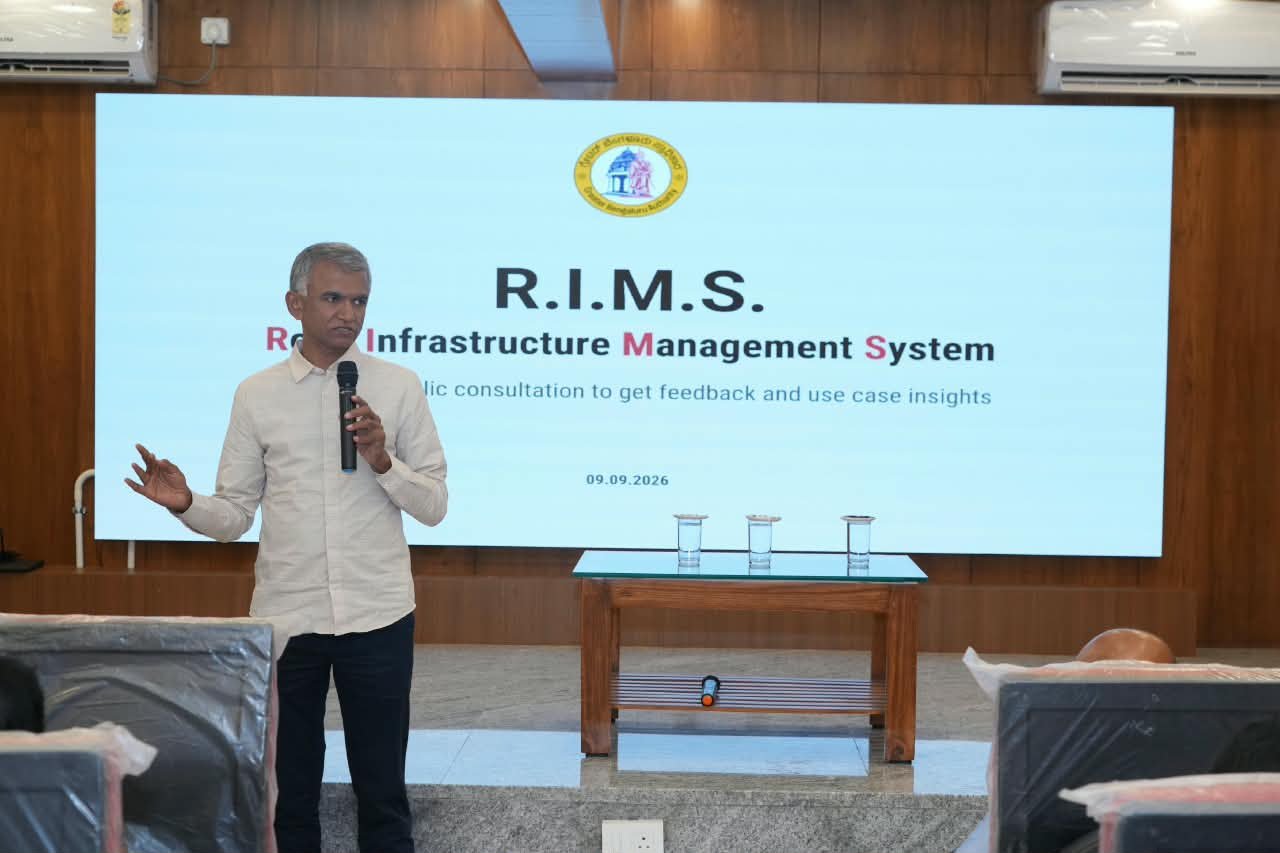
Addressing a consultation with citizens on Sahaaya 3.0 and the Road Infrastructure Management System (RIMS) at the GBA central office’s Naukarara Bhavan, Krishna Byre Gowda said changes had already been made to the existing Sahaaya 2.0 system and further improvements would be incorporated after receiving suggestions from citizens and experts.
He said Sahaaya 3.0 would be implemented soon after the consultation process and would focus on making it easier for citizens to register complaints while increasing transparency and accountability at every stage of resolution.
One proposed feature would allow residents to submit a voice note along with a photograph and location instead of having to type out the entire complaint. The minister said this would make complaint registration easier and save time.
The consultation was intended to identify additional requirements and gather suggestions from the public and experts before the upgraded platform is rolled out.
Sahaaya 2.0 currently functions as an integrated digital grievance redressal platform within the GBA area, allowing complaints to be filed through mobile devices, assigning responsibility to designated officials, providing SLA-based resolution and offering a three-level appeal mechanism.
Sahaaya 3.0 is proposed as an enhancement of the existing system rather than a separate grievance platform. Its central objective is to make the journey of a complaint visible to citizens from registration through resolution and final closure, while making the responsible official identifiable at each stage.
The proposed system will support complaints in different Indian languages and allow voice-based registration without typing. It is also intended to function smoothly on low internet bandwidth.
In specified categories, citizens may be allowed to file complaints without revealing their identity. Residents will also be able to easily reopen complaints they believe have not been satisfactorily resolved.
Another proposed safeguard is citizen confirmation before a complaint is finally closed. The system is intended to obtain confirmation from the complainant that the issue has been resolved before closure.
A public performance dashboard will provide information on complaints received, resolved and pending. Automatic SLA alerts are proposed to warn officials before prescribed resolution deadlines are breached.
The platform will also clearly display the official responsible for each complaint and introduce a uniform system for field verification of grievances.
Krishna Byre Gowda said the city should not require separate software systems for every issue such as potholes, streetlights and road-development works. He called for a unified platform capable of receiving and resolving public complaints, planning works, monitoring progress, managing data and generating payments at the backend.
The minister also identified lack of coordination among government departments as a longstanding problem and said an integrated portal involving all departments was being developed. Data is currently being received under the name Road Infrastructure Management System, or RIMS, and an appropriate name for the portal would be decided later.
He said the portal should enable coordination among departments before road construction, pipeline laying, electricity cable installation and other infrastructure works are taken up.
Information about any road or infrastructure project should ideally be entered into the portal at least six months before work begins, he said. Such advance disclosure would also help citizens plan their own activities around upcoming works.
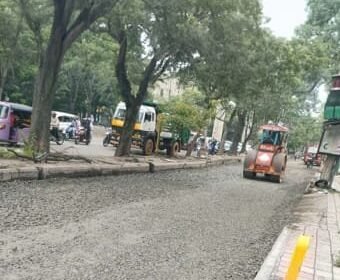
RIMS has been developed to provide integrated management of road assets, grants and infrastructure works across the GBA area. It is linked to Bengaluru’s GIS-based road network and is intended to record all road works, with progress updated and monitored every week.
A key feature is the creation of a ‘Road History’ for individual roads, allowing authorities to see the complete record of works previously undertaken on the same stretch.
Citizens are also proposed to get access to an interactive map showing ongoing and proposed road works around them in real time.
The RIMS database contains road-work information for five financial years from 2022-23 through 2026-27, including the current year, across the five city corporations. It includes details of more than 2,000 km of road works and ₹9,151 crore provided through different government funding sources.
The system is intended to reduce errors and inconsistencies in road-work information, improve workflow and integrate AI-based technologies to strengthen road-development planning, project monitoring, investment prioritisation and public transparency.
By bringing planning, implementation, monitoring and public information on road works onto one digital platform, the GBA aims to make Bengaluru’s road infrastructure management more efficient and transparent.
Chief Commissioner Maheshwar Rao, city corporation commissioners Ramesh D.S., G. Jagadish, Ramesh K.N. and Dr. Rajendra K.V., Deputy Commissioner Gayathri Naik, citizens and other officials attended the consultation.
About the Author