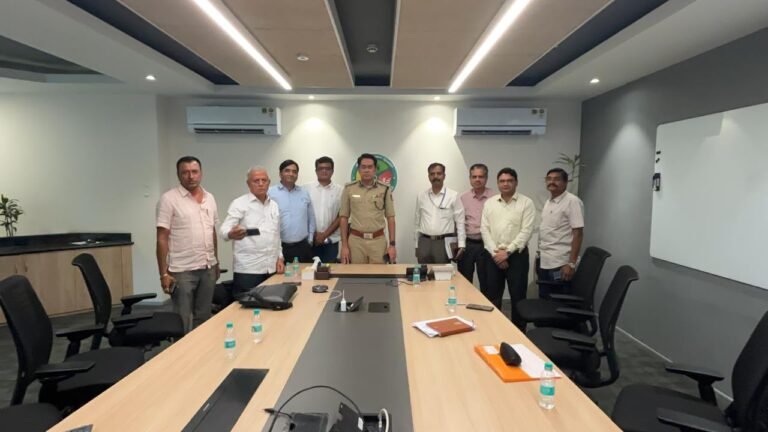
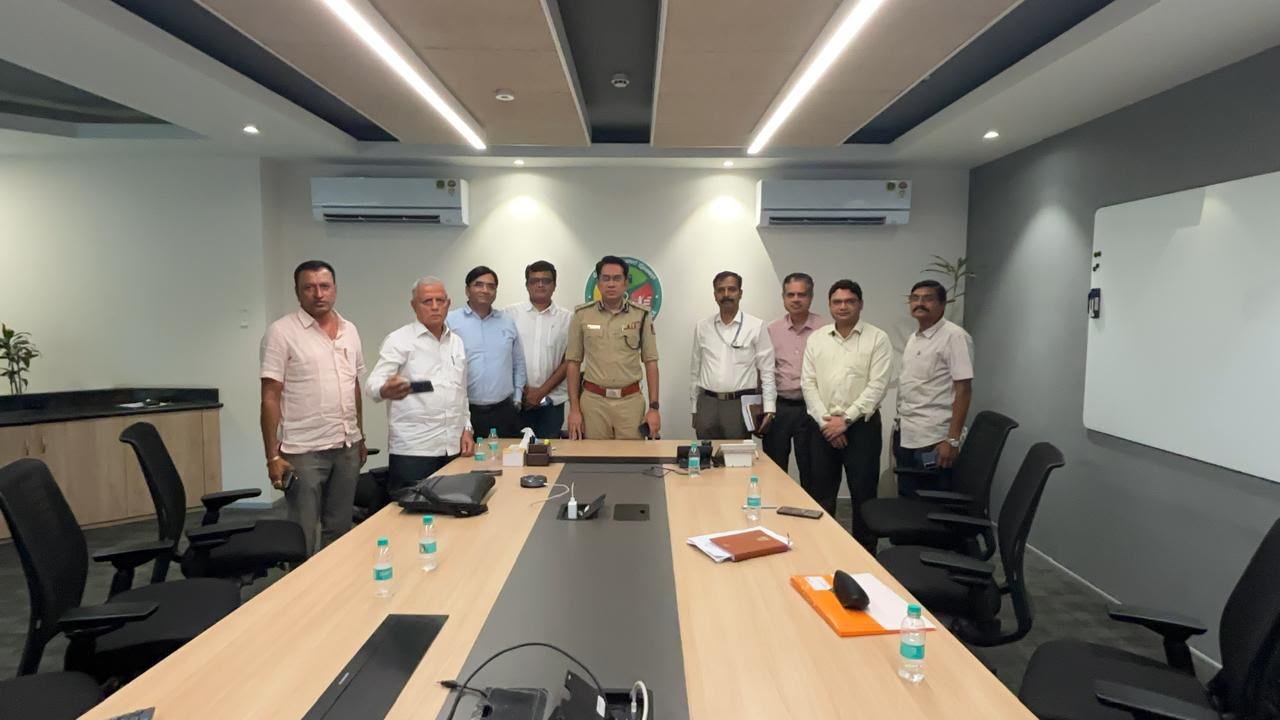
Officials and petroleum-sector representatives at the tanker-routing meeting in Bengaluru on October 28. Image: Supplied.
Bengaluru: Petroleum tankers moving fuel between districts with no delivery destination in Bengaluru are to stay out of the city from November 2, according to a letter from the Bengaluru traffic police. The letter is dated October 31 and signed by Joint Commissioner of Police (Traffic) Karthik Reddy. The copy seen is addressed to Indian Oil’s Karnataka state head.
It says such tankers shall be restricted from entering or passing through the city and directed to NICE Road, the Satellite Town Ring Road (STRR), the outskirts and other designated peripheral routes.
Who can still enter the city
Vehicles delivering petroleum products and household or commercial LPG cylinders to fuel stations, depots and other designated destinations in Bengaluru may operate within city limits, subject to prescribed routes, timings and traffic restrictions.
The letter restates the existing daily ban on goods vehicles in the city from 7 am to 11 am and 4 pm to 10 pm. Vehicles carrying essential commodities and emergency supplies remain permitted, subject to traffic rules.
Oil companies have been asked to instruct transport agencies, tanker operators and contractors to comply, and to tell vehicle operators about revised routes and timings in advance.
What the change is expected to do
The police letter cites congestion on arterial roads, road safety and the hazardous nature of petroleum products. It expects better traffic flow and lower travel time and costs for these vehicles, but gives no percentage for reduced congestion.
The Namma IndianOil Dealers Association (NIPDA), which said it sought the change, circulated the letter to dealers on November 1 with its own guide. NIPDA estimates that a city crossing of 2 to 3 hours could fall to about 1 hour on suitable routes. It says this time saving must not be read as the same reduction in city congestion.
NIPDA’s guide also lists Hosur Road as a route option; the police letter does not name it. NIPDA had earlier said the routing would begin on November 1, while the letter sets November 2. The documents do not show how the restriction worked on its first day.
About the Author