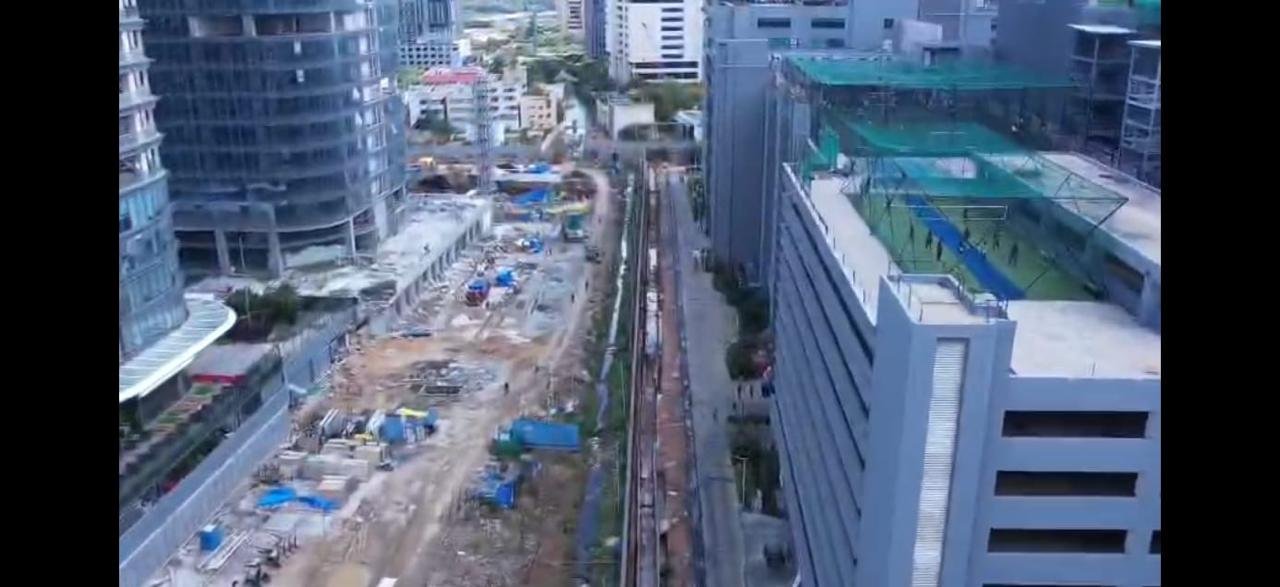
A stormwater channel in Bengaluru North. Photograph supplied.
Bengaluru: A 1.6-km drain linking Veerannapalya’s service road to the main Hebbal channel and sensor-operated pumps in a low-lying layout are among Bengaluru North City Corporation’s measures to tackle recurring rainwater stagnation. The civic body says the approach combines new drainage connections with pumping where water collects on roads.
Under Commissioner Pommala Sunil Kumar’s guidance, works have been carried out near Manyata Tech Park, in the Attur–Puttenahalli catchment, HBR Layout and the Tata Nagar–Dynasty–Defence Layout areas, according to the corporation.
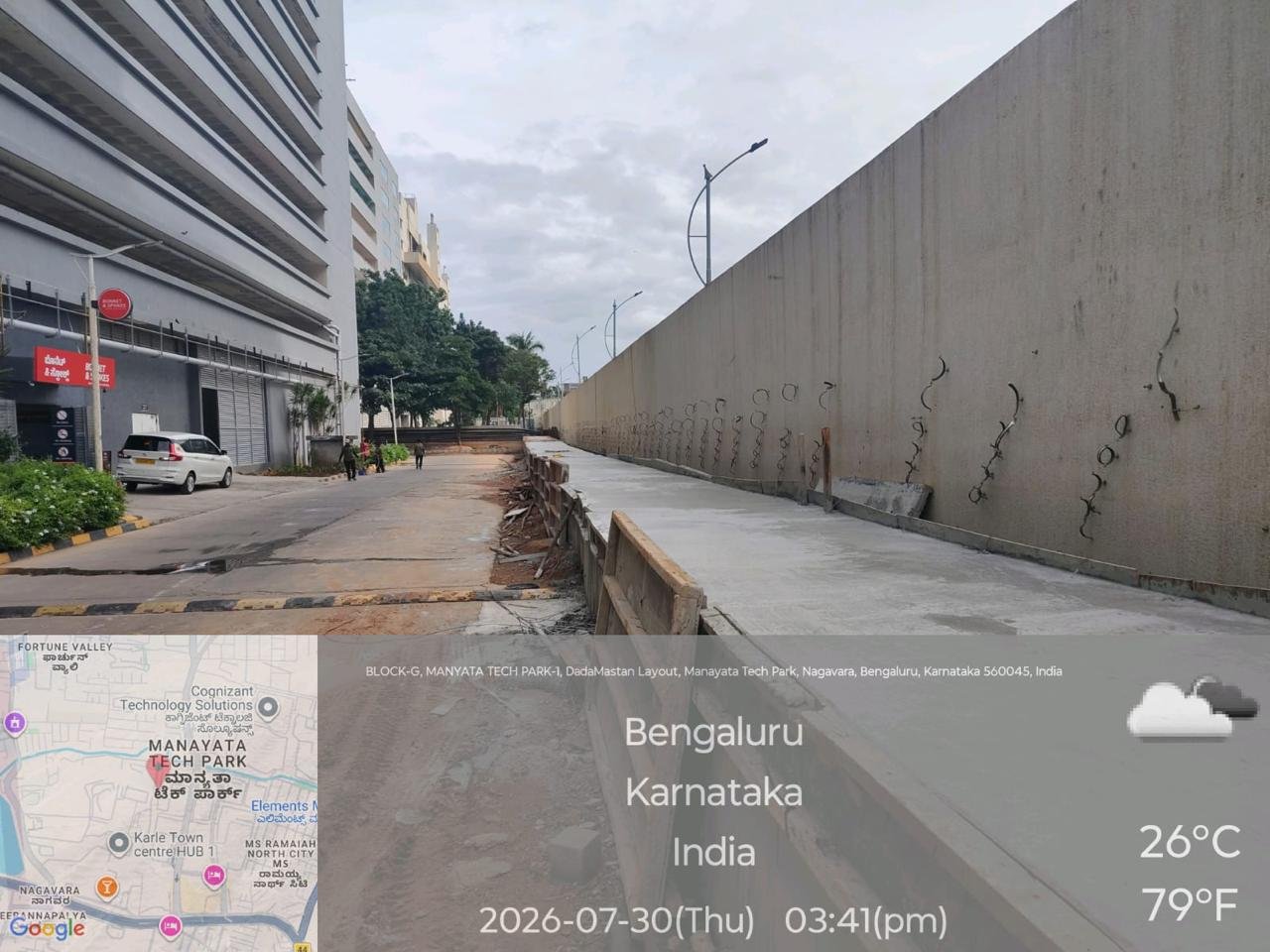
New outlet for a decade-old Manyata–ORR problem
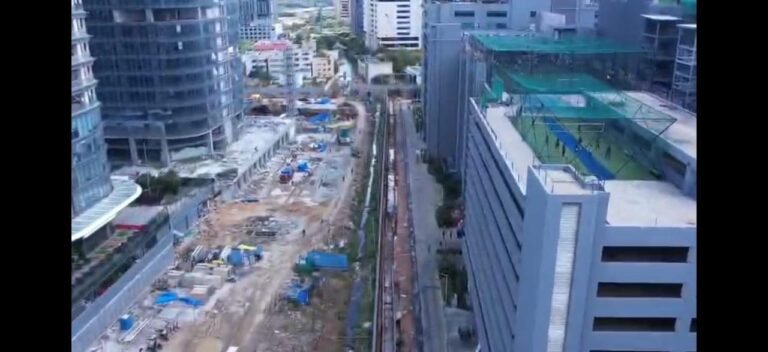
For about 10–15 years, rainwater had stagnated along roughly a kilometre of Hebbal Outer Ring Road and Veerannapalya service road near Manyata Tech Park, affecting residents and motorists, the corporation said.
Encroachments in the channel area were removed and a 1.6-km artificial drain was constructed to connect the service road to the main Hebbal drain. The corporation reported that, despite around 75–80 mm of rain on September 30, the Kariyannapalya and Veerannapalya stretches of ORR did not flood, with water flowing towards the main channel.
Separate routes for sewage and lake-bound rainwater
At Ramanashree California Layout in the Puttenahalli–Attur area, sewage and rainwater arriving from Anantapura had caused stagnation because of inadequate drainage connections. With private property owners’ consent, a 145-metre-long, 600-mm-diameter NP3 RCC pipeline was connected to a diversion drain to prevent sewage entering the lake.
A separate 60-metre stormwater drain built under the National Disaster Mitigation Fund provides an outlet from the Anantapura and Attur catchments to Puttenahalli Lake. The corporation said no flooding or water ingress was reported in this area during the September 30 rain.
Culvert and drain connection at HBR Layout
Near the BESCOM office on 18th Main Road in HBR Layout’s 5th Block, a 1.5-metre-diameter MS pipeline associated with HN Valley had obstructed rainwater movement for eight to ten years, according to the civic body.
A new RCC culvert and drain, designed to suit the road’s slope, have been connected to a nearby main stormwater drain. Drains in Sarvagnanagar are also being cleaned regularly, with removed vegetation and silt taken away to maintain water flow.
Sensor pumps for low-lying Dynasty Layout
Tata Nagar, Dynasty Layout and Defence Layout suffered flooding for three consecutive days during heavy rain in 2024, the corporation said. RCC retaining walls have since been built along the stormwater drain with National Disaster Mitigation Fund and World Bank assistance.
Because Dynasty Layout is low-lying, two ground-level collection sumps and automatic sensor-operated pumps have been installed to remove water from roads and prevent flooding.
Further works based on local drainage conditions
Other measures include connecting drains to lakes, improving stormwater drains, rejuvenating lakes, building RCC retaining walls along unlined drains and constructing U-shaped drains. Narrow bridges are being replaced with RCC bridges designed for local requirements.
The corporation said the works are being implemented following technical assessments, using World Bank assistance, the National Disaster Mitigation Fund and civic funds to address recurring stagnation in low-lying areas.
About the Author