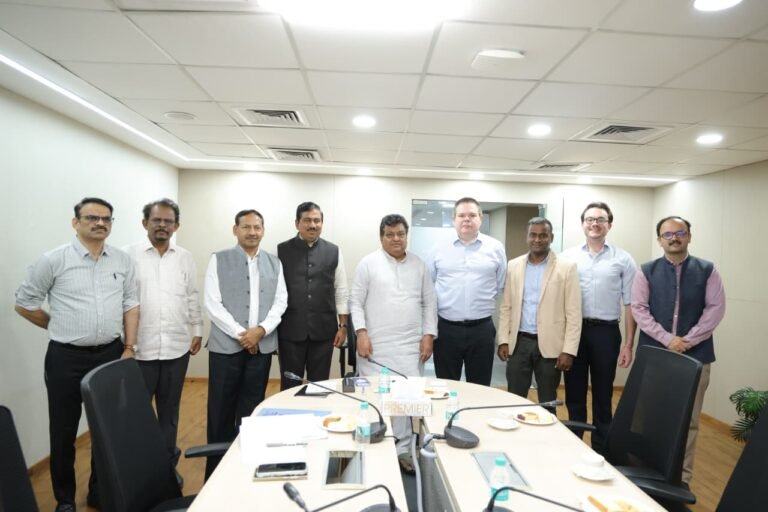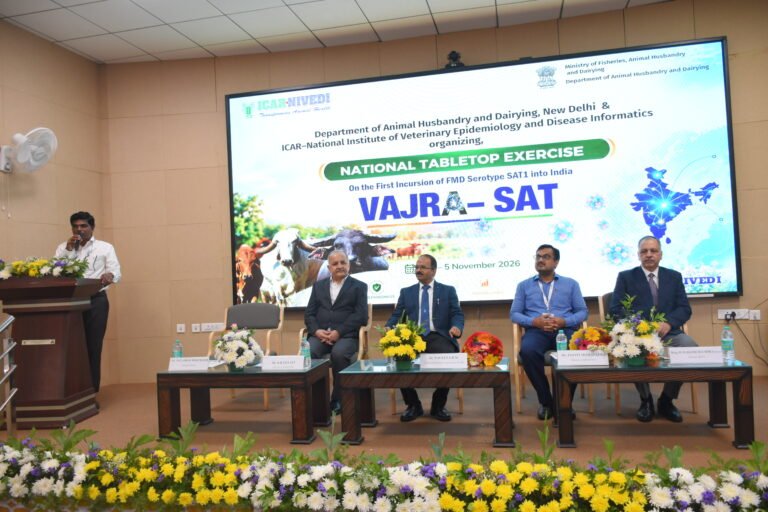
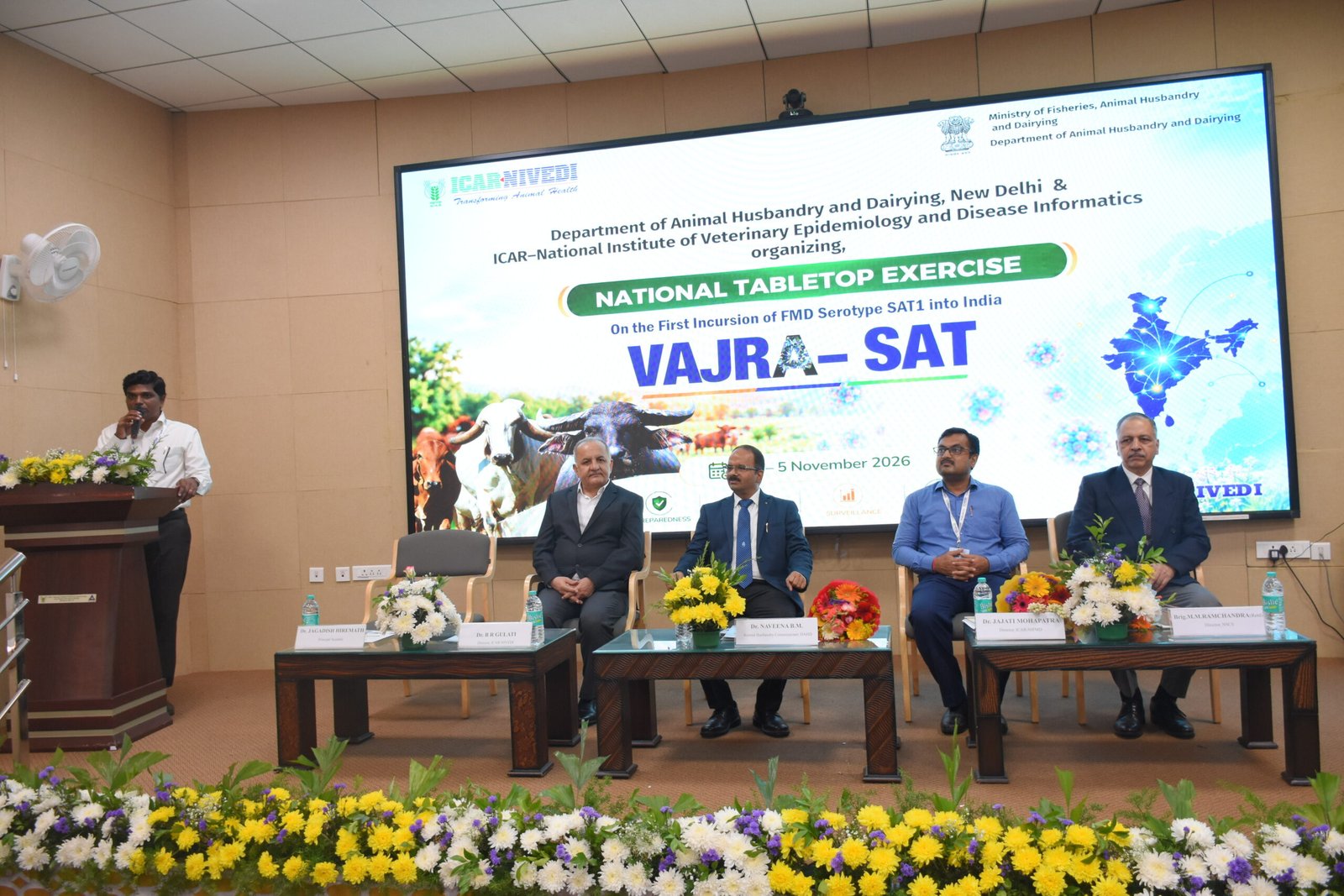
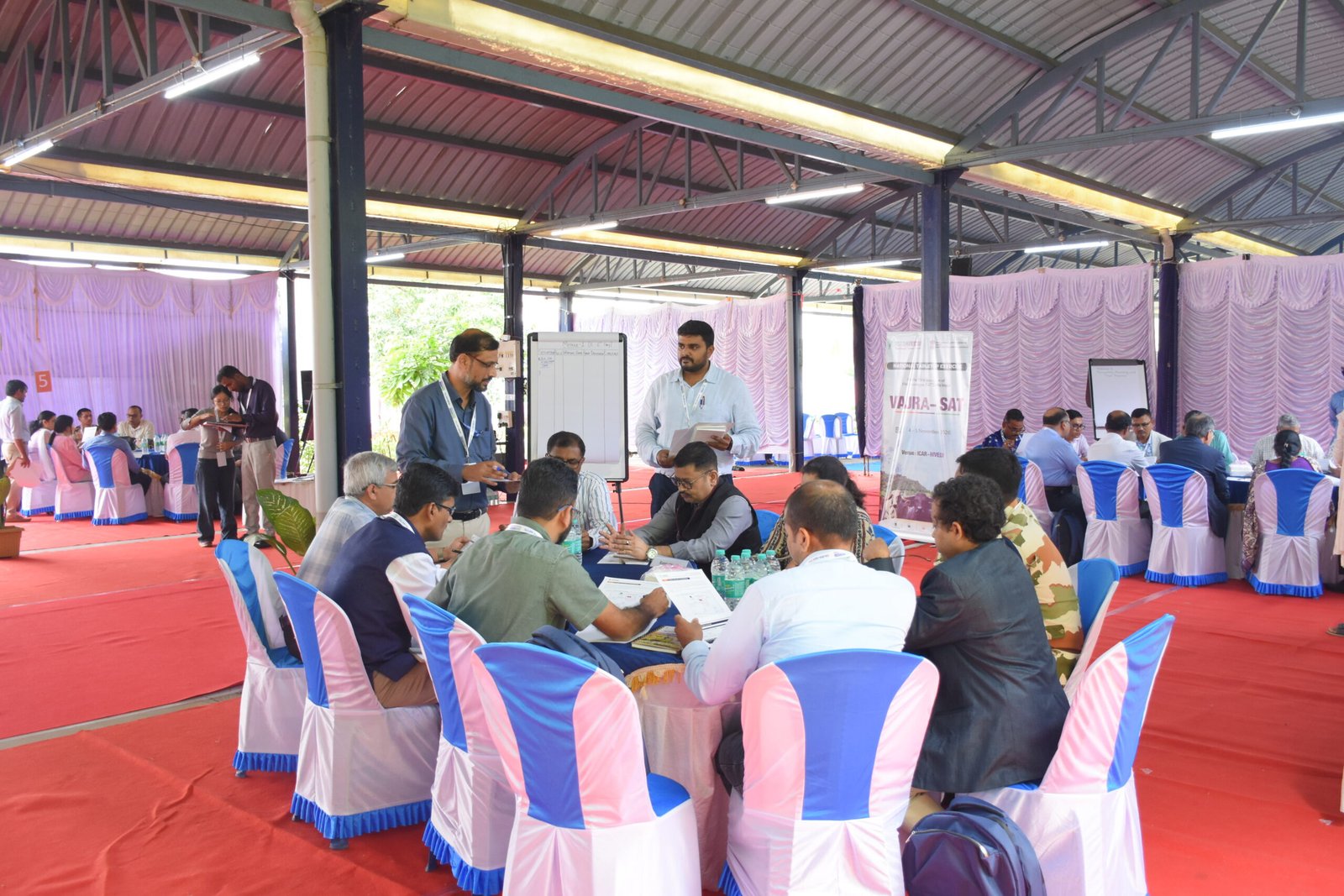
The launch session of Exercise VAJRA-SAT at ICAR-NIVEDI in Bengaluru on November 4, 2026. Photo: ICAR-NIVEDI.
Bengaluru: The Department of Animal Husbandry and Dairying (DAHD) and ICAR-National Institute of Veterinary Epidemiology and Disease Informatics (ICAR-NIVEDI) launched a two-day national tabletop exercise, ‘VAJRA-SAT’, in Bengaluru on November 4. The exercise runs on November 4–5, 2026. The exercise tests India’s preparedness against the potential incursion of foot-and-mouth disease (FMD) serotype SAT-1. The institute’s press note says SAT-1 has not been reported in India.
The exercise is themed “Detect Early, Confirm Fast, Contain Together”. It brings together policymakers, veterinary epidemiologists, disease control experts, diagnostic laboratories, security agencies and vaccine manufacturers. The institute says 83 participants from 25 states, three Union Territories and national institutions are taking part, including state animal husbandry departments, ICAR institutions, the National Dairy Development Board, veterinary universities, the National Security Council Secretariat and the Army, Air Force, BSF, ITBP, Assam Rifles and SSB.
Why the exercise matters
According to the press note, the exercise follows the spread of FMD SAT-1 beyond its traditional African distribution into West Asia. The institute says a possible incursion would threaten India’s livestock population of more than 530 million, dairy-based livelihoods, livestock trade and gains under the National Animal Disease Control Programme. It also notes that India does not currently produce SAT-1 vaccine domestically.
How the exercise works
Organising Secretary Dr Jagadish Hiremath said the exercise simulates a potential SAT-1 incursion through realistic outbreak scenarios, asking agencies to assess information, take time-sensitive decisions and coordinate responses. It has three linked stages: initial suspicion and reporting; laboratory confirmation, epidemiological investigation and containment; and coordinated disease control and recovery. The response chain under review runs from detection by a field veterinarian and reporting to state and central authorities, to laboratory confirmation, tracing of infection, movement restrictions, vaccination preparedness and communication with livestock farmers.
Officials’ remarks
Animal Husbandry Commissioner Dr Naveena B.M., DAHD, who inaugurated the exercise, stressed the need for a coordinated, practical and implementable national strategy for exotic FMD serotypes, and for identifying preparedness gaps. He also highlighted the existing Crisis Management Plan for animal diseases.
Dr Baldev R. Gulati, Director of ICAR-NIVEDI, pointed to risk-based surveillance, epidemiological intelligence and early-warning systems as the growing priorities for SAT-1, and described the institute’s role in assessing the risk of introduction into India.
Dr J.K. Mohapatra, Director of ICAR-National Institute of Foot-and-Mouth Disease (ICAR-NIFMD), emphasised laboratory preparedness, rapid diagnosis and vaccine development for an exotic serotype.
Brigadier M.M. Ramachandra, Director of the National Security Council Secretariat, said protecting livestock-dependent rural economies, particularly in border regions, depends partly on security agencies monitoring and regulating animal movements.
What is expected
The deliberations are expected to feed into a national contingency plan for FMD SAT-1, recommendations for strengthening standard operating procedures, improved vaccine preparedness and a replicable tabletop exercise framework for state animal husbandry departments. A consolidated report identifying preparedness gaps and priority actions is to be submitted to DAHD for further consideration.
About the Author