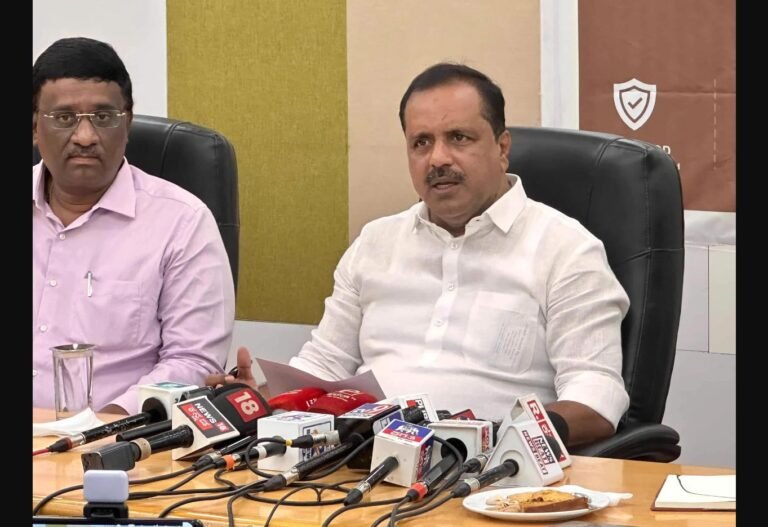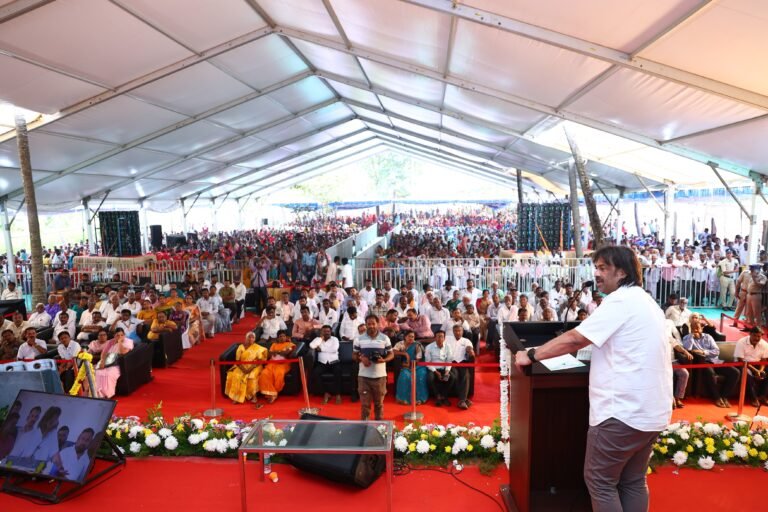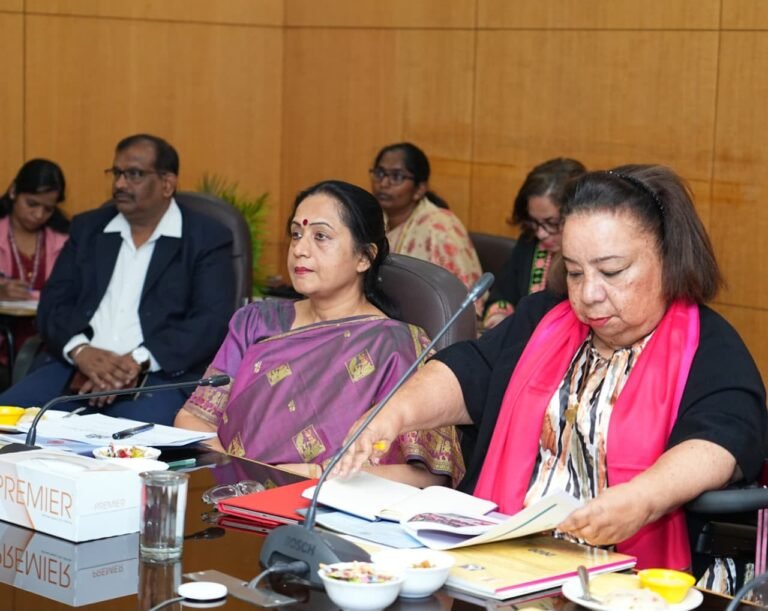
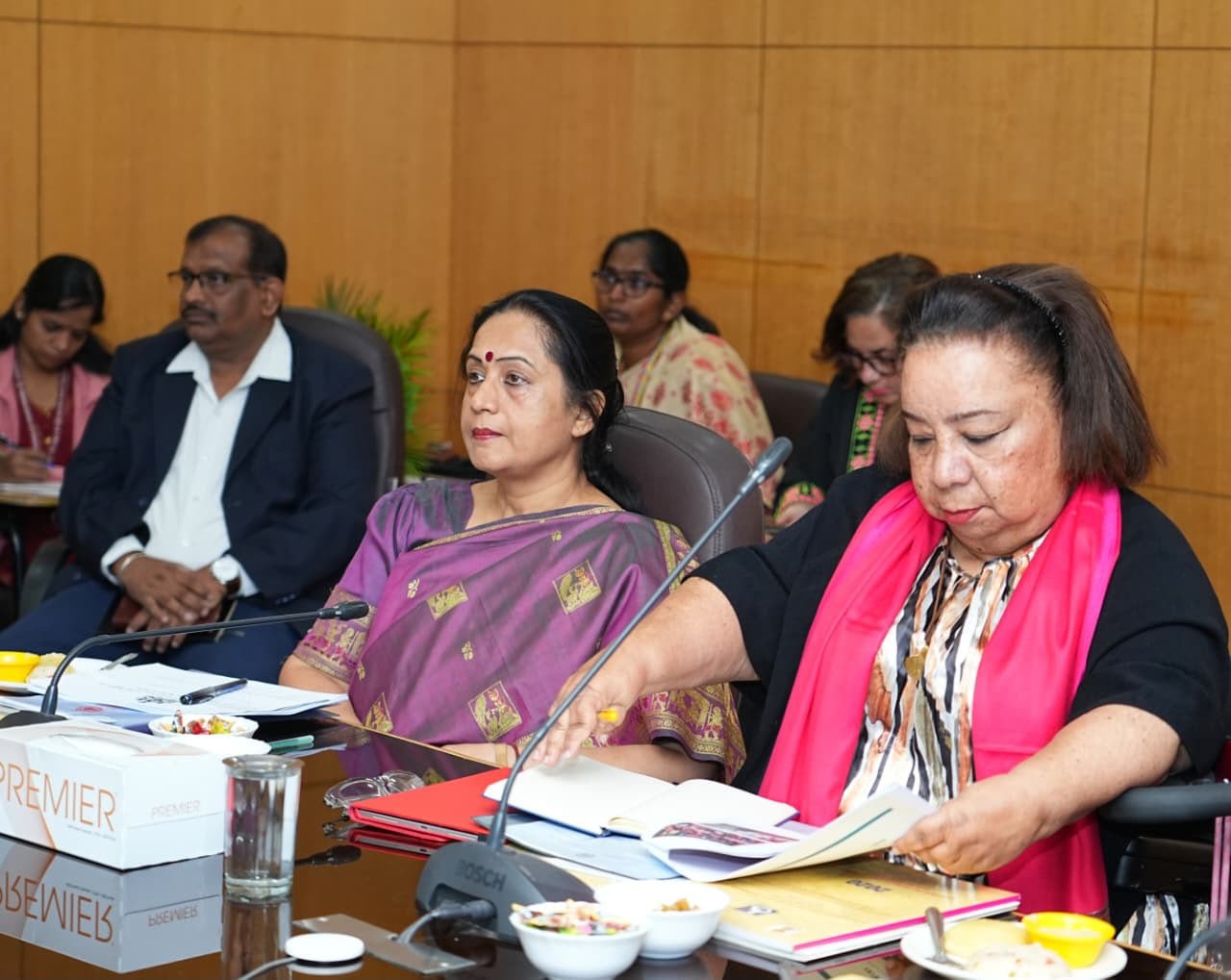
The interactive meeting with the UN Special Rapporteur on the Rights of Persons with Disabilities at Vidhana Soudha.
Bengaluru: Heba Hagrass, the United Nations Special Rapporteur on the Rights of Persons with Disabilities, visited Bengaluru on November 20 and 21 to learn about the programmes, schemes and achievements of the Karnataka government for the rights and empowerment of persons with disabilities, according to a government release. An interactive meeting was held with her in Committee Room No. 313 of Vidhana Soudha.
The Special Rapporteur is on an official visit to India from November 16 to 25, in coordination with the Ministry of External Affairs. Chief Secretary Dr. Shalini Rajneesh, Additional Chief Secretary and Development Commissioner Uma Mahadevan, senior officers of the Revenue, Higher Education, Health, and Women and Child Development departments, and the directors of NIMHANS and the All India Institute of Speech and Hearing (AIISH), Mysuru, attended the meeting.
The state submitted a report on its initiatives, achievements and implementation challenges in line with the UN Convention on the Rights of Persons with Disabilities (UN CRPD), and presented its model for protecting the rights of persons with disabilities through various departments.
Uma Mahadevan made a presentation on the state’s schemes covering all 21 categories of disabilities. The figures she presented included:
- 18 of the 31 districts have District Early Intervention Centres (DEICs), which provided treatment and rehabilitation to 20,601 children from April to October 2026. The remaining 13 are to be set up shortly.
- 18 District Disability Rehabilitation Centres (DDRCs) have served 2,77,492 persons with disabilities.
- Karnataka facilitated the adoption of 172 children with special needs, 35 of them domestically and 137 internationally.
- Assistive devices distributed include 17,408 motorised two- and three-wheelers, 955 battery-operated wheelchairs, 4,422 talking laptops, 2,079 Braille kits, 39,194 assorted assistive devices and 2,370 sewing machines.
- Under the Niramaya Health Insurance Scheme, 1,02,414 persons have benefited. In addition, 712 persons received surgical assistance, 15,317 beneficiaries availed loans under the Adhara Self-Employment Loan Scheme and 8,296 received marriage incentives. Bus passes have been extended to more than 11 lakh persons with disabilities.
- Government jobs carry a 4% reservation in Group A and B posts and 5% in Group C and D posts. A total of 1,98,762 posts across 89 departments have been identified and 126 notifications issued. At present, 11,120 persons with disabilities work in state government services.
- A 5% reservation also applies to education, grants to local bodies, poverty alleviation programmes, and allotment of BDA and government sites, with a 25% concession in site prices.
- The Rural Development Department has converted 5,888 Gram Panchayat libraries into digital centres, with Alexa voice-assistant facilities in 350, beacon-based library systems in 800 and USB text readers. A sensory park has been set up at Bal Bhavan, Bengaluru.
Revenue Department Secretary Manoj explained disaster management measures taken in line with National Disaster Management Authority guidelines. These include collecting and mapping data on persons with disabilities in flood- and landslide-prone villages, providing ramps and accessible toilets in school shelter centres in advance, use of State Disaster Response Fund money, mock drills and collaboration with UNICEF.
Gopalakrishna, Commissioner for Collegiate Education, said about 3.25 lakh students study in 440 government colleges in the state, and that ramps, smart classrooms and student welfare cells have also been set up in 430 aided colleges. A total of 1,043 students with disabilities are studying in government colleges. Eligible girl students get a full fee exemption, employees with disabilities get transfer protection, and steps are being taken to ensure admission for all eligible students with disabilities.
Dr. Rajani of the Health Department described the community-based mental healthcare services: the Ballari Model, the District Mental Health Programme in all 31 districts, services through more than 170 taluk hospitals and about 12 lakh counselling sessions a year. The 24-hour Tele-MANAS helpline (14416) has responded to about 1.2 lakh calls. The department also explained the strengthening of UDID certification at the taluk level and the setting up of Emergency Care and Recovery Centres in 10 district hospitals for homeless persons with mental illness.
NIMHANS Director Dr. Janardhan Reddy and experts spoke about the institute’s 1,096-bed healthcare services, the World Health Organization’s Nelson Mandela Award received in 2024, the Sakalawara Halfway Home that has functioned for 50 years, and employment given to 50% of persons who have undergone rehabilitation. They also presented measures to protect the rights of persons with mental illness, the policy of not setting up any new custodial shelter homes, and the legal protection mechanism working under District Commissioners.
Dr. M. Pushpavathi, Director of AIISH, Mysuru, said the institute treats and rehabilitates about 80,000 to 85,000 patients a year at highly subsidised rates. She also highlighted newborn hearing screening within three to four days of birth, support to 800 children under the ‘Little Angels’ programme, and the integrated therapy park.
On social security, 9,77,884 UDID cards have been distributed and taluk-level issue of disability certificates has been strengthened. Monthly maintenance pensions of Rs 1,400 go to more than five lakh persons with disabilities and monthly pensions of Rs 2,000 to more than one lakh persons with severe intellectual disabilities. Monthly allowances are paid to 10,835 caregivers, and childcare allowances to 1,620 visually impaired mothers.
Challenges in implementation were also discussed. A six-point action plan was proposed, which includes integrating data on persons with disabilities across departments, developing special schools as Satellite Resource Centres, strengthening special cells in universities, and early commencement of the remaining 13 DEICs and 13 DDRCs.
Hagrass took note of the presentation on the state’s initiatives, inter-departmental coordination, use of technology, reservation in education and employment, and healthcare and rehabilitation services. She particularly appreciated the state government’s approach of honestly identifying not only its achievements but also the challenges at the field level, and its commitment to addressing them, according to the release.
About the Author