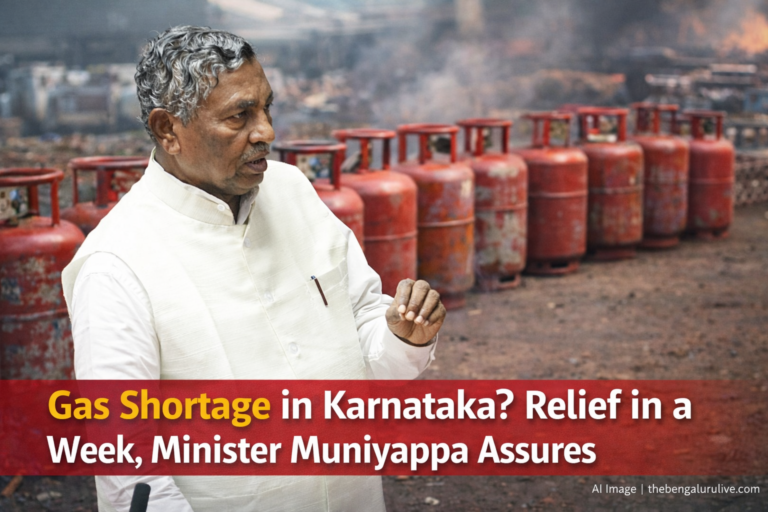
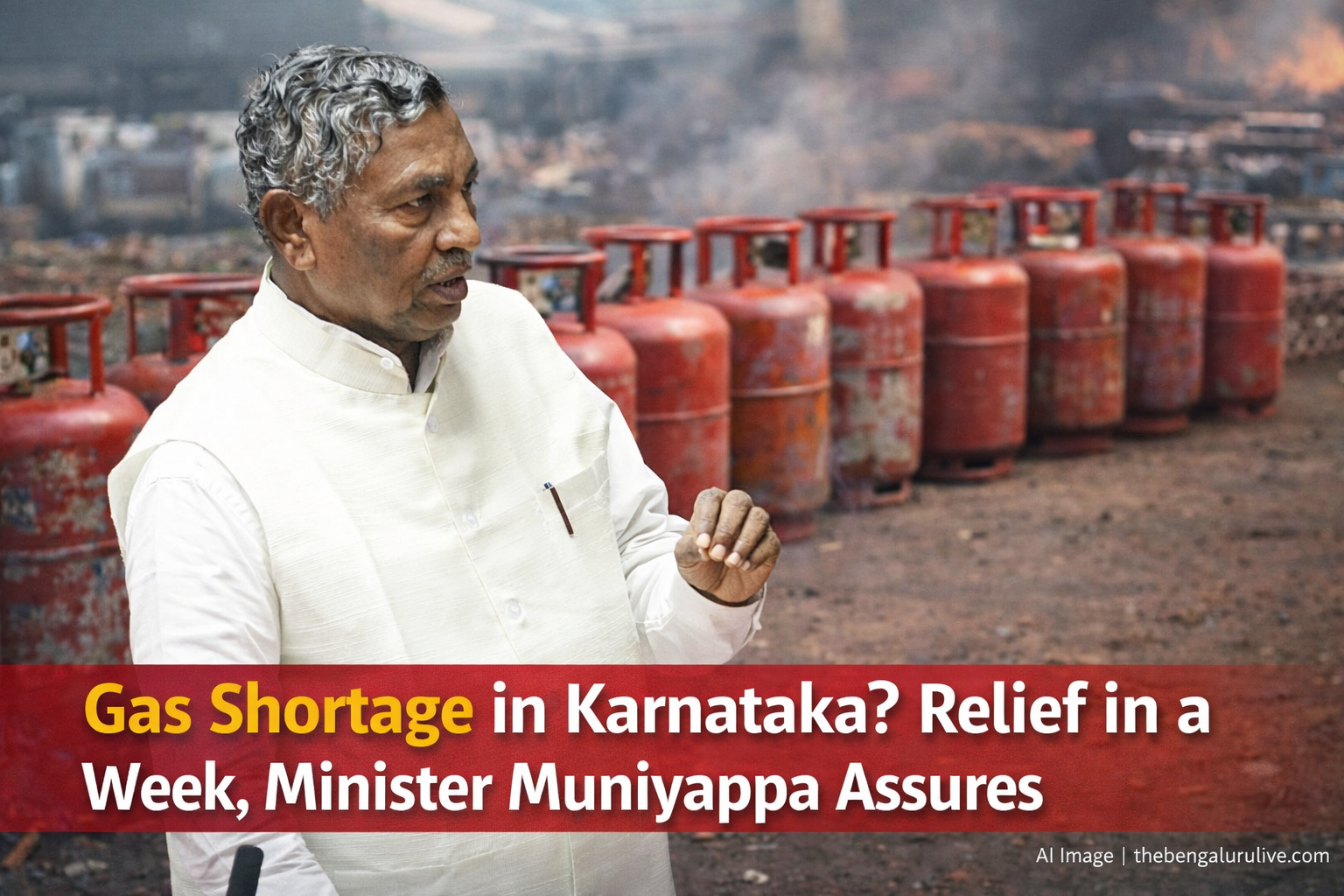
Karnataka Food and Civil Supplies Minister K.H. Muniyappa.
Bengaluru, March 12: Karnataka Food and Civil Supplies Minister K.H. Muniyappa has said that the ongoing shortage of commercial LPG cylinders in the state is likely to be resolved within a week, even as global tensions and shipping disruptions have affected gas supplies.
Responding to concerns in the Legislative Council regarding the LPG shortage, the minister clarified that domestic LPG cylinders used in households are not affected, and the supply remains stable across the state.
However, commercial LPG cylinders used by hotels, restaurants and other establishments are currently facing temporary supply constraints, he said.
Muniyappa explained that global geopolitical tensions and disruptions to LPG vessel movements have slowed supplies, resulting in a temporary shortage of commercial cylinders in Karnataka.
According to the minister, two LPG ships have already arrived and another 10 to 12 vessels are expected to reach soon, which will significantly improve supply in the coming days.
“To address the immediate situation, we have already held meetings with oil companies, the department secretary and officials to ensure essential services receive priority supply,” Muniyappa said.
He added that hospitals, hostels, residential schools and other critical institutions that require gas for food preparation will be given priority in the supply of commercial LPG cylinders.
For the hotel industry, which depends heavily on commercial LPG cylinders, the minister advised temporary use of electric cooking equipment wherever possible until supply stabilises.
“We have requested hotel owners to cooperate for about a week and manage with alternative arrangements. Within seven to ten days, the situation is expected to normalise,” he said.
The minister assured that the government is closely coordinating with oil companies to ensure adequate LPG availability, and once the incoming shipments reach India, the supply chain will stabilise.
Officials also indicated that steps are being taken to ensure that essential sectors such as hospitals, hostels and residential institutions do not face any disruption in cooking gas supply during this period.
ಇದನ್ನೂ ಓದಿ: ರಾಜ್ಯದಲ್ಲಿ ಗ್ಯಾಸ್ ಕೊರತೆ? ಆಸ್ಪತ್ರೆ, ಹಾಸ್ಟೆಲ್ಗಳಿಗೆ ಮೊದಲ ಆದ್ಯತೆ ಗ್ಯಾಸ್: ಹೋಟೆಲ್ಗಳಿಗೆ ಎಲೆಕ್ಟ್ರಿಕ್ ಸ್ಟವ್ ಬಳಕೆ ಸಲಹೆ
About the Author