Bengaluru Bans Drinking Water Use for Swimming Pools Amid El Niño Concerns; BWSSB Makes Water-Saving Devices Mandatory
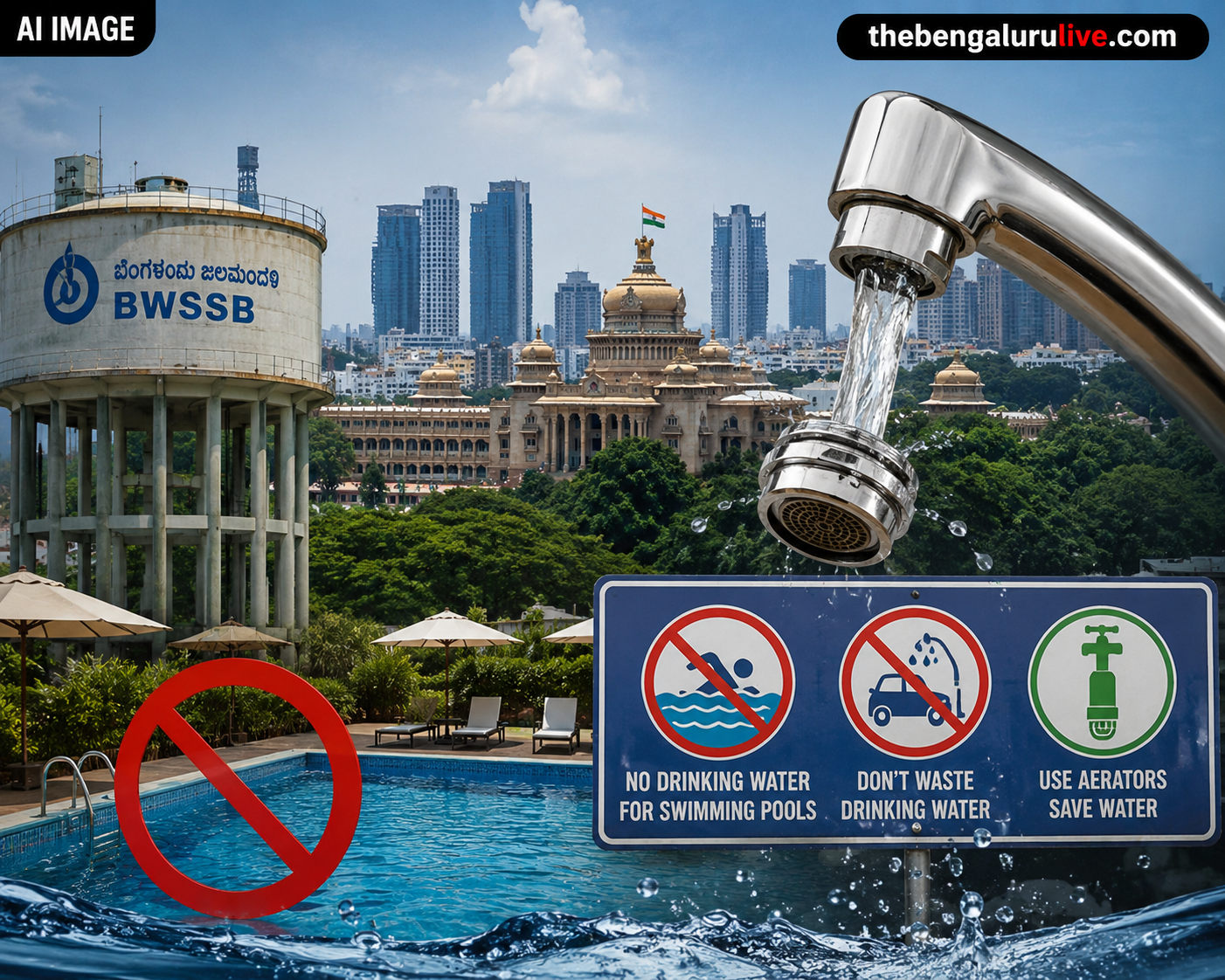
Bengaluru, July 4: In a major water conservation initiative aimed at safeguarding Bengaluru’s drinking water supply amid concerns over a weak monsoon influenced by El Niño, the Bengaluru Water Supply and Sewerage Board (BWSSB) has issued three major directives, including a ban on using drinking water to fill swimming pools, mandatory installation of water-saving aerators, and restrictions on the misuse of potable water.
Announcing the measures, BWSSB Chairperson Dr. Manjula said the decisions have been taken to ensure sustainable water management and encourage judicious use of drinking water across the city in view of changing rainfall patterns and long-term water security concerns.
The Board said the measures are based on scientific recommendations, including findings from the Indian Institute of Science (IISc), and are intended to ensure that every drop of potable water is used responsibly.
Aerators Made Mandatory
BWSSB has made it mandatory to install Flow Restrictors (Aerators) in all water-consuming buildings, including:
- Residential houses
- Apartments
- Commercial buildings
- Government offices
- Hotels
- Industries
According to the Board, aerators can reduce water consumption by 30% to 50% without affecting the user experience or water pressure, making them an effective tool for water conservation.
Drinking Water Barred for Swimming Pools
In one of the most significant decisions, BWSSB has prohibited the use of drinking water for filling both private and public swimming pools across Bengaluru.
Pool operators have been directed to use treated water or other alternative water sources instead of potable water.
The move comes as Bengaluru prepares for possible water stress if rainfall remains below normal due to El Niño conditions.
Restrictions on Misuse of Drinking Water
The Board has also prohibited the use of drinking water for non-essential purposes such as:
- Washing vehicles
- Watering gardens and lawns
- Cleaning roads and footpaths
- Construction activities
- Any other non-potable use
For these activities, BWSSB has directed that treated water must be used wherever required.
Penalties for Violations
BWSSB warned that strict action will be taken against violators under the provisions of the Bengaluru Water Supply and Sewerage Act, 1964.
The penalties include:
- Reduction of water supply by up to 50%
- A ₹5,000 fine for violations
- An additional ₹500 per day if the violation continues
- Further legal action wherever necessary
Citizens’ Cooperation Essential
Appealing to Bengaluru residents, Dr. Manjula said drinking water is a precious natural resource that belongs to every citizen and must be used responsibly.
She urged households, apartment associations, commercial establishments, industries and institutions to install aerators, avoid wastage of potable water and actively participate in BWSSB’s water conservation campaign.
“Today’s water conservation will determine tomorrow’s water security. Bengaluru’s future water sustainability depends on responsible use by every citizen. Public participation is essential to build a long-term water-secure city,” she said.
BWSSB expressed hope that with active cooperation from citizens and organisations, Bengaluru will be better prepared to face future water challenges while ensuring an uninterrupted drinking water supply despite climatic uncertainties linked to El Niño.
About the Author