Concerns Rise Over Illegal Cattle Slaughter During Ramadan in Karnataka
Bengaluru: Reports have surfaced indicating illegal cattle trafficking and slaughter occurring in various parts of Karnataka during the Ramadan festival. Incidents of animal slaughter have been observed in public spaces and along roadsides, raising potential concerns regarding public health, environmental issues, and law and order. The state government has already implemented laws to prevent cattle slaughter, but the Hindu Rashtra Sammanvaya Committee has urged the state home minister to take preventive measures to completely curb these illegal activities.
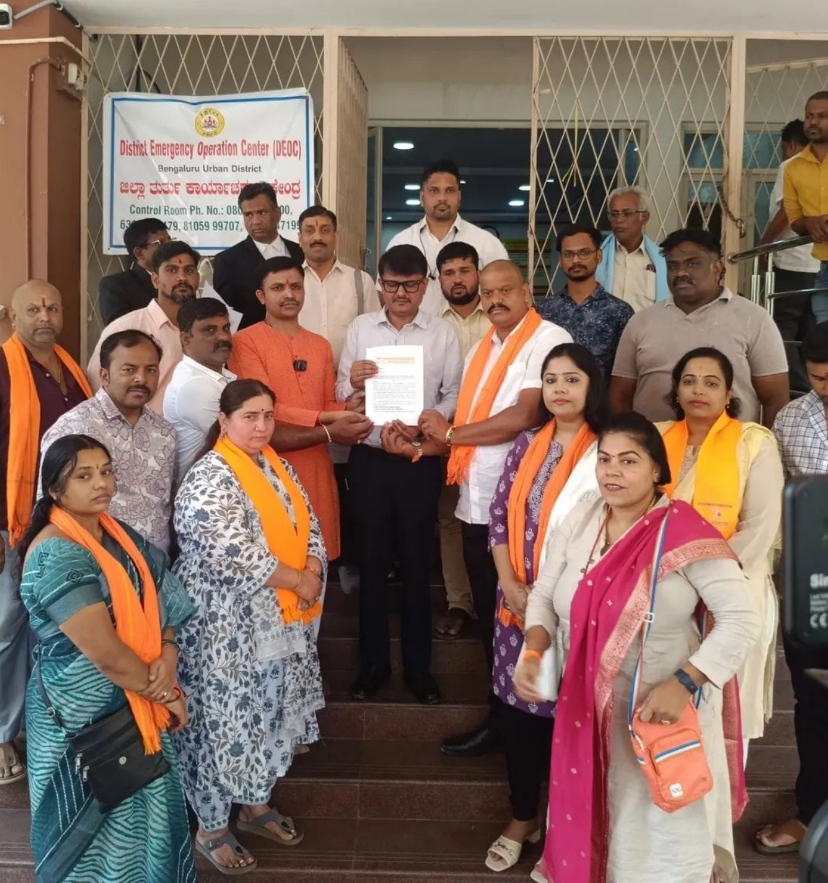
Prominent members of Hindu organizations, including Mohan Gowda, State Coordinator of the Hindu Rashtra Sammanvaya Committee, and others were present during the petition submission at the district commissioner’s office.
Legal and Constitutional Framework:
1. Article 48 of the Indian Constitution: This article mandates the state to take steps to organize agriculture and animal husbandry on modern and scientific lines and prohibits the slaughter of cows and other milch animals.
2. Karnataka Prevention of Slaughter and Preservation of Cattle Act, 2020: This act makes cattle slaughter, illegal transportation, and unauthorized activities related to beef punishable offenses.
3. Prevention of Cruelty to Animals Act, 1960: This law makes cruelty, unauthorized slaughter, or inhumane treatment of animals legally punishable.
4. Food Safety and Standards Act, 2006: According to this act, animal slaughter should only occur in licensed abattoirs, making slaughter in public places or unauthorized locations illegal.
5. Supreme Court Ruling: In the landmark case of *State of Gujarat vs Mirzapur Moti Kureshi Kassab Jamat* on October 26, 2005, the Supreme Court upheld the constitutionality of laws prohibiting cattle slaughter.
Demands to the Government:
To maintain law and order and social harmony in the state, the following measures have been requested:
1. Establish special police surveillance to prevent illegal cattle trafficking and slaughter during Ramadan.
2. Mandatory checks on vehicles transporting animals at major national and state highway checkpoints.
3. Implement strict measures to ensure that animal slaughter occurs only in officially licensed abattoirs.
4. No permissions should be granted for temporary abattoirs during the festival.
5. Immediate legal action against individuals and organizations involved in illegal cattle trafficking or slaughter.
6. The police department, animal husbandry department, and local administration should coordinate to form special inspection teams.
7. Public awareness campaigns should be conducted in various districts to inform citizens about legal regulations.
The committee has urged the government to take these issues seriously to uphold social peace, public health, and respect for religious sentiments.
About the Author