
Bengaluru, March 14: The Greater Bengaluru Authority (GBA) has announced plans to significantly expand the number of biogas plants within Bengaluru to convert wet waste into energy, as part of a larger push towards scientific solid waste management.
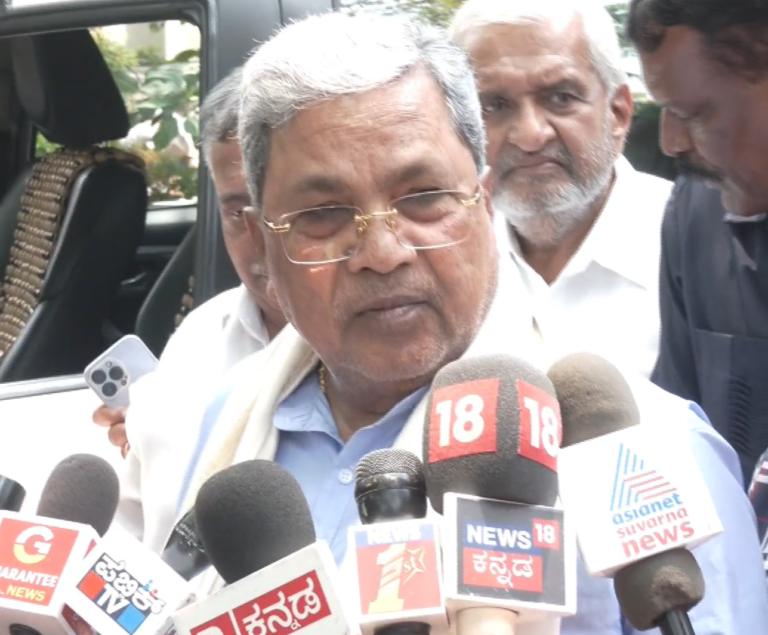
Speaking to reporters after inspecting the waste-to-energy (Kasa-Rasa) facility in Koramangala under the Bengaluru South City Corporation, GBA Chief Commissioner Maheshwar Rao said the authority will undertake a comprehensive study to enhance biogas production from wet waste across city corporations within the GBA limits.
Rao stated that establishing decentralised biogas centres in each city corporation would require about 2–3 acres of land. As an immediate step, existing waste processing facilities will be upgraded to increase biogas production, with plans to supply the gas to nearby hotels and commercial establishments.
He emphasised that proper segregation of wet and dry waste at the source is crucial for efficient waste processing and appealed to citizens to cooperate by segregating waste before handing it over to civic authorities.
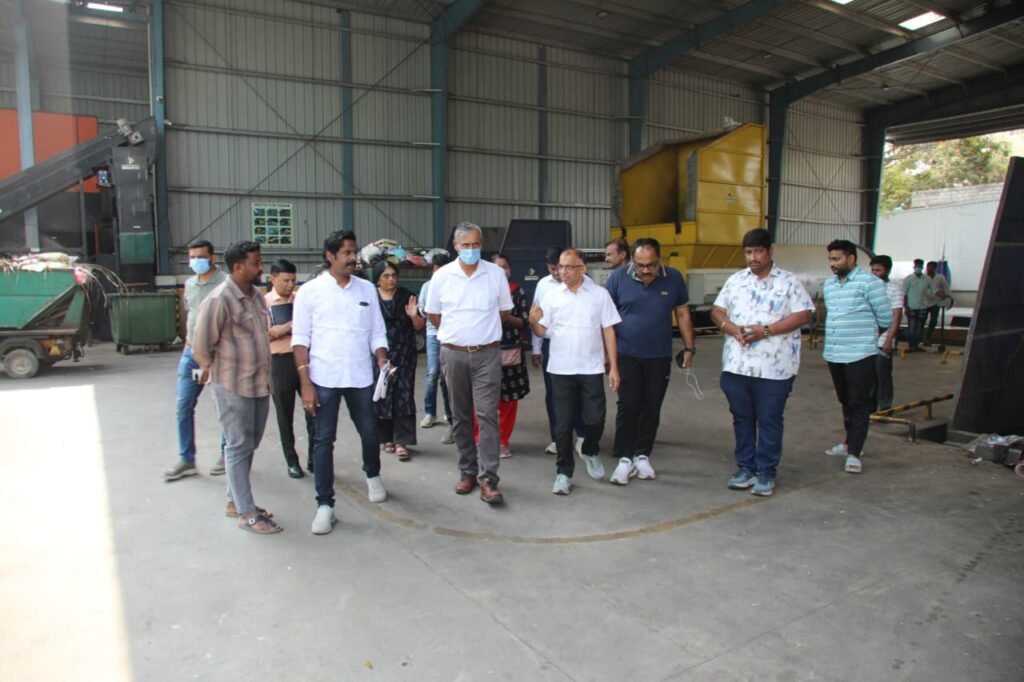
At present, the Koramangala Kasa-Rasa facility processes about 10 tonnes of waste daily, producing biogas that is supplied to a nearby hotel. Officials plan to enhance production capacity further. Rao noted that relocating the high-tension electricity line passing through the site would enable large-scale expansion of biogas production, and officials have been instructed to initiate the necessary process.
Kareegowda, Chief Executive Officer of Bengaluru Solid Waste Management Limited (BSWML), said scientific processing of wet waste is a key component of the city’s waste management strategy. He added that several biomethanisation plants are already operating to convert wet waste into biogas.
Of the 12 biogas plants previously established by BBMP, six are currently operational, each processing about five tonnes of wet waste per day. In total, these plants process around 30 tonnes of waste daily, and renovation works are underway to revive the remaining six facilities.
On average, one tonne of wet waste can generate 30–50 kilograms of biogas, meaning each plant produces approximately 200 kilograms of gas daily. The gas generated is primarily used within the plants themselves, while surplus gas is utilised for electricity generation through generators to power nearby parks and public spaces.
At the Koramangala biogas plant with a capacity of 8.5 tonnes, around 120 kilograms of biogas is produced daily and supplied to a nearby hotel. At a rate of ₹70 per kilogram, this generates approximately ₹8,400 in revenue per day, demonstrating the economic potential of converting wet waste into fuel.
The authority is also constructing four new decentralised biomethanisation plants, of which two facilities (in Ward 151 and Ward 27) have already been completed and will soon begin operations, while construction of two more plants in Ward 196 and Ward 56 is currently underway.
In addition, two large-scale biogas plants are planned. One project, being developed in partnership with GAIL Gas India, will process around 300 tonnes of wet waste per day. Another facility proposed in Kannahalli, in collaboration with Sataram Company, will process up to 1,000 tonnes of wet waste daily.
A separate facility at Herohalli, capable of processing 50 tonnes of waste per day, has been empanelled to produce around 1,500 kilograms of gas daily, which will be marketed as Bio-CNG. Plans are also being explored to supply gas to households through pipelines in the future.
Looking ahead, the city plans to process around 3,000 tonnes of wet waste per day through biogas production, a proposal that has been incorporated into the upcoming comprehensive solid waste management tender.
Officials said these initiatives will help generate clean energy while producing liquid fertiliser from the sludge generated in the plants, which can be used by farmers.
Authorities also highlighted the potential for household-level biogas units, which can be installed at a cost of approximately ₹20,000, allowing families to convert kitchen waste into cooking fuel.
The Kasa-Rasa facility in Koramangala currently houses several waste processing units, including a biomethanisation plant processing 8.5 tonnes per day, a Dry Waste Collection Centre (DWCC), a thermocol processing unit, a bulk waste management centre, and a training centre.
Rao also inspected the secondary waste transfer station at Koramangala, where he observed that mixed waste was being delivered. He directed officials to strictly enforce waste segregation protocols.
Bengaluru South City Corporation Commissioner K.N. Ramesh, Chief Engineer Basavaraj Kabade and other officials were present during the inspection.
ಇದನ್ನೂ ಓದಿ: ಬೆಂಗಳೂರಿನಲ್ಲಿ ಕಸದಿನಿಂದ ಗ್ಯಾಸ್: ಇನ್ನಷ್ಟು ಬಯೋಗ್ಯಾಸ್ ಘಟಕ ಸ್ಥಾಪನೆಗೆ GBA ಯೋಜನೆ
About the Author