Bengaluru, March 16: In a bid to tackle the growing menace of illegal roadside parking and abandoned vehicles, Additional Chief Secretary of the Urban Development Department Tushar Giri Nath has directed officials to conduct a comprehensive review of the parking system across the five city corporations under the Greater Bengaluru Authority (GBA) limits.
During a high-level meeting on urban mobility and parking management, officials were instructed to frame appropriate parking regulations after examining the current situation in the city. Authorities were asked to study the feasibility of creating parking facilities in vacant roadside spaces and on private land, while also exploring incentives that could be offered to private property owners willing to provide parking spaces.
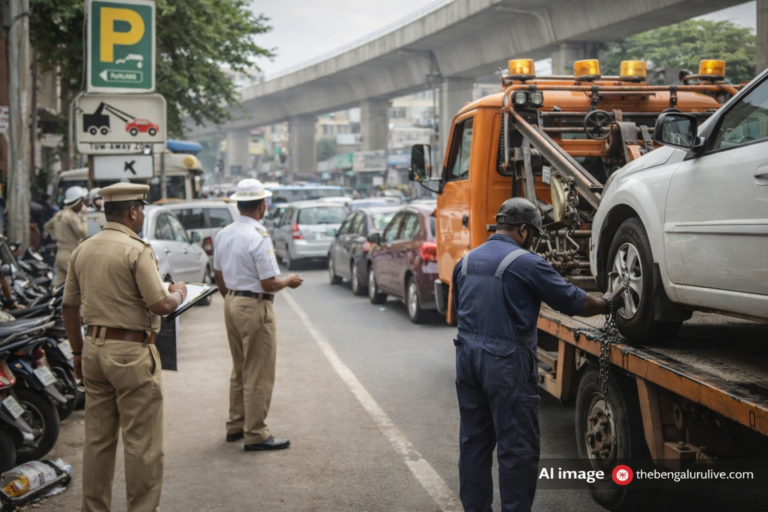
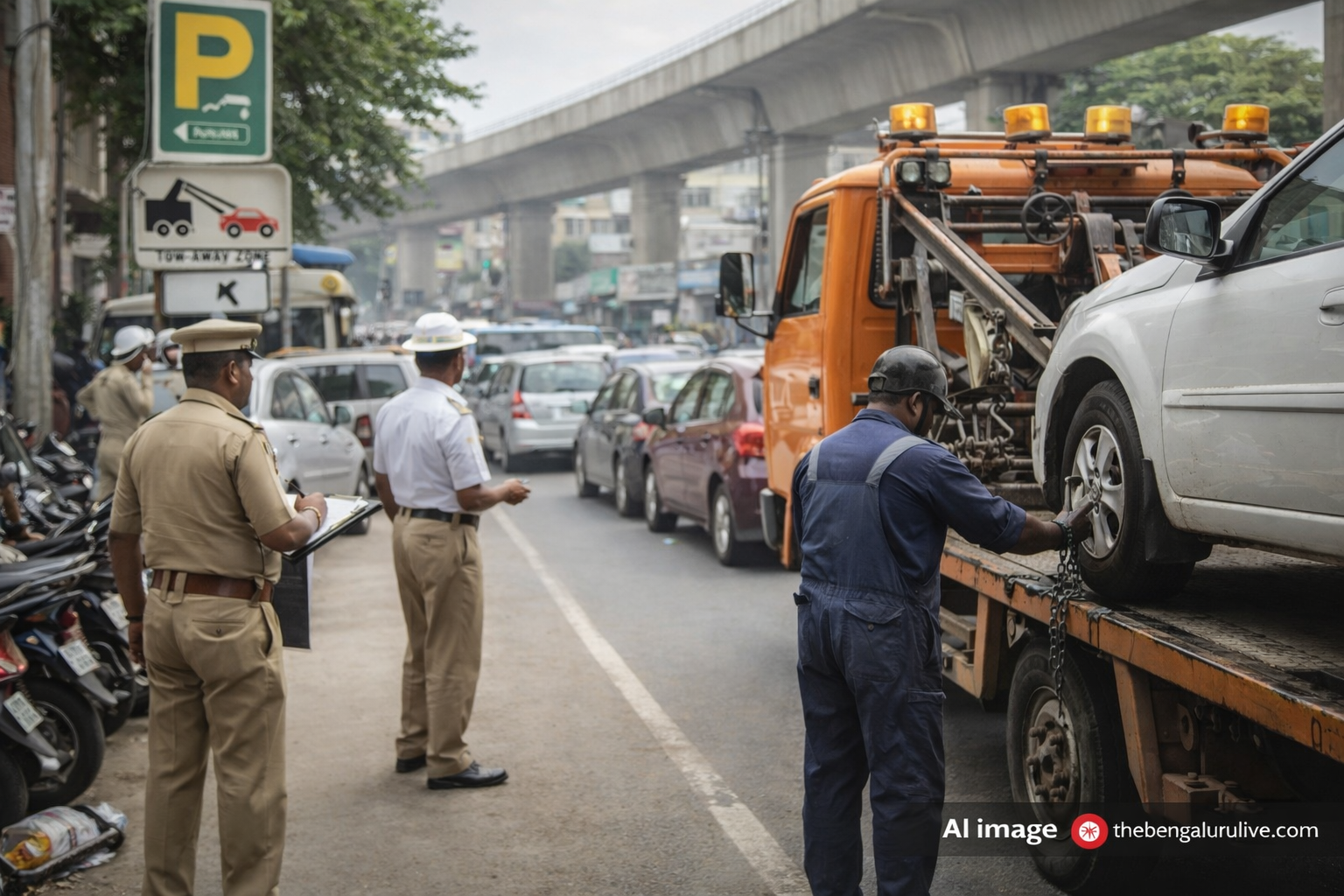
To strengthen enforcement, officials were directed to designate dedicated officers for towing operations in each of the five city corporations. Once the mechanism is finalized, towing vehicles will be deployed to remove abandoned and illegally parked vehicles across the city.
Published In Public Interest by thebengalurulive.com
Greater Bengaluru Authority Chief Commissioner Maheshwar Rao said illegal roadside parking has been steadily increasing and is contributing to traffic congestion. He instructed officials to launch special enforcement drives against unauthorized parking to restore road discipline.
The meeting was attended by senior officials including Special Commissioners Munish Moudgil, Dr. K. Harish Kumar and R. Ramachandran, Secretary Deepa Cholan, BDA Commissioner Manivannan, city corporation commissioners, BWSSB Chairman Ram Prasath Manohar, BMRCL Managing Director Ravishankar, Bengaluru Urban Deputy Commissioner Jagadeesh, and other officials from transport and civic departments.
Possible Pros and Cons of the Proposed Parking Policy
Pros
- Reduced traffic congestion: Clearing roadside parking could improve traffic flow on major city roads.
- Better urban planning: Dedicated parking zones can help organize vehicle movement in busy commercial areas.
- Revenue opportunities: Parking facilities on private land may create new revenue streams for property owners and local bodies.
- Cleaner streets: Removal of abandoned vehicles will improve road safety and city aesthetics.
Cons
- Cost implications: Developing new parking infrastructure may require significant investment.
- Resistance from motorists: Strict enforcement and towing may face public opposition.
- Limited urban space: Finding adequate land for parking in dense areas could be challenging.
- Implementation complexity: Coordination among multiple agencies may delay policy execution.
About the Author