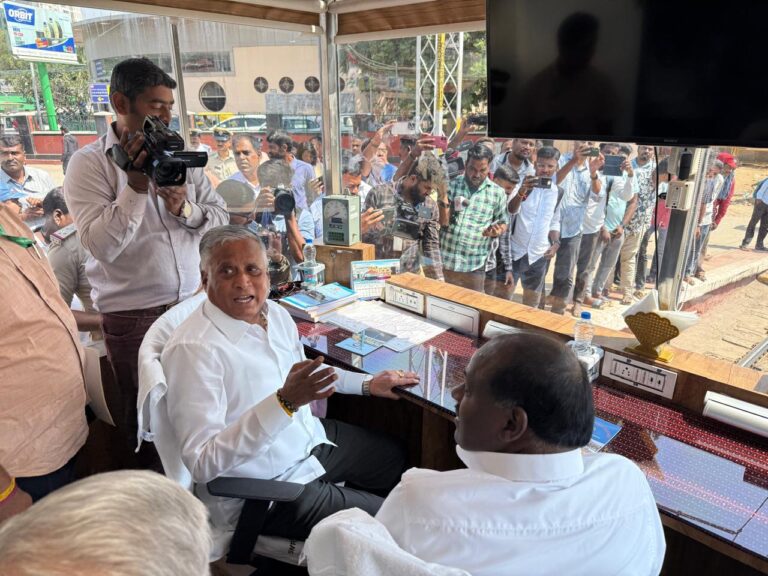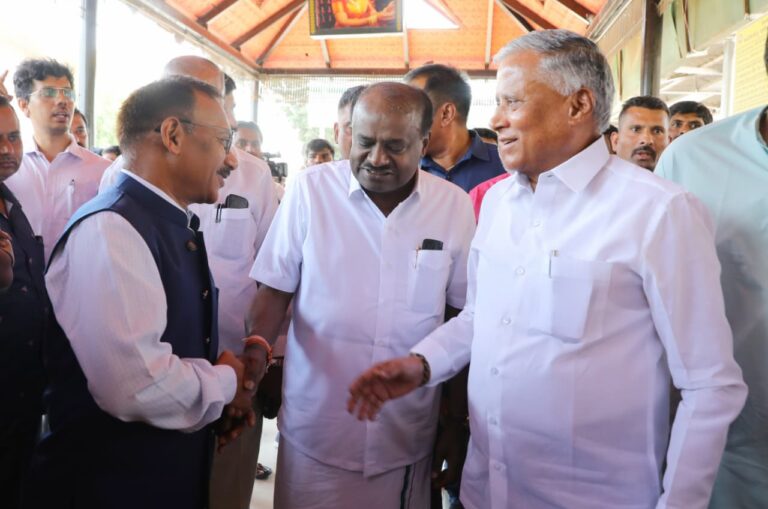
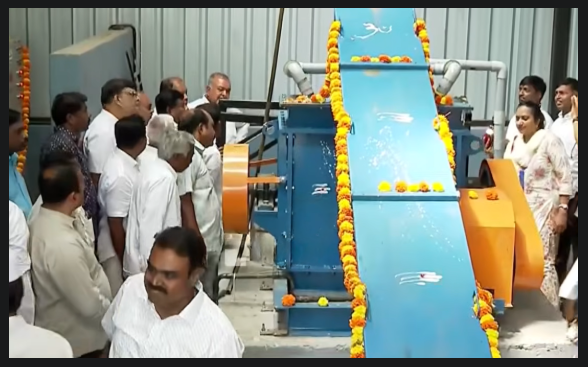
Bengaluru: In a significant push towards sustainable waste management, a bio-methanisation plant in Koramangala is scaling up operations by utilising wet waste collected from residents to produce biogas, Karnataka Minister Ramalinga Reddy said.
The project, originally launched in 2018 with a capacity to process 8 tonnes of wet waste per day, has now been expanded with an additional 5-tonne capacity unit. The upgraded facility is expected to enhance gas production and reduce the burden on landfill sites.
The initiative has been developed under the support of the Karnataka government’s BSWML and is operated by Carbon Masters, focusing on converting organic waste into clean energy.
Published In Public Interest by thebengalurulive.com
Boost in Gas Production
Officials said that earlier, the plant processed around 8 tonnes of waste daily, producing approximately 8 to 10 commercial gas cylinders. With the enhanced capacity of 13 tonnes per day, the output is now expected to increase to nearly 13 to 14 cylinders daily.
The process involves collecting wet waste, storing it for around 30 days, and converting it into raw gas, which is then refined and supplied to commercial establishments such as hotels.
Reducing Landfill Burden
Minister Ramalinga Reddy highlighted that Bengaluru generates a significant amount of wet waste daily, much of which earlier ended up in dumping yards, leading to environmental issues such as foul smell, mosquito breeding, and water pollution.
“By converting wet waste into biogas, we can significantly reduce the pressure on dumping yards. If such plants are established across all assembly constituencies, nearly half of the city’s waste problem can be solved,” he said.
He further stressed that strict measures are needed to ensure that wet waste does not reach landfills, adding that similar projects are already being initiated in multiple locations.
‘Kasa to Rasa’ Model
Calling it a “Kasa to Rasa” (waste to resource) model, the minister noted that while innovative naming exists, the focus must be on effective implementation and scaling up production.
The expansion comes at a time when gas supply constraints are being reported in parts of the country, making such decentralised energy solutions increasingly relevant.
The government is now considering replicating the Koramangala model across Bengaluru and other urban centres to promote sustainable waste management and energy generation.
ಇದನ್ನೂ ಓದಿ: ‘ಕಸದಿಂದ ರಸ’ ಮಾದರಿ ಜೋರಾಗಿದೆ! ಕೋರಮಂಗಲ ಬಯೋಗ್ಯಾಸ್ ಘಟಕದಲ್ಲಿ ಉತ್ಪಾದನೆ ಹೆಚ್ಚಳ
About the Author