
Bengaluru Races Against Monsoon: Sai Layout Flood Fix Deadline Set for April 30
Published In Public Interest by thebengalurulive.com
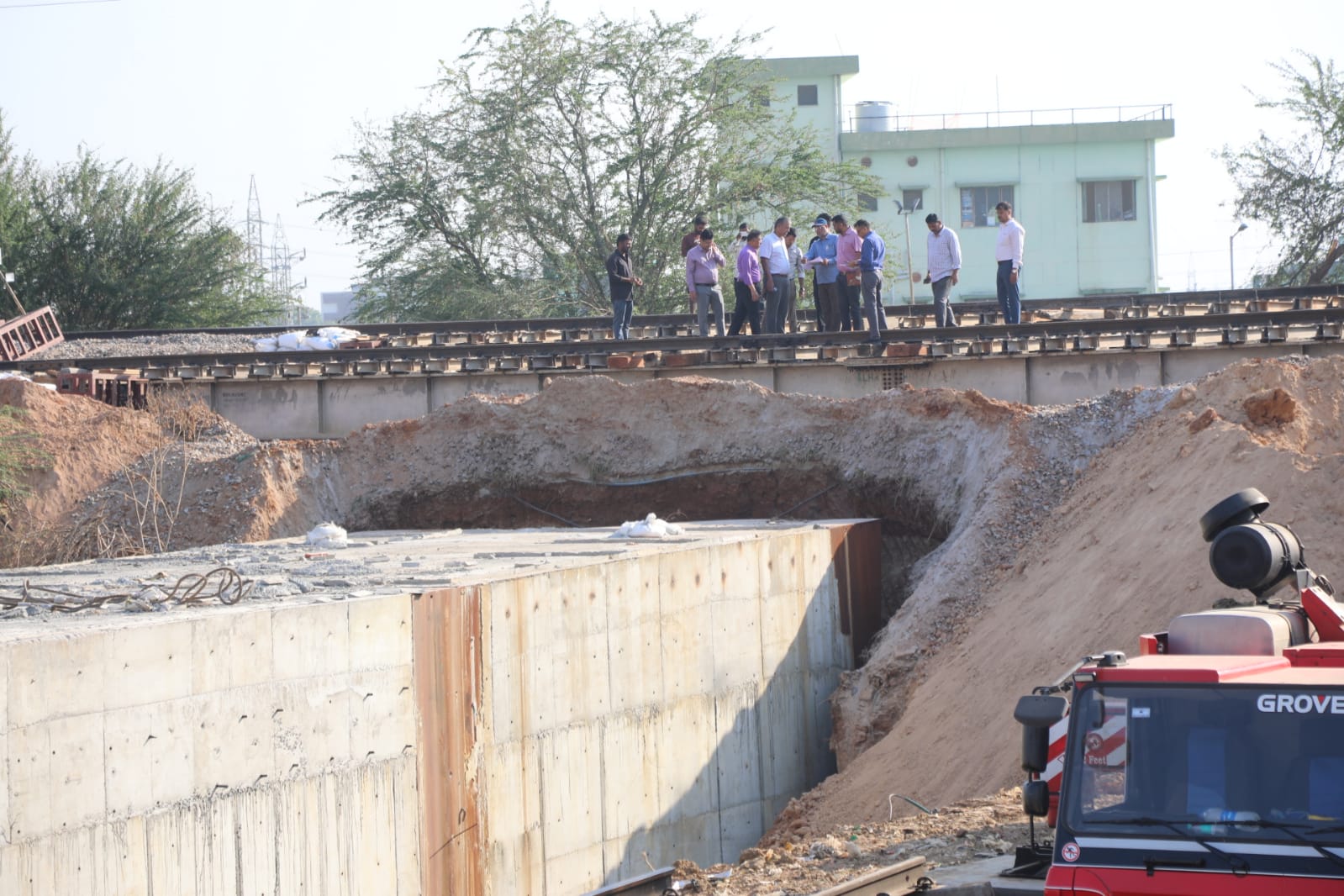
Bengaluru: With the monsoon fast approaching, city authorities have shifted into high gear to prevent flooding in one of Bengaluru’s most vulnerable pockets—Sai Layout—setting a strict April 30 deadline to complete critical drainage work near the Geddalahalli railway track.

During a field inspection, Greater Bengaluru Authority Chief Commissioner Maheshwar Rao issued a series of urgent directives aimed at ensuring the city is monsoon-ready, with Sai Layout emerging as the focal point of flood mitigation efforts.

Published In Public Interest by thebengalurulive.com
At the heart of the plan is a complex “box pushing” engineering operation under the railway line to improve stormwater flow. With Railway Department clearance secured, one box has already been pushed up to 12 metres, with work progressing at about 2 metres per day. Officials have been instructed to complete this phase by April 30, while a parallel structure is expected to be finished by May-end. Supporting RCC retaining wall work is also underway.
To further strengthen flood prevention, another drainage vent being developed by BDA is nearing completion. Authorities have been directed to deploy temporary pumping systems and create water storage mechanisms to tackle excess rainwater during peak downpours.
In addition, large-scale desilting operations in the Hebbal valley near the railway vent have been ordered to ensure uninterrupted rainwater flow during heavy showers.
Beyond flood control, the inspection also focused on key infrastructure upgrades. A 5-km white topping project on Hennur–Bagalur Road has been accelerated, with a June 15 completion deadline. So far, over 6 km of work across both carriageways has been completed. Contractors have been warned against delays, with officials instructed to impose penalties where necessary.
Authorities have also been asked to adopt trenchless technology for stormwater drain construction beneath railway tracks, ensuring minimal disruption while connecting drains to major rajakaluves.
On the civic front, waste management and urban maintenance also came under scrutiny. A secondary waste collection unit in Sarvagnanagar is currently handling 200 tonnes of waste daily, with stricter enforcement of waste segregation rules in areas reporting higher mixed waste.
Other immediate actions include clearing encroachments, removing an unused public toilet obstructing traffic on K. Narayanapura Road, filling potholes, widening culverts, and speeding up pending road and footpath works across multiple localities.
The coordinated push signals a deadline-driven, multi-agency approach involving BBMP, BDA, BESCOM, and other departments to tackle Bengaluru’s recurring monsoon challenges head-on.
About the Author

Related Stories